Buying Property in Oman for Expats in 2026

Since 2006, foreign nationals have been permitted to purchase property in Oman. Previously, options were limited to Integrated Tourism Complexes (ITCs). However, as of 2025, foreign buyers can acquire real estate both within and beyond ITCs, except in specific zones outlined in a Royal Decree.
Purchasing property in Oman grants eligibility for a renewable Golden Visa as long as ownership is retained. While there is no minimum investment threshold, larger investments may qualify for a five- or ten-year visa.
Reservation of Property
For international real estate investors and those considering overseas homeownership, Oman is among the leading destinations in the Gulf region.
The Sultanate actively encourages foreign investment by fostering favourable conditions for major hospitality and development companies. Government-backed incentives contribute to the expansion of large-scale projects, creating new opportunities for international investors.
 From $714,000
Completion in: 2027.IV 373 units in total
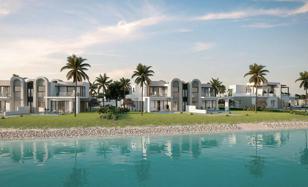 From $245,000
Completion in: 2029.II 500 units in total
 From $107,000
Completion in: 2028.III Total of 447 apartments
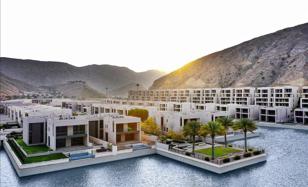
 From $516,000
Completion in: 2028 84 units in total
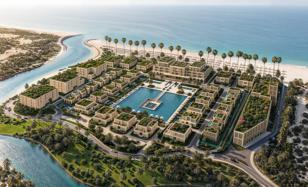 From $149,000
Completion in: 2028.IV Total of 263 apartments
 From $300,000
Completion in: 2029.II 240 units in total
 From $211,000
Completion in: 2029.I 23 units in total
In 2025, there has been a notable rise in foreign investor interest in Oman’s property sector. More buyers are seeking to diversify their assets and turn to international real estate brokers specialising in Omani developments.
Tranio’s experts will provide exclusive property recommendations and comprehensive transaction support, from property selection to legal formalities. Contact us to receive a tailored list of investment projects in Oman.
Contact us
Real estate brokerage in Oman is regulated by Royal Decree, ensuring brokers are accountable for providing accurate information regarding property features and specifications.
The property acquisition process in Oman begins with engaging a broker. Investors collaborate with real estate specialists to identify the most suitable project, assess its investment potential, conduct viewings, and reserve their chosen apartment or villa.
The broker submits a reservation request to the developer on behalf of the investor. The investor then confirms their intent by placing a deposit as an Expression of Interest (EOI), typically not exceeding 5% of the property’s value.
Once the reservation is secured, the property’s price is formally recorded in the sale and purchase agreement.
Sale and Purchase Agreement
The contract between the developer and the buyer sets out their rights and obligations, including the payment schedule.
Typically, payments are linked to the project’s completion stages. The agreement may also grant the developer the right to retain the initial deposit or a portion thereof as compensation if the buyer fails to meet payment obligations without valid reason.
Similar to Dubai, Oman has implemented an escrow account system for investor protection. Before launching a project, developers must establish an escrow account with a bank and demonstrate sufficient funds for completion.
A developer must open a dedicated escrow account for each project with a licensed bank in Oman. If a developer manages multiple projects, separate escrow accounts must be created for each.
Funds collected from buyers are deposited into the escrow account rather than being directly accessible to the developer. This ensures that developers cannot collect funds and abandon the project. The money is only disbursed upon project completion.
Under Omani law, funds can only be withdrawn from the escrow account upon submission of a request to the authorised bank, accompanied by a project completion certificate.
Initial Deposit
Most developers in Oman offer instalment plans throughout the construction phase, and some provide post-handover payment schemes, allowing part of the payment to be made after project completion.
Following the reservation and deposit payment, the investor enters into a formal agreement and makes the first instalment payment.
The initial payment typically ranges between 10% and 35% of the property’s total value.
Instalment Plans
Instalment plans in Oman are optional rather than mandatory. Investors can opt for a structured payment plan with regular instalments, or pay the full amount upfront.
A sample instalment plan for off-plan properties in Oman:
Initial deposit | Instalments during construction | Final payment upon completion |
20% | 50% | 30% |
Property Handover and Inspection
Under the Royal Decree, developers are responsible for rectifying any defects or construction issues identified during the handover process. Contractors must address deficiencies or incomplete work as specified in the contract, with a timeframe agreed upon by both parties.
A formal inspection report is prepared upon completion of the assessment.
Property Registration
The final step in acquiring property in Oman is registering the ownership transfer. The investor registers the property with the Ministry of Housing and Urban Planning under their name.
Required documents for property registration:
- original title deed proving the developer’s ownership rights;
- sale and purchase agreement;
- No Objection Certificate (NOC) from the Ministry of Housing and Urban Planning;
- proof of full payment of the property’s purchase price.
Upon successful registration, the buyer receives a new title deed in their name.
Renting Out or Living in the Property
Oman’s property market experienced significant growth in 2022, with positive trends continuing through 2023 and a moderate adjustment in 2024. In 2025 the growth is driven by increasing demand from tenants and investors in both residential and commercial sectors.
With a growing population, the residential property market is expected to expand further. According to Cavendish Maxwell, the market was valued at $4.01 billion in 2023 and is projected to reach $6.23 billion by 2028, reflecting a compound annual growth rate (CAGR) of 9.19% over the period.
Oman remains committed to real estate sector growth, allocating $11.37 billion in 2023 for investments in hospitality and property development. The plan includes the construction of over 16,500 hotel rooms and 42,500 residential units nationwide.
Buyers of Omani real estate have several strategies: renting out their property, capitalising on value appreciation for resale, or residing in their flat or villa.
Investors are attracted to Oman’s competitive rental yields, comparable to Dubai’s: short-term rentals typically yield 12–13% per annum, while long-term rentals offer 6–8%.
For those planning to live or holiday in their Omani property, the Sultanate’s visa programme with no minimum investment threshold and low taxes adds to its appeal. Property rental and resale transactions are tax-exempt, VAT is set at 5%, and property registration fees stand at 3%.
Regardless of their chosen strategy, buyers benefit from the ease of opening a bank account with access to global banking services. Residency permit holders enjoy a simplified banking application process.
We will send you a content digest not more than once a week
- Buying and Registering
- Residence
- Citizenship (getting passport)
- Taxes