Buying Property in Ajman: Complete Buyer’s Guide

Buying property in Ajman can be an attractive option for both homebuyers and investors looking for a comparatively accessible entry point into the UAE real estate market. The emirate offers apartments, villas, townhouses, land and off-plan properties, while its location next to Sharjah provides access to the wider Dubai—Sharjah metropolitan area.
Ajman’s real estate sector is regulated by the Department of Land and Real Estate Regulation, which oversees property registration, real estate development, mortgages and other property transactions. Government services related to ownership and registration are also available digitally through the emirate’s official platforms.
Overview of the Real Estate Market in Ajman
Ajman has developed a sizeable residential market combining established apartment districts with newer villa communities and large real estate development projects. Apartments account for an important part of the market, particularly in and around the city centre, while villas and residential plots are common in expanding suburban districts.
Official statistics indicate substantial growth in property transaction activity. The number of registered sales of properties and real estate units increased from 4,560 in 2020 to 11,560 in 2024. Mortgage registrations rose from 1,138 to 2,318 over the same period.
More recent government open data continue to record transactions during 2026. The Ajman Open Data platform, whose real estate datasets are published by the Department of Land and Real Estate Regulation, provides current information on sales, mortgages and other transactions by project, district and property type. The datasets were updated in August 2026 and include transactions through the second quarter of the year.
For buyers, this means that Ajman is not simply an alternative market based on lower prices. It has an established registration system, an active resale sector, off-plan development and a growing volume of mortgage transactions.
 From $219,000
Completion in: 2027.IV Total of 1775 apartments
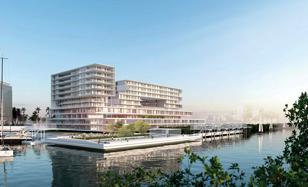 From $254,000
Completion in: 2026.IV Total of 200 apartments
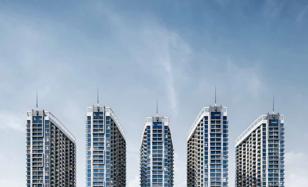 From $164,000
Completion in: 2026.IV Total of 1680 apartments
 From $536,000
Built in 2025 Total of 90 apartments
 From $5,777,000
Completion in: 2025.IV Total of 13 apartments
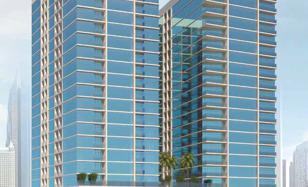 From $149,000
Completion in: 2024.I Total of 576 apartments
 From $90,000
Completion in: 2024 Total of 160 apartments
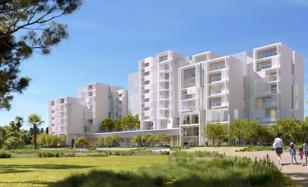 From $388,000
Completion in: 2026.IV Total of 20 apartments
Can Foreigners Buy Property in Ajman
Foreigners can buy eligible property in Ajman. However, a buyer should verify the ownership status of the specific property or development before signing an agreement, because the right available to a non-UAE national depends on the applicable land and project regulations.
Ajman’s property legislation is administered by the Department of Land and Real Estate Regulation. The emirate’s real estate development framework is established, among other legislation, by Law No. 2 of 2020, which regulates real estate development, project registration, off-plan transactions and the registration of real estate units.
The current government fee schedule expressly provides a separate sale-registration fee for a non-citizen buyer, confirming the registration framework applicable to foreign purchasers. Under the 2025 fee rules, a non-citizen buyer pays 3% of the property’s assessed value for sale registration, subject to a minimum of AED 3,000, in addition to any applicable ownership fee.
Non-residents may also need to provide a valid passport rather than an Emirates ID for certain property services. The official Ajman service portal, for example, specifically lists a valid passport for non-residents among the documents accepted for property-related registration procedures. Foreign buyers should therefore confirm before paying a deposit that the exact unit can be registered in their name and what form of ownership applies.
How to Buy Property in Ajman Step by Step
The procedure differs slightly between ready and off-plan properties, but a typical purchase involves property selection, legal and technical checks, signing the sale documentation, making the required payments and registering the transaction with the Department of Land and Real Estate Regulation.
Choosing a Property
The first stage is to decide whether the property will be used as a home, a long-term rental investment or a capital-growth investment. For an investment purchase, buyers should compare:
- the property’s actual transaction price rather than only its advertised price;
- achievable rent and current tenant demand;
- annual service charges;
- the age and condition of the building;
- parking and amenities;
- accessibility to Sharjah, Dubai and major roads;
- future residential supply in the same area;
- the developer’s record for an off-plan purchase; and
- resale liquidity for the particular property type.
The Department of Land and Real Estate Regulation publishes official datasets covering real estate unit transactions, land sales and mortgages. These can be useful for understanding where transactions are actually taking place instead of relying only on asking prices.
For an off-plan property, buyers should also check that the project and developer are properly registered. Under Ajman’s real estate development law, transactions involving off-plan units must be recorded in the initial real estate register.
Sale Agreement, Payments and Registration
Once the property has been selected and the commercial terms have been agreed, the parties proceed with the sale documentation. For off-plan property, Ajman Law No. 2 of 2020 requires the reservation deed and standard sale contract to be prepared in Arabic and English. The law also states that the developer must register a sold unit in the buyer’s name in the initial real estate register within five working days after the buyer signs the standard sale contract.
Payments for an off-plan purchase should follow the contractual payment schedule and the rules applicable to the project’s escrow arrangements. For a ready property, the buyer should verify the title, confirm that there are no unresolved legal restrictions or mortgages affecting the transfer, and establish whether a clearance or no-objection document is required.
The ownership transfer is then registered through the Department of Land and Real Estate Regulation. Ajman’s government service system covers registration, ownership certificates, title deeds and mortgage registration.
If bank financing is involved, the mortgage must also be registered in favour of the lender. The official mortgage-registration procedure includes submitting the application, paying the required fees, completing the signing formalities and receiving the title deed, ownership certificate or initial registration certificate electronically.
Costs and Fees When Buying Property in Ajman
Buyers should calculate the total acquisition cost rather than budgeting only for the advertised property price. Under the current Ajman fee schedule introduced by Emiri Decision No. 9 of 2025, the registration fee for a standard property sale is differentiated according to the buyer’s status.
For a non-UAE/GCC buyer, the sale-registration fee is 3% of the property’s assessed value, with a minimum charge of AED 3,000, plus the applicable ownership fee. For an Emirati or GCC buyer, the corresponding buyer’s registration fee is 2%, subject to a minimum of AED 2,500. The seller is charged 1% of the property’s assessed value.
Other expenses can include the issuance of ownership documentation, developer fees where applicable, brokerage costs, property valuation and mortgage-related charges. For financed purchases, Ajman’s official mortgage-registration service lists a separate mortgage registration charge as well as a fee for issuing the title deed, ownership certificate or initial registration certificate. A bank may additionally charge valuation, processing or arrangement fees according to its own tariff.
Mortgage buyers are also subject to UAE Central Bank loan-to-value rules. For expatriates purchasing a first owner-occupied property valued at AED 5 million or less, the maximum LTV is 80%, which generally means at least a 20% contribution from the buyer’s own funds. The maximum LTV falls to 70% for a first home worth more than AED 5 million and to 60% for a second or subsequent property or an investment property. For off-plan purchases, the regulatory maximum is 50%. These are maximum regulatory limits: individual banks may apply stricter lending criteria.
Benefits of Buying Property in Ajman
Ajman’s main advantages are a relatively accessible market, a wide selection of residential properties and a substantial rental population. It can therefore appeal both to buyers seeking their own home and to investors looking for income-producing property.
Affordable Entry Prices
One of Ajman’s main attractions is the availability of smaller and mid-market residential properties alongside more expensive waterfront and villa developments. The emirate has a broad range of apartments, from studios and one-bedroom units to larger family apartments. Buyers can also consider villas, townhouses and plots in newer residential districts.
From $219,000
Completion in: 2027.IV Total of 1775 apartments
From $254,000
Completion in: 2026.IV Total of 200 apartments
From $164,000
Completion in: 2026.IV Total of 1680 apartments
From $536,000
Built in 2025 Total of 90 apartments
From $5,777,000
Completion in: 2025.IV Total of 13 apartments
From $149,000
Completion in: 2024.I Total of 576 apartments
From $90,000
Completion in: 2024 Total of 160 apartments
From $388,000
Completion in: 2026.IV Total of 20 apartments
For investors with a limited budget, this variety makes it possible to enter the UAE property market without necessarily targeting the significantly more expensive prime segments found elsewhere in the country. However, a low purchase price alone should not determine the decision. Two apartments with similar asking prices may produce very different returns once service charges, maintenance, vacancy and resale liquidity are taken into account.
Government transaction data can help buyers compare actual market activity by district and project. For example, the Department of Land and Real Estate Regulation’s 2026 datasets record transactions in areas including Rashideya, Al Jurf, Al Yasmeen and other established and developing parts of the emirate.
Rental Demand and Investment Potential
Ajman has a large expatriate tenant base, which supports demand for residential rental property. Official statistics show that the number of registered residential tenancy contracts involving non-citizens increased substantially over recent years. There were 54,480 such contracts in 2020 and 92,447 in 2024. Including UAE citizens, the total number of registered residential tenancy contracts reached 98,129 in 2024.
This does not mean that every property will generate a strong return. Rental performance varies considerably according to building quality, unit size, location, service charges and the amount of competing supply.
For income-focused investors, the relevant calculation is net rental yield, not simply advertised gross yield. Annual service charges, maintenance, property management, periods without a tenant and other expenses should be deducted from expected rental income.
Investment potential may also come from capital appreciation, particularly in areas benefiting from new infrastructure or development. However, expected future appreciation should be treated as an additional possibility rather than the basis for making a purchase.
Best Areas and Property Types for Buyers
There is no single best area in Ajman for every buyer. The choice should depend on budget, intended use and investment strategy:
- Al Rashidiya and the wider central Ajman area have an established stock of apartment buildings and access to commercial facilities. Current Department of Land and Real Estate Regulation data continue to record residential transactions in Rashideya during 2026.
- Al Nuaimiya is another established residential district with apartment stock and access to the Sharjah border, making it relevant to residents who commute between the emirates.
- Al Jurf includes residential and mixed-use development and can appeal to buyers seeking larger properties or access to major transport routes.
- Al Yasmeen is particularly relevant to villa and land buyers. Official 2026 land-transaction data show continuing transaction activity in the district.
Other options include newer development clusters and projects around the city centre. Buyers looking specifically for apartments can use the government’s Real Estate Units Transactions dataset to check which projects and districts are recording sales.
In terms of property type, studios and one-bedroom apartments generally require less capital and target a broad tenant market. Larger apartments can suit families and long-term tenants, while villas may provide more space and land value but require a larger initial investment and can have different resale and maintenance characteristics.
Risks and Points to Check Before Buying
A property should be checked at both the legal and financial level before purchase. For a ready property, buyers should verify the title deed, ownership eligibility, outstanding mortgage status and any amounts payable to the developer or building management. The physical condition of the unit and common areas should also be inspected.
Service charges deserve particular attention. An inexpensive apartment with high annual charges may generate a weaker net return than a more expensive unit in a well-managed building. For an off-plan purchase, the developer and project should be registered and the transaction must comply with Ajman’s real estate development regulations. The law requires off-plan sales to be entered in the initial real estate register.
Buyers should review the completion date, construction status, payment schedule, contractual provisions covering delays and the arrangements for transferring the final title after completion. Ajman’s real estate development legislation provides that, after a project’s completion certificate and final cadastral survey are issued, the developer must transfer fully paid sold units to buyers and obtain the relevant title deeds within the prescribed process.
Mortgage buyers should also allow for the possibility that the bank’s valuation may be below the agreed purchase price. Because financing is calculated with reference to the lender’s permitted LTV and property valuation, the buyer may need to contribute additional cash.
Finally, investors should consider concentration risk. Purchasing solely because a development offers a low price or an attractive payment plan can be risky if a large number of similar units are due to enter the market at the same time.
FAQ about Buying Property in Ajman
Yes. Non-UAE nationals can purchase eligible property in Ajman under the emirate’s applicable ownership and real estate regulations. Buyers should confirm the ownership status of the specific property or project before signing the contract. Ajman’s current government fee schedule expressly provides registration charges for non-citizen property buyers.
Property-related services in Ajman provide for transactions involving non-residents, and the government’s service requirements expressly refer to valid passports for non-residents. The precise documentation depends on the type of transaction.
Under the fee schedule introduced in 2025, a non-citizen buyer pays 3% of the property’s assessed value, with a minimum registration fee of AED 3,000, plus any applicable ownership fee. The seller’s fee is 1% of the assessed property value.
Yes, subject to the lender’s eligibility criteria. Under current Central Bank rules, expatriates can generally finance up to 80% of a first owner-occupied property valued at no more than AED 5 million. The regulatory limits are lower for more expensive first homes, investment properties, subsequent purchases and off-plan properties.
A ready property provides immediate use or rental potential and allows the buyer to inspect the completed unit. An off-plan property may offer staged payments and access to newer developments but introduces construction, completion and future-supply risks. Ajman’s Law No. 2 of 2020 regulates off-plan projects and requires sold units to be recorded in the initial real estate register.
Ajman has a substantial rental market. Official statistics recorded 98,129 residential tenancy contracts in 2024, of which 92,447 involved non-citizens. Nevertheless, investment performance depends on the individual property, purchase price, rent, service charges, vacancy and future supply rather than the emirate-wide figures alone.
The Department of Land and Real Estate Regulation provides registration and ownership services, while Ajman’s official Open Data platform publishes datasets on property sales, mortgages, transactions and districts.
We will send you a content digest not more than once a week