Turkish railways in 2026: guide for foreigners

Rail transport in Turkey has become increasingly attractive in recent years due to well-developed infrastructure and high-speed trains.
Experienced travellers usually combine trains and buses in their travels, saving on rental housing and spending the night in comfortable sleeping cars that take them to various tourist attractions quickly. Turkey’s railway network continues to expand. The Ministry of Transport’s 2025 report records 13,919 kilometres of railway at year-end, including 2,251 kilometres of high-speed lines.
Train types in Turkey
There are more than 10 long-distance trains running in different parts of Turkey. On the country map, the railways stretch from east to north and west. The southwestern part of the Mediterranean coast (from Bodrum to Silifke) and the northeastern Black Sea part of the country (near the cities of Ordu, Trabzon and Rize) remain very popular among tourists. The country’s southernmost railway is located near the cities of Mersin and Antakya.

Most of the rail network in Turkey was built by the Germans. The locals joke that they must have been paid for mileage, which is why the railways in Turkey are so winding. Of course, the real reason for this is the rugged mountainous terrain.
Railway carriages types by comfort level
Most trains in Turkey offer:
- Sleeping cars (Yatakli) with compartments for 1 or 2 people with a washbasin and mini-fridge; these are perfect for spending the night on the train.
Sleeping compartments are private: when booking for 1 person, you still have to pay for the entire compartment, as the price is for both berths. When booking for 2 people, the price is per berth.
- Economy class couchettes (Kusetli) for 4 people with folding shelf-like beds on which you can both sit and lay down.
- Passenger cars (Pullman), similar to the European compartment cars with reclining seats. They can be either economy class (designated as 2+2 Pullman) or business class (2+1 Pullman). The difference in cost is about 1.5 times.
There are dining cars on main line and international trains; on high-speed trains, there is usually a buffet available.
Main line and regional trains

Main line railways connect cities with each other. Also, many cities in the country have regional trains running between urban centres and rural areas.
Many of these trains have their own unique names:
- Izmir Blue Train (Izmir Mavi Treni): Izmir — Ankara; the route takes approx. 13.5 hours;
- Taurus Express (Toros Ekspresi): Adana — Konya; approx. 6.5 hours. The Taurus Express runs along a very picturesque mountain route. The railway was built at the beginning of the 20th century; it includes the famous Varda Viaduct shown in the photo at the beginning of this article;
- Blue train (Konya Mavi Treni): Konya — Izmir; approx. 12.5 hours;
- Lake Van Express (Vangolu Ekspresi): Ankara — Tatvan; approx. 25 hours. This express takes tourists to Lake Van;
- Aegean Express (Ege Ekspresi): Eskisehir — Izmir (Basmane station); approx. 11.5 hours;
- Euphrates Express (Firat Ekspresi): Adana — Elazig; approx. 10 hours;
- Ankara Express (Ankara Ekspresi): Ankara — Istanbul (Halkali station); approx. 8.5 hours.
A rich network of regional railways surrounds Izmir, Balikesir, Manisa, Mersin, Eskisehir, Istanbul, and Zonguldak.
The famous Marmaray train near Istanbul connects Europe and Asia under the Bosporus, as well as the centre and distant areas. The proximity of neighbourhoods to its stations significantly increases the cost of housing in the area.
 From 17,680,000 TRY
Completion in: 2027.IV Total of 2644 apartments
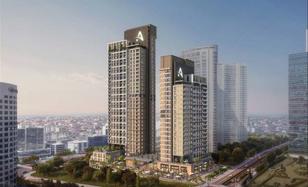 From 12,487,000 TRY
Completion in: 2026.IV Total of 294 apartments
 From 15,983,000 TRY
Completion in: 2026.II Total of 369 apartments
 From 27,471,000 TRY
Built in 2025 Total of 544 apartments
 From 35,962,000 TRY
Completion in: 2026.IV Total of 295 apartments
 From 24,175,000 TRY
Completion in: 2026.II Total of 781 apartments
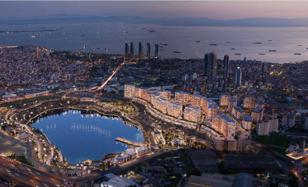 From 14,209,000 TRY
Completion in: 2026.IV Total of 2800 apartments
 From 48,999,000 TRY
Built in 2024 Total of 1557 apartments
International trains in Turkey
International routes include Istanbul (Halkali)–Sofia and Van–Tehran. The Van–Tehran service resumed in March 2025. From Sofia, onward connections lead to other European countries. The Turkish railways website (TCDD) publishes route information; international booking arrangements depend on the service.
High-speed trains in Turkey
The «bullet trains» of Turkey transport passengers in the railway carriages manufactured by the Spanish CAF and the German Siemens Velaro companies. These carriages provide only sitting accommodation, but the compartments themselves are spacious, comfortable, and have air-conditioning; there are electrical sockets next to some seats. High-speed trains connect:
- Istanbul with Ankara in 4 hours 15 minutes;
- Istanbul with Konya in 4 hours 40 minutes;
- Ankara with Konya in 1 hour 44 minutes.
Travel gurus advise combining high-speed trains with buses in order to get to Cappadocia, Pamukkale or the resorts on the south coast.
Turkish rail transport peculiarities
Some foreigners may find it unusual that sometimes train stations are located on the outskirts of the city, much like airports. Keep in mind that often in such cases a free shuttle runs from these stations to the city, so before calling a taxi, it is worth taking a closer look at where the locals go from the station.
When buying tickets online, select the specific station as well as the city. Istanbul has several active stations: high-speed services use stations such as Söğütlüçeşme, Pendik and Halkali, depending on the train. Izmir’s stations include Basmane and Alsancak.
On high-speed railways, pick-up and drop-off zones at major stations are separated (similar to airports) and are marked with the letters A, B, C, D.
TCDD sells high-speed and main-line tickets through its online system, call centre, agencies and station ticket offices. Regional-train tickets are sold at station ticket offices; international services have route-specific sales arrangements.
Buying train tickets in Turkey
There is usually no shortage of tickets. But in the peak of the tourist season, it is better to book seats in sleeping cars a few days in advance. You can buy tickets for high-speed trains 10 days before departure, for intercity trains — 15–30 days before departure.
On eligible high-speed and main-line services, passengers aged 60–64 receive a 15% discount, while those aged 65 or over receive 50%. The youth discount is 15% for ages 13–26 inclusive, and the return-ticket discount is 15%. Special tourist-train fares have their own conditions.
There are several ways to buy a train ticket in Turkey:
- Buying tickets online. On the official Turkish railways website, select the E-ticket option, fill out the form and pay by card. The ticket must then be printed at the terminal at the station before boarding the train.
- Buying tickets at the station. You can buy a ticket at the ticket office or at the self-service terminal at the railway station. All kinds of tickets are available here: from local suburban to intercity trains. You can pay either by card or in cash.
- Buying tickets through a travel agency. Travel agencies can book your train tickets for you. To do this, you can write to them by email, leave a request on their website or simply call them. Such agencies are usually easy to find by typing «buy train ticket in turkey» in any search engine online. There are even tour programmes in Turkey exclusively by train.
Ticket prices
To compare travel budgets, consider the illustrative Ankara–Istanbul fares below. Actual prices depend on the departure date, class, baggage allowance and transfers to the station or airport. TCDD quotes train fares in Turkish lira for the selected departure. Illustrative Ankara–Istanbul comparison:
- bus — 6–12 $;
- train — 11 $;
- plane — about 25 $.
For comparison, an illustrative travel budget for Frankfurt–Berlin:
- bus — 27 $;
- train — from 29 $;
- plane — from 174 $.
Train schedule in Turkey
It is best to look at the current train schedule on the Turkish railways website. Here you can select the type of train: from high-speed trains (on the website’s YHT tab) to intercity long-distance trains (Ana Hat) and regional trains (Bölgesel).
There are sites aggregating train schedules for independent travellers, such as the Seat61 portal.
Another popular route aggregator, Rome2Rio, helps you to plan complex trips with multiple transfers by displaying up-to-date prices in your chosen currency.
Tourist trains in Turkey
How to plan a trip combining both railway romance and popular tourist destinations?
Istanbul — Cappadocia (Goreme):
- take high-speed train Istanbul — Ankara (4.5 hours) and then transfer to the bus to Goreme (5 hours);
- take high-speed train Istanbul — Ankara (4.5 hours), transfer to the train to Kayseri (7.5 hours) and then — to the bus to Goreme (1.5 hours).
Istanbul — Pamukkale (Denizli):
- take high-speed train Istanbul — Ankara (4.5 hours), get off at the Eskisehir station and transfer to the express train to Pamukkale (7.5 hours) or the bus to Denizli (6.5 hours).
Istanbul — Izmir:
- take high-speed train Istanbul — Ankara (4.5 hours), get off at the Eskisehir station and transfer to the night train to Izmir (10.5 hours) or bus (6.5 hours).
Izmir — Isparta:
- take the Lake Express (Göller Ekspresi), which transports tourists to the area of Isparta and Burdur, where Lake Salda is located, surrounded by rose and lavender fields.
The Orient Express in Istanbul

The historic Orient Express linked Paris and Istanbul and inspired Agatha Christie’s famous novel. It is no longer an ordinary scheduled through train, but Belmond’s Venice Simplon-Orient-Express offers luxury itineraries, including a published Paris–Istanbul journey for 2026. Ordinary rail travel between the cities involves connections.
Turkey’s Doğu Ekspresi, or Eastern Express, is a different train from the historic Orient Express. Its route runs east from Ankara to Kars near the Armenian border. This is a winter fairy tale with oriental charm: the most beautiful photos from this route are taken against the backdrop of snow.
The separate Turistik Doğu Ekspresi has two-berth sleeping compartments and a dining car. In its completed 2025–2026 winter season, the journey took about 33 hours including sightseeing stops. Ankara departures ran on Mondays, Wednesdays and Fridays from 22 December 2025 to 27 February 2026; return departures ran on Wednesdays, Fridays and Sundays until 1 March. Timetables and fares are published for each season and depend on the direction and departure date.
We will send you a content digest not more than once a week