Invest in Azerbaijan: Opportunities, Sectors and Property Investment in 2026
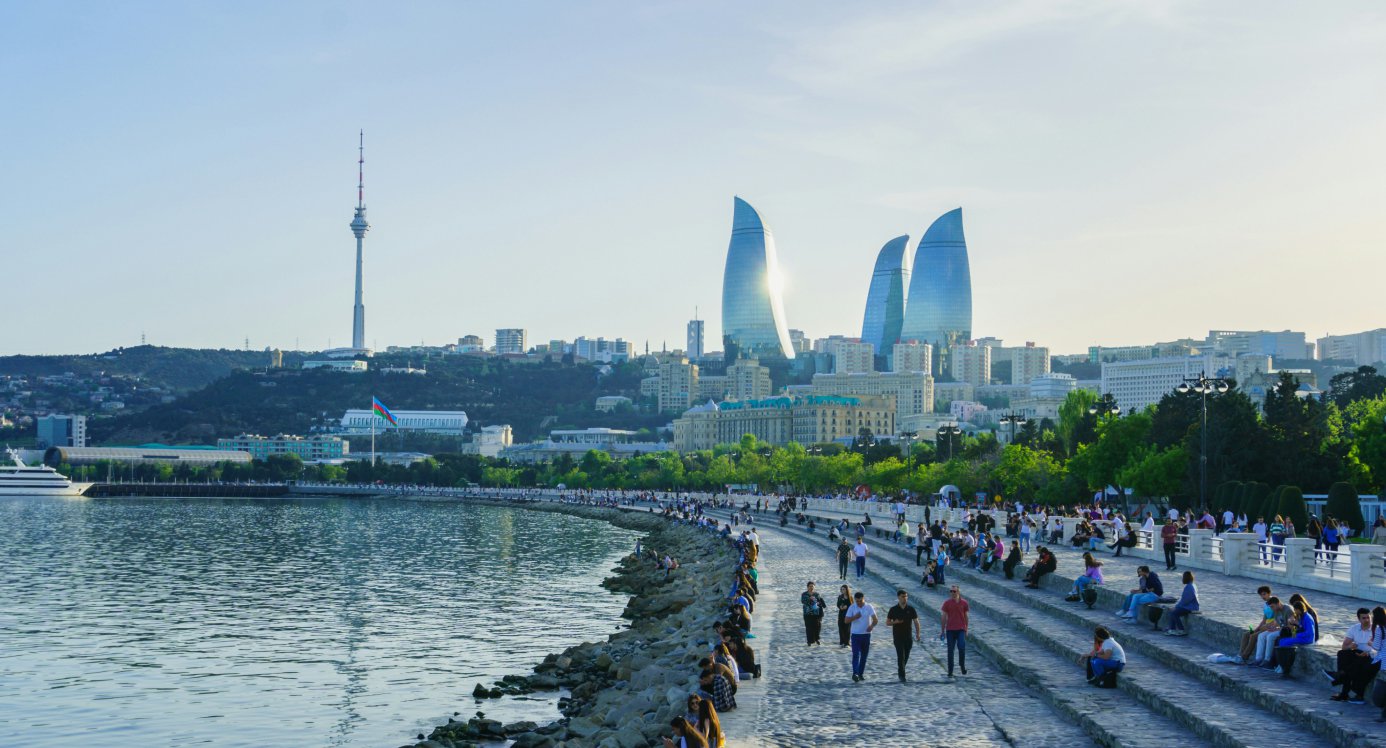
Azerbaijan combines a resource-rich economy with a growing non-oil sector, a strategic position between Europe and Asia and significant investment in transport, energy and urban infrastructure. For investors, opportunities range from real estate and tourism to renewable energy, manufacturing, logistics, agriculture and financial instruments.
The economy continued to expand in 2026. According to the State Statistical Committee of Azerbaijan, GDP increased by 1.2% year on year in January—August 2026, while non-oil and gas GDP grew by 2.1%. Information and communication services expanded by 10.7%, transport and storage by 8.7%, and non-oil and gas industrial production by 5.4%. Investment in fixed capital increased by 10%.
For those planning to invest in Azerbaijan, however, the potential return varies considerably by sector. Residential property in Baku offers a different risk profile from resort property at Sea Breeze, while large renewable-energy or industrial projects operate within separate regulatory and incentive frameworks.
Why Invest in Azerbaijan
Azerbaijan occupies a strategic location on the Caspian Sea between Europe, Central Asia and the Caucasus. This position is particularly relevant for transport, logistics, manufacturing and export-oriented investment. The country’s economy remains connected to oil and gas, but diversification has become increasingly important.
Growth in transportation, information technology, non-oil manufacturing and renewable energy demonstrates that Azerbaijan investment opportunities extend beyond the traditional energy sector. Several characteristics may attract investors:
- a strategic location on East—West and North—South transport routes;
- established oil and gas infrastructure;
- continued investment in renewable energy;
- development of industrial and free economic zones;
- growth of Baku and the Absheron Peninsula;
- comparatively low annual property taxes for individual owners;
- opportunities in tourism and resort real estate;
- government incentives for qualifying industrial and strategic projects.
Azerbaijan also permits foreign participation in businesses. The country’s foreign investment legislation allows foreign investors to establish wholly foreign-owned enterprises, participate in joint ventures and acquire shares, bonds and other assets permitted by law.
Azerbaijan Investment Landscape
The Azerbaijan investment market can broadly be divided into direct business investment, property, financial assets and large infrastructure or industrial projects. Oil and gas remain economically important, but recent growth figures show stronger dynamics in several non-oil sectors. In the first eight months of 2026, information and communication services grew by 10.7%, transportation and storage by 8.7%, and non-oil and gas industrial output by 5.4%.
Investment policy also increasingly targets strategic non-oil projects. In 2026, the government extended the investment promotion certificate mechanism until January 1, 2029. Eligible areas include renewable energy, recycling, seawater desalination, pharmaceutical production, projects based on local raw materials and selected new manufacturing activities.
The Ministry of Economy’s investment promotion programme provides qualifying projects with benefits for seven years, including exemption from land and property taxes, exemptions from VAT and customs duties on specified imported equipment, and a 50% reduction in profit or income tax.
As of January 1, 2026, 633 investment promotion certificates had been issued to 528 businesses, representing planned investment of more than €4.76 billion. Most certified projects were outside Baku, and almost two-thirds were in industry.
Azerbaijan Investment Opportunities
Investors considering investment in Azerbaijan can choose among sectors with very different capital requirements, expected returns and risk levels.
Real Estate
Real estate is one of the most accessible investment options in Azerbaijan for private investors. The main strategies include:
- apartments for long-term rental in Baku;
- new-build units bought during construction;
- premium residential property;
- commercial premises;
- resort and holiday properties;
- managed investment units at Sea Breeze.
Baku remains the deepest and most liquid market, while Sea Breeze represents a more tourism-oriented investment model. According to the Azerbaijan Chamber of Appraisers, the median asking price for a new-build apartment in Baku was approximately €1,434 per m² in August 2026, 5% above the December 2025 reference level. Resale apartments had a median of approximately €1,358 per m².
Energy
Energy continues to be one of Azerbaijan’s most important investment sectors, but opportunities increasingly include renewable power alongside oil and gas. The Ministry of Energy stated in September 2026 that Azerbaijan plans to develop approximately 8 GW of renewable-energy capacity by 2032. Private investment opportunities include solar and wind generation, offshore wind, energy storage, grid modernisation, energy efficiency and regional green-energy corridors.
Several international projects are already under development. Azerbaijan has signed investment, power-purchase and grid-connection agreements with private companies for solar projects, while large wind and solar projects are also progressing in different regions. For private investors, this sector generally requires substantially more capital and technical expertise than buying real estate or financial securities.
Tourism and Hospitality
Tourism creates investment opportunities in hotels, serviced accommodation, restaurants, resort projects and short-term rental property. Baku is the country’s principal urban tourism market, while the Caspian coast and destinations such as Gabala offer leisure-oriented opportunities.
Sea Breeze is particularly significant because it combines residential real estate with hotels, beaches, restaurants, entertainment and other tourism infrastructure. This creates a model in which an apartment can serve both as an investment asset and as short-term accommodation. Tourism investment is more sensitive to seasonality than long-term residential property. Occupancy assumptions therefore need to distinguish between peak and off-peak periods.
Agriculture and Food Production
Agriculture and food processing are part of Azerbaijan’s non-oil economy and can provide investment opportunities in production, processing, packaging, logistics and exports. Agricultural projects have also represented a substantial portion of projects benefiting from Azerbaijan’s investment promotion programme: as of the beginning of 2026, 32.9% of projects with investment promotion certificates were concentrated in agriculture.
Foreign investors should distinguish between investing in an agricultural enterprise and owning agricultural land. Azerbaijani law restricts foreigners from directly owning land; foreign individuals and foreign legal entities may obtain land on a lease basis.
Logistics and Transport
Azerbaijan’s location makes logistics an important investment theme. In January—August 2026, transport and storage services increased by 8.7% year on year. One major infrastructure platform is the Alat Free Economic Zone, situated near Baku International Sea Trade Port and at the intersection of major East—West and North—South transport routes.
The official Alat Free Economic Zone website positions the zone as a base for high-value-added, export-oriented manufacturing and logistics and offers prepared industrial land and infrastructure. Investment opportunities can include:
- warehouses and distribution centres;
- freight and logistics services;
- export-oriented manufacturing;
- cold storage;
- transport infrastructure;
- supply-chain services.
Technology and Digital Economy
Technology is one of the faster-growing areas of the economy. Information and communication services grew by 10.7% year on year in January—August 2026. Investment opportunities include software development, fintech, digital services, cybersecurity, e-commerce and technology start-ups. Compared with real estate, early-stage technology investments can offer higher growth potential but also involve significantly higher business failure and liquidity risk.
Investment Options in Azerbaijan
There is no single best way to invest Azerbaijan capital. Suitable instruments depend on the investor’s budget, risk tolerance and investment horizon.
Direct Business Investment
An investor can establish or acquire a business in sectors such as manufacturing, hospitality, services, logistics or technology. Foreign-invested commercial entities can be registered in Azerbaijan. The State Tax Service provides a dedicated registration procedure for commercial legal entities with foreign investment. A foreign investor can also own 100% of an Azerbaijani company, subject to sector-specific requirements where applicable.
Shares and Bonds
Azerbaijan has a regulated securities market that includes shares, corporate bonds and government securities. The Central Bank of Azerbaijan publishes capital-market statistics covering government bonds, Central Bank notes and broader securities-market indicators. Bonds may appeal to investors seeking income without purchasing and managing physical property. Returns, liquidity, currency and credit risk vary by issuer and instrument.
Bank Deposits
Bank deposits represent a simpler investment option than property or business ownership. Returns depend on currency, term and bank. They generally involve fewer operational responsibilities than real estate, but investors should compare interest rates with inflation, currency exposure and applicable deposit-protection rules.
Private Equity and Venture Capital
Investors can also provide capital to private Azerbaijani businesses or start-ups. This strategy can produce higher returns when a business expands successfully, but private investments are less liquid and require more extensive financial and legal due diligence.
Real Estate
For many individual international investors, Azerbaijan property investment is the most tangible option. It does not require the investor to operate a company and can provide both rental income and potential capital appreciation. However, property is not automatically a low-risk investment: developer quality, documentation, rental demand and resale liquidity matter substantially.
Azerbaijan Property Investment
Property investment in Azerbaijan is centred primarily on Baku and the Absheron Peninsula. Investors usually follow one of three strategies:
- buy a completed apartment for long-term rental;
- purchase off-plan and resell after completion or price appreciation;
- acquire resort property for short-term rental and personal use.
The residential market remained positive in 2026. In August, Baku’s new-build price index was 5% above its December 2025 baseline, while the resale apartment index was 4.2% higher. Rental performance was more restrained. The median asking rent for new-build apartments was around €5.5 per m² per month, 1.2% below its December 2025 baseline. This divergence is important for investors: when purchase prices rise faster than rents, rental yields can compress even while the value of the property increases.
Property Investment in Baku
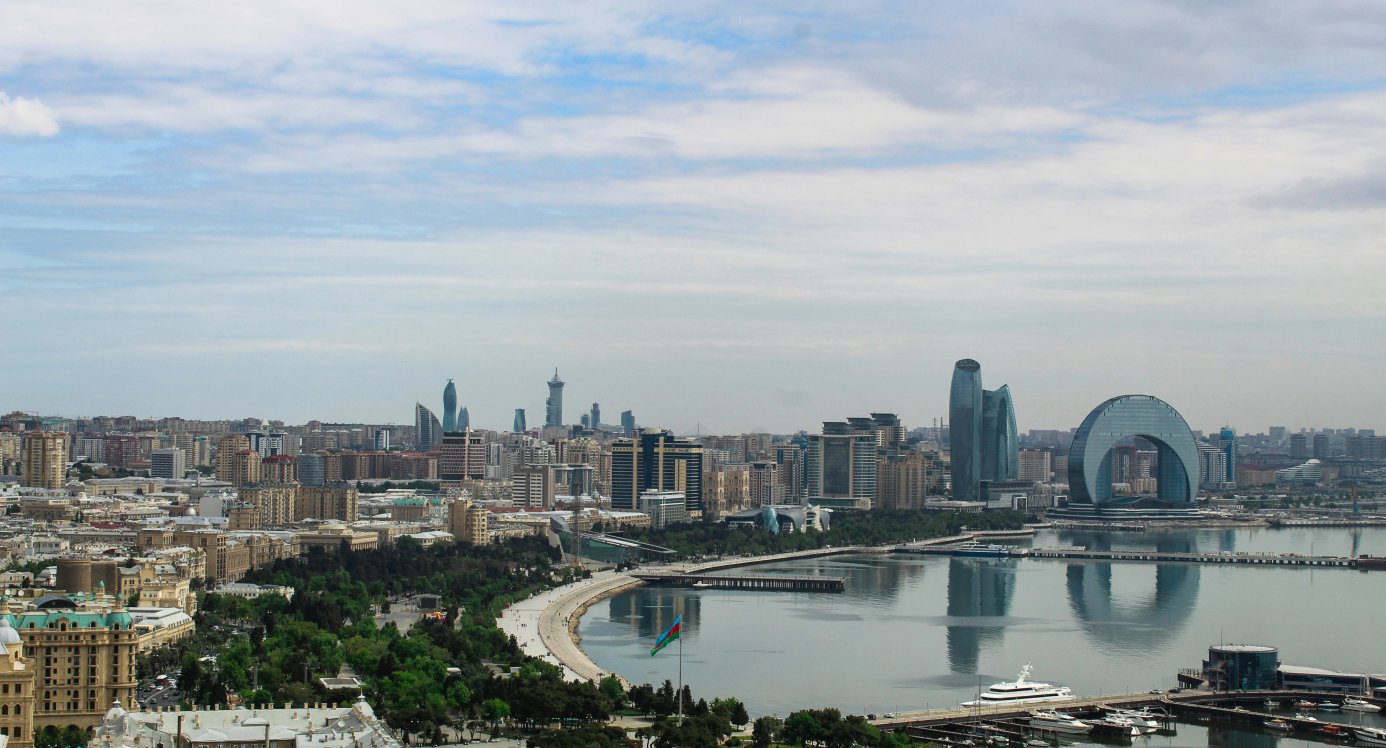
Baku offers the country’s broadest choice of residential and commercial investment property. Central and established districts such as Sabail, Nasimi, Narimanov, Yasamal and Khatai attract buyers because of employment, infrastructure, education, transport and rental demand. Different strategies suit different districts.
Central apartments tend to have higher entry prices but usually benefit from deeper rental demand and better resale liquidity. New residential complexes attract tenants seeking modern buildings, parking, security and amenities. Emerging areas may have lower initial prices and stronger capital-growth potential, but investors take more development and location risk.
As of August 2026, the median asking price for new-build apartments in Baku was €1,434 per m². The market had corrected slightly from July but remained 5% above December 2025. Baku also has relatively low annual property tax for private individuals compared with the asset value. The State Tax Service states that residential property tax in Baku is calculated at €0.2 per m² on the portion of residential area exceeding 30 m², adjusted by a location coefficient ranging from 0.7 to 1.5.
 From $88,000
Completion in: 2028.II Total of 2733 apartments
 From $88,000
Completion in: 2028.II Total of 2733 apartments
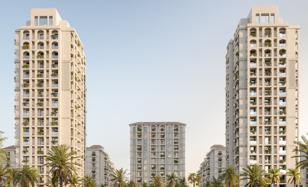 From $157,000
Completion in: 2028.II Total of 2733 apartments
 From $222,000
Completion in: 2028.II Total of 2733 apartments
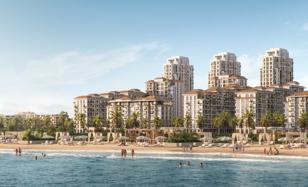 From $338,000
Completion in: 2028.II Total of 2733 apartments
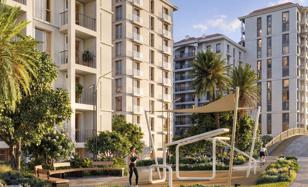 From $504,000
Completion in: 2028.II Total of 2733 apartments
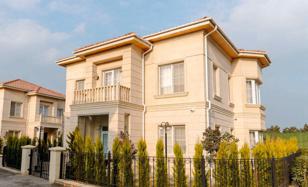 $800,000
Total area 230 m² Land area: 604 m²
 $2,500,000
Total area 393 m² Land area: 1,200 m²
Investing in Sea Breeze Real Estate
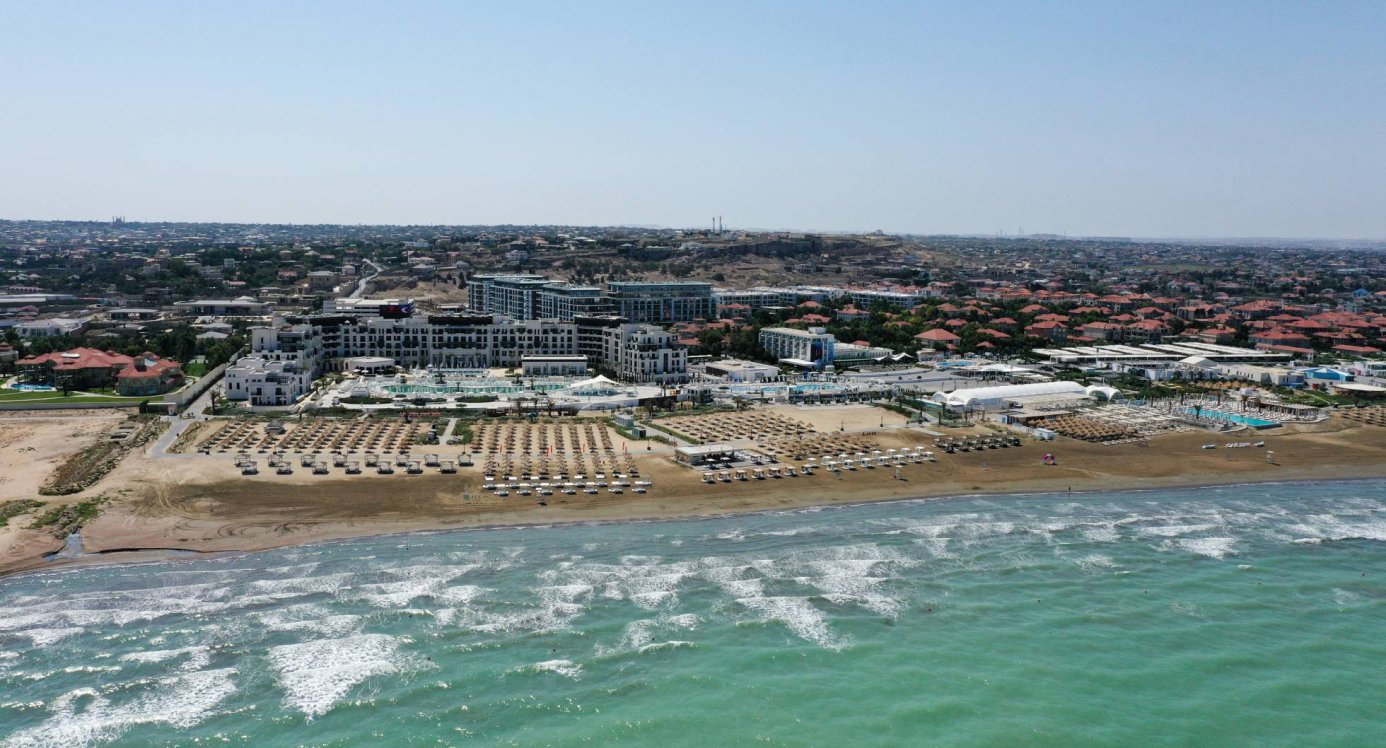
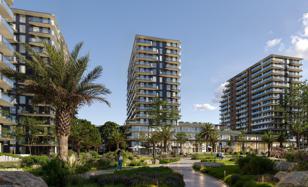
Sea Breeze has developed into a separate investment segment within Azerbaijan property investment. Located on the Caspian coast near Baku, the project combines apartments, villas, hotels, beaches, retail, restaurants, sports facilities and other leisure infrastructure.
According to the developer, Sea Breeze currently extends over around 1,000 hectares and includes more than 3.5 million m² of completed residential and commercial real estate. Expansion to approximately 1,850 hectares and more than 250 additional projects is planned by 2030. These are developer plans rather than independent market forecasts.
From $88,000
Completion in: 2028.II Total of 2733 apartments
From $88,000
Completion in: 2028.II Total of 2733 apartments
From $157,000
Completion in: 2028.II Total of 2733 apartments
From $222,000
Completion in: 2028.II Total of 2733 apartments
From $338,000
Completion in: 2028.II Total of 2733 apartments
From $504,000
Completion in: 2028.II Total of 2733 apartments
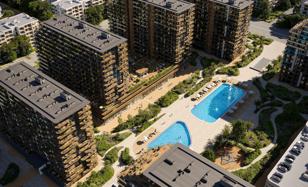 $87,000
Total area 28 m² 1 bathroom
 $237,000
Total area 75 m² 1 bedroom
Sea Breeze Investment Strategies
Investors can choose between:
- completed apartments for immediate rental;
- off-plan apartments;
- villas and townhouses;
- premium waterfront units;
- branded or serviced residences;
- properties placed with the resort’s management company.
The entry threshold also differs significantly between projects. Sea Breeze currently advertises investment units starting from around €79,300.
Rental Potential
Sea Breeze promotes short-term rental as a core investment strategy. The developer reports rental yields from 8% annually for its projects and historical property-value growth of 15–35% per year. However, Sea Breeze explicitly states that these figures are based on statistics from projects completed in 2023–2025 and do not guarantee future returns.
For an investor, actual returns depend on:
- purchase price;
- unit location;
- proximity to the beach;
- seasonality;
- occupancy;
- nightly rates;
- management commission;
- utilities and maintenance;
- taxes;
- future competition from new units.
Sea Breeze therefore has a different risk profile from a long-term rental apartment in Baku. Potential returns may be higher, but they depend more heavily on tourism and seasonal occupancy.
Future Supply
The scale of future development is one of the most important factors when assessing Sea Breeze. Additional hotels, restaurants, schools and leisure infrastructure could make the destination more attractive throughout the year. At the same time, hundreds of planned projects can substantially increase competing residential supply. Investors should therefore assess individual buildings and phases rather than assuming that all Sea Breeze property will perform identically.
Other Locations for Property Investment in Azerbaijan
Absheron Peninsula
The wider Absheron Peninsula includes suburban housing, coastal projects and villa communities. It can offer lower entry prices than central Baku and may appeal to buyers looking for larger homes, coastal property or long-term suburban growth. Transport access, utility infrastructure and legal documentation are particularly important when evaluating these properties.
Sumgait
Sumgait is a major urban and industrial centre close to Baku. Residential prices tend to be lower than in the capital. Investment demand is primarily supported by the local population rather than international tourism, making the market more relevant to long-term rental and local resale strategies.
Gabala and Other Tourist Regions
Gabala and other leisure destinations offer opportunities in villas, holiday accommodation, boutique hotels and tourist services. These markets are much smaller than Baku and generally more seasonal. The investment case therefore depends heavily on occupancy and tourism demand.
How Much Does It Cost to Invest in Azerbaijan
There is no universal minimum for investment in Azerbaijan. For property, the required amount depends on location and unit size. Using the August 2026 Baku median new-build asking price of about €1,434 per m², even relatively small apartments can require substantial capital before furnishing and transaction expenses are included.
Sea Breeze advertises an entry threshold from approximately €79,300, although premium beachfront projects can cost considerably more. Business investment varies much more widely. A small service company may require limited initial capital, while logistics, manufacturing and renewable-energy projects can involve millions of dollars.
Investors should calculate the full cost rather than only the acquisition price. Depending on the investment, additional costs can include:
- registration and notarial expenses;
- renovation or furnishing;
- management fees;
- maintenance charges;
- taxes;
- professional due diligence;
- financing costs;
- vacancy periods;
- working capital for businesses.
Returns on Investment in Azerbaijan
Returns depend on the type of investment.
Rental Income
A completed Baku apartment may provide relatively stable long-term income but is likely to offer lower gross yields than a successful holiday property. Sea Breeze targets higher short-term rental returns, but income is more seasonal and management costs can be higher.
Capital Appreciation
Property values can increase as infrastructure improves or a project approaches completion. In August 2026, new-build apartment asking prices in Baku were approximately 5% above December 2025, while resale prices were 4.2% higher. Past growth should not be treated as a forecast. Investors purchasing after a strong period of appreciation may achieve lower subsequent returns.
Business Returns
Direct business investment can offer significantly higher returns than passive assets but introduces operating, competitive and management risks.
Bonds and Deposits
Fixed-income assets offer a more predictable cash-flow structure than equity or property, but investors must consider issuer risk, inflation, interest rates and currency.
How Foreigners Can Invest in Azerbaijan
Foreign investors can use several investment structures. The Azerbaijani foreign investment framework permits foreign investors to:
- establish wholly foreign-owned enterprises;
- invest jointly with Azerbaijani partners;
- acquire shares and other securities;
- purchase assets that may legally be owned by foreigners;
- obtain contractual and lease rights.
The State Tax Service also provides a registration process specifically for companies with foreign investment.
Property Ownership
Foreign citizens can acquire apartments and other buildings, subject to normal registration requirements, but cannot directly own land in Azerbaijan. Article 48 of the Land Code states that foreigners, stateless persons, foreign legal entities and international organisations may acquire land only under lease rights.
This distinction is particularly important when buying detached houses, villas or development sites. The rights to the building and the underlying land need to be reviewed separately. Ownership rights to real estate generally arise through registration in the State Register of Real Estate.
Taxes on Investment in Azerbaijan
Taxation depends on whether the investor is an individual or company and on the type of income.
Corporate Profit Tax
The standard corporate profit tax rate is 20%. The State Tax Service’s Tax Code extract confirms that resident and relevant non-resident enterprises are subject to profit tax and that the standard rate is 20%.
Rental Income
Under Article 124 of the Tax Code, rental income from movable and immovable property subject to withholding is generally taxed at 14%. Where rent is paid by an individual who is not registered as a taxpayer, the lessor is responsible for paying the tax under the applicable procedure.
Property Tax
Individual owners of residential property pay municipal property tax. In Baku, the basic rate is €0.2 per m² on the residential area exceeding 30 m², with a zone coefficient of 0.7–1.5. In Ganja, Sumgait and Absheron district, the base rate is €0.16 per m². The State Tax Service tax guide provides further information on property-tax obligations for resident and non-resident individuals.
Sale of Property
Property disposal can also create tax obligations. The State Tax Service notes that a notary certifying the disposal of land, residential or non-residential premises calculates the applicable simplified tax and transfers it to the state budget. The precise amount depends on the type and location of the property and the circumstances of the transaction.
Investment Incentives in Azerbaijan
Azerbaijan uses several separate incentive regimes.
Investment Promotion Certificates
For qualifying strategic projects, investment promotion certificates can be issued until January 1, 2029. The certificate provides seven years of benefits, including:
- exemption from property tax;
- exemption from land tax;
- exemption from customs duties on qualifying imported machinery and equipment;
- exemption from VAT on qualifying imported machinery and equipment;
- a 50% reduction in profit or income tax.
Industrial Parks
Residents of qualifying industrial parks benefit from a more extensive ten-year regime. According to the Economic Zones Development Agency, residents are exempt for ten years from corporate profit tax, property tax and land tax, as well as VAT and customs duties on qualifying machinery and technological equipment imported for production purposes.
Alat Free Economic Zone
AFEZ has its own legal and fiscal regime designed for export-oriented, high-value-added businesses. The official AFEZ website lists 0% corporate tax, VAT, property tax and customs duties and taxes among its incentives. Its FAQ also states that there is no local-partner requirement and no restriction on foreign ownership of an AFEZ legal entity. These incentives apply within the specific AFEZ regime and should not be assumed to apply to businesses operating elsewhere in Azerbaijan.
Risks of Investing in Azerbaijan
Every Azerbaijan investment opportunity should be assessed against its risks:
- Market liquidity. Property in central Baku may be easier to resell than a large villa, premium resort unit or regional property.
- Currency risk. An investor whose capital or financial obligations are denominated in another currency remains exposed to exchange-rate risk even if the investment performs well in manat terms.
- Economic concentration. Azerbaijan continues to have significant exposure to the energy sector. Changes in global energy markets can affect economic activity, government revenues and investment sentiment.
- Developer and construction risk. Off-plan property depends on the developer completing the project according to schedule and specification.
- Rental risk. Projected occupancy and rental rates may not be achieved. This is especially important for short-term and resort properties.
- Seasonality. Coastal and tourist destinations can produce strong summer income but substantially weaker off-season results.
- Supply risk. Large development pipelines can place pressure on resale values and rental occupancy. This issue is particularly relevant at Sea Breeze, where substantial additional construction is planned.
- Legal risk. Property title, encumbrances, building permits and registration must be checked before purchase. For foreigners, the legal status of the underlying land is also essential because direct foreign land ownership is restricted.
How to Invest in Azerbaijan Step by Step
1. Define the Investment Objective
Decide whether the priority is income, capital appreciation, diversification, business expansion or personal use.
2. Choose an Investment Sector
Compare real estate, financial assets, operating businesses and larger strategic projects.
3. Determine the Budget
Include not only the purchase or investment amount but also taxes, fees, renovation, management, working capital and contingency reserves.
4. Compare Expected Returns
For property, review realistic rental data and actual market prices rather than only developer projections. For a business, build cash-flow and sensitivity scenarios.
5. Conduct Due Diligence
For real estate, verify registered ownership, encumbrances and construction documentation. For a company, review financial statements, liabilities, licences, contracts and beneficial ownership.
6. Select the Investment Structure
A private individual may purchase an apartment directly, while a business or large project may require a local legal entity or a special-zone structure.
7. Complete Registration
Real estate ownership must be properly registered, while a company with foreign investment must follow the commercial-registration procedure.
8. Monitor Performance
Track rental income, occupancy, operating expenses, property values or business KPIs after the investment is completed.
Azerbaijan Investment Outlook
The Azerbaijan investment outlook is supported by continuing economic diversification, infrastructure spending and growing activity in several non-oil sectors. Official data for January—August 2026 show:
- GDP growth of 1.2%;
- non-oil and gas GDP growth of 2.1%;
- non-oil and gas industrial growth of 5.4%;
- transport and storage growth of 8.7%;
- information and communication growth of 10.7%;
- fixed-capital investment growth of 10%.
Renewable energy is likely to remain one of the major strategic investment themes. The government plans around 8 GW of renewable capacity by 2032 and is attracting private capital into solar, wind, offshore wind, storage and grid infrastructure. Real estate is likely to remain important as well, particularly in Baku and on the Absheron coast. However, the 2026 data suggest a more selective market: Baku sale prices have risen while apartment rents have remained broadly flat.
For Sea Breeze, continued infrastructure development could support both property values and rental demand, but the extensive future supply pipeline should remain part of any investment analysis. Overall, Azerbaijan is becoming a more diversified investment market, but expected returns increasingly depend on sector selection, individual asset quality and investment structure rather than on general economic growth alone.
FAQ about invest in Azerbaijan
Azerbaijan offers opportunities in property, renewable energy, manufacturing, logistics, technology, tourism and other sectors. The suitability of the market depends on the investor’s objectives, risk tolerance and investment horizon.
For private investors, residential property and securities are among the more accessible options. Larger investors may consider manufacturing, logistics, renewable energy, hospitality and projects benefiting from industrial-zone or investment-promotion incentives.
Investment options in Azerbaijan include real estate, direct business ownership, company shares, corporate and government bonds, bank deposits, private equity and large industrial or infrastructure projects.
Yes. Foreign investors can establish companies, participate in Azerbaijani businesses, acquire securities and purchase assets allowed under local legislation.
Foreigners can acquire buildings and apartments, but direct foreign ownership of land is restricted. Foreign citizens and foreign legal entities may generally obtain land through lease rights.
Property can generate rental income and capital appreciation, but profitability varies significantly by location, property type and purchase price. In Baku, sale prices increased during 2026 while long-term rents showed much weaker growth, so investors should calculate yields on individual properties rather than rely on market-wide assumptions.
Baku offers the country’s deepest residential and rental market. Sea Breeze offers a resort-oriented strategy with short-term rental potential, while the wider Absheron Peninsula and regional cities generally have lower entry prices but lower liquidity.
Sea Breeze can be attractive for investors seeking new-build resort property, short-term rental income and potential capital appreciation. The developer advertises rental yields from 8%, but states that its figures are based on previous project performance and are not guaranteed. Its risks include seasonal demand, management costs and substantial future supply.
There is no statutory universal minimum investment. The amount depends on the asset. Sea Breeze advertises units from around €79,300, while Baku property costs vary widely according to size and district. Business and infrastructure projects can require substantially larger capital commitments.
Key risks include liquidity, currency exposure, economic concentration, construction risk, rental-market fluctuations, legal due diligence and, in tourism property, seasonality.
We will send you a content digest not more than once a week