Buying Property in Ras Al Khaimah: a Buyer’s Guide
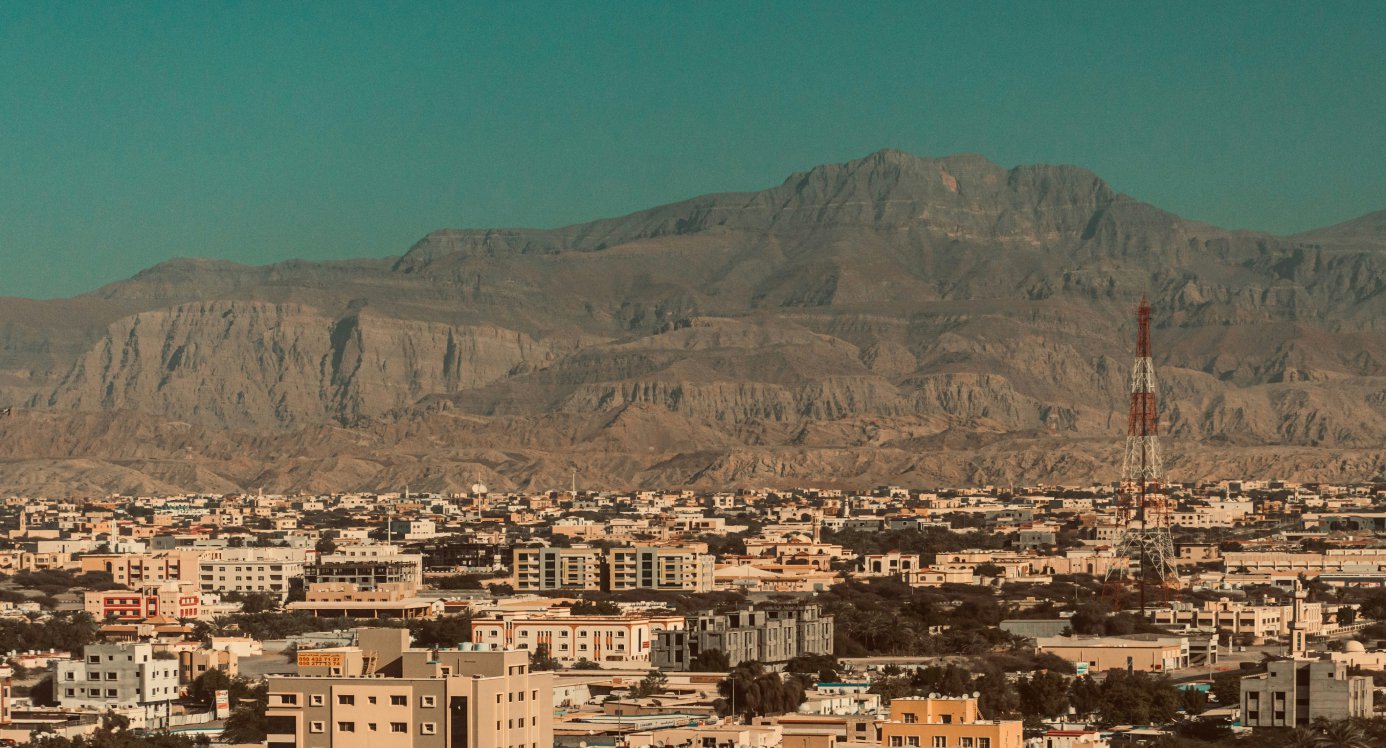
Buying property in Ras Al Khaimah has become increasingly relevant for international investors and people looking for a home in the UAE outside Dubai and Abu Dhabi. The emirate combines established waterfront communities, new resort developments, freehold ownership opportunities for foreigners and a growing tourism economy.
Foreign nationals can own property in designated freehold areas. Ras Al Khaimah Municipality currently lists Al Hamra Village, Mina Al Arab, Al Marjan Island, RAK Central, Julphar Towers and plots in Al Maareedh among the freehold locations, with additional development areas also emerging.
The regulatory framework has also recently been updated. Ras Al Khaimah introduced Law No. 10 of 2026 regulating real estate development, replacing the previous 2023 framework. Buyers of off-plan property should therefore make sure that the developer, project, sale documentation and escrow arrangements comply with the current rules.
Overview of the Real Estate Market in Ras Al Khaimah
Ras Al Khaimah’s property market includes apartments, villas, townhouses, branded residences, waterfront developments and residential land. The most internationally oriented part of the market is concentrated in freehold coastal communities such as Al Marjan Island, Al Hamra Village and Mina Al Arab.
Official statistics show that total registered real estate transactions reached approximately AED 18.8 billion in 2025, compared with AED 15.1 billion in 2024. The 2025 total consisted of approximately AED 3.2 billion in registered sales, AED 12.7 billion in mortgages and AED 2.9 billion in waivers and related transactions. These categories should not be confused: growth in total transaction value does not necessarily mean that property sale prices increased by the same percentage.
The tourism sector is another important factor influencing residential development. Ras Al Khaimah Tourism Development Authority recorded 1.35 million overnight visitors in 2025, up 6% year on year, while tourism revenues increased by 12%. The emirate is targeting more than 3.5 million annual visitors by 2030. This expansion is supporting new residential and hospitality projects, particularly along the coast. Al Marjan Island alone has more than 18,000 residential units planned as part of its long-term masterplan.
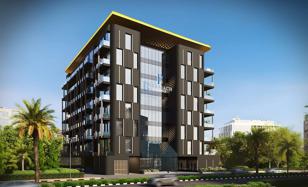 From $636,000
Completion in: 2027.II Total of 92 apartments
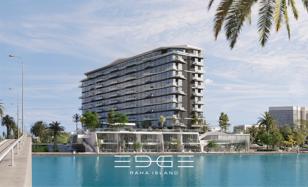 From $618,000
Completion in: 2027.II Total of 100 apartments
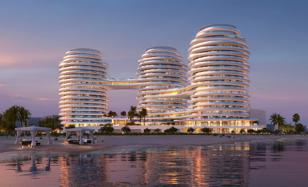 From $820,000
Completion in: 2028.I 355 units in total
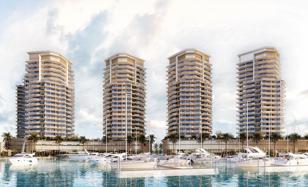 From $382,000
Completion in: 2027.I Total of 641 apartments
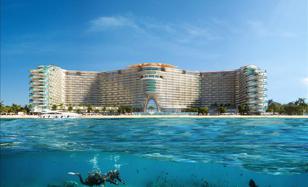 From $798,000
Completion in: 2026.IV Total of 1000 apartments
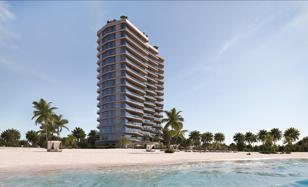 From $1,231,000
Built in 2024 Total of 151 apartments
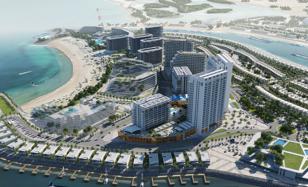 From $3,268,000
Built in 2026 Total of 668 apartments
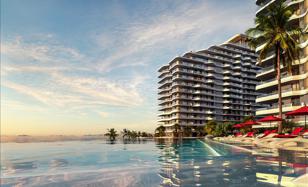 From $1,840,000
Completion in: 2028.I 803 units in total
Can Foreigners Buy Property in Ras Al Khaimah
Foreigners can buy and own property in designated freehold areas in Ras Al Khaimah. The current RAK Municipality property-sale service expressly states that both UAE and non-Emirati customers are entitled to own real estate in freehold areas. For foreign investors, the municipality’s registration documentation also provides for the use of passport copies.
Foreign ownership is therefore not limited to UAE residents. However, buyers should always confirm the status of the exact plot, building or development rather than assuming that every property in Ras Al Khaimah is available for foreign freehold ownership.
Freehold Areas and Ownership Rules
RAK Municipality currently identifies the following among the emirate’s freehold areas:
- Al Hamra Village;
- Mina Al Arab;
- Al Marjan Island;
- RAK Central;
- Julphar Towers;
- Al Maareedh, for specified plots.
The municipality also refers to the developing Beach District. Freehold ownership generally allows the purchaser to hold the property in their own name and receive a title deed after registration. The rules are different from leasehold or usufruct rights, so the nature of the title should be checked before purchase.
For resale property in a freehold development, RAK Municipality requires a no-objection letter from the developer as part of the standard sale-registration documentation. The municipality issues the title deed once the sale has been reviewed, approved and registered.
Buying Property for Israeli Citizens and Other Foreign Buyers
RAK Municipality’s publicly available registration rules do not establish a separate property-ownership regime for Israeli citizens. Instead, they distinguish generally between Emirati and non-Emirati buyers and state that non-Emirati customers may own property in designated freehold areas.
On the basis of these published rules, an Israeli citizen purchasing property is treated as a foreign buyer rather than being placed in a separate ownership category. The same principle applies to buyers of other foreign nationalities. Foreign investors may use their passport as part of the property-registration documentation.
However, property ownership rules and financial compliance are separate issues. Banks, developers, brokers and payment providers perform identity, source-of-funds and anti-money-laundering checks. A foreign buyer should therefore confirm payment and banking arrangements before transferring a reservation deposit, particularly when funds are arriving from outside the UAE. There is no separate RAK Municipality registration fee published specifically for Israeli nationals.
How to Buy Property in Ras Al Khaimah Step by Step
The purchasing procedure depends on whether the property is ready or off-plan and whether financing is involved. For a completed property, a typical transaction progresses from unit selection and due diligence through the sale agreement, developer NOC, payment and final registration with Ras Al Khaimah Municipality.
Selecting a Property and Making an Offer
The first step is to decide whether the property is intended for personal use, long-term rental, holiday letting or capital appreciation. For investment property, buyers should compare the following factors:
- recent sales of comparable units;
- achievable rent rather than advertised rent;
- service and community charges;
- unit condition and building age;
- developer reputation;
- view and proximity to the waterfront;
- future construction around the property;
- rental restrictions;
- resale liquidity; and
- the amount of competing supply expected in the same community.
Foreign purchasers should also verify that the exact unit can be registered as freehold in their name. For a ready unit, due diligence should cover the existing title deed, any registered mortgage, developer or community liabilities and the property’s physical condition.
For an off-plan unit, buyers should check the developer and project’s regulatory status and confirm the project’s escrow arrangements before transferring funds. RAK Municipality’s Real Estate Regulatory Administration states that developers selling units off-plan must register their projects and maintain project escrow arrangements.
Contracts, Payments and Registration
Once the commercial terms are agreed, the buyer and seller proceed with the contractual documentation. For a resale transaction, RAK Municipality lists documents such as the original property title, property plan, identification documents, power of attorney where applicable and a developer NOC for a freehold property. Passport copies are accepted in the case of foreign investors.
The municipality’s current procedure involves submitting the documentation, signing the sale contract, paying the applicable fees and completing the authority’s review. Once approved, a new title deed is issued. The updated service information lists a processing period of approximately three working days for the registration service.
For an off-plan purchase, payments should be made according to the SPA and the project’s approved payment arrangements. The project escrow system is intended to separate buyers’ project funds and regulate how developers can use them.
As of 2026, real estate development and off-plan regulation is governed by the emirate’s updated Law No. 10 of 2026. Buyers should therefore review current project documentation rather than relying on older explanations based solely on Law No. 12 of 2023.
Costs and Fees When Buying Property in Ras Al Khaimah
Transaction costs should be added to the advertised purchase price when calculating the total budget. For a standard real estate sale, RAK Municipality currently lists a registration charge of: 2% of the property’s market value for the buyer, and 2% of the property’s market value for the seller.
The municipality also lists an AED 200 plan issuance fee and an AED 200 title deed issuance fee for the standard transaction. Whether the parties contractually agree to allocate some expenses differently should be established before signing. Additional costs may include a real estate broker’s commission, developer NOC or administration charges, property inspection, legal assistance and bank costs if the purchase is financed. These are not all fixed government charges and can differ between transactions.
For a mortgage, RAK Municipality currently lists the mortgage contract registration charge as 0.001 of the mortgage value, equivalent to 0.1%. Mortgage borrowers are also subject to UAE Central Bank loan-to-value rules. For expatriates, the regulatory maximum for a first owner-occupied property worth up to AED 5 million is 80% of the property value. It falls to 70% for a first home above AED 5 million and 60% for a second, subsequent or investment property. The maximum LTV for an off-plan property is 50%.
These are regulatory ceilings; an individual bank may offer a lower amount depending on income, residency status, property valuation and its lending policy.
Best Areas to Buy Property in Ras Al Khaimah
The best location depends on whether a buyer prioritises waterfront living, rental income, a family home, an established secondary market or exposure to a new development district.
Al Marjan Island is one of the emirate’s most important waterfront investment locations. The four-island development has approximately 23 km of waterfront and more than 18,000 planned residential units, alongside a major hospitality pipeline. It is particularly relevant to buyers considering apartments, branded residences and premium waterfront property.
From $382,000
Completion in: 2027.I Total of 641 apartments
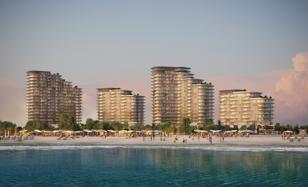 From $1,144,000
Completion in: 2027.I Total of 268 apartments
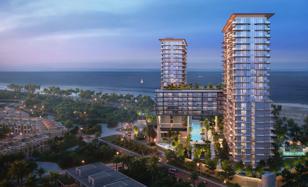 From $462,000
Completion in: 2029.IV Total of 600 apartments
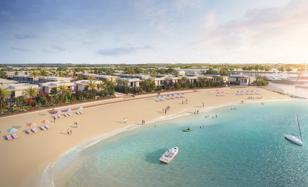 From $2,142,000
Built in 2024 502 units in total
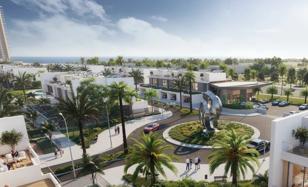 From $1,004,000
Completion in: 2028.IV 26 units in total
Al Hamra Village is a more established residential community with apartments, townhouses and villas. The developer describes the masterplan as containing around 4,000 homes together with beaches, a marina, golf course, hotels and community facilities. This combination can appeal to both owner-occupiers and long-term tenants.
Mina Al Arab, now increasingly marketed as Mina, is a large waterfront master-planned destination developed by RAK Properties. It includes apartments, villas, branded residences and new island developments across areas such as Hayat Island, Raha Island and the Lagoons.
From $618,000
Completion in: 2027.II Total of 100 apartments
From $3,268,000
Built in 2026 Total of 668 apartments
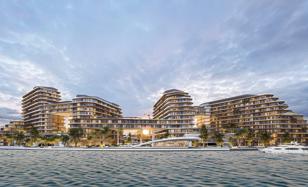 From $1,822,000
Completion in: 2027.I 880 units in total
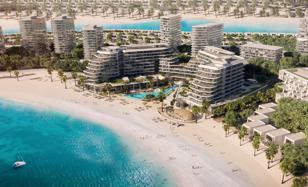 From $684,000
Completion in: 2026.IV Total of 200 apartments
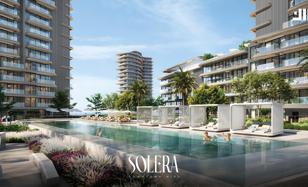 From $334,000
Completion in: 2028.II Total of 339 apartments
 From $1,318,000
Completion in: 2028.II Total of 339 apartments
 From $626,000
Completion in: 2028.III Total of 110 apartments
 From $3,499,000
Completion in: 2028.III 110 units in total
RAK Central is a newer mixed-use district. Marjan’s masterplan includes residential neighbourhoods, Grade A offices, retail, hospitality and public spaces. It may be relevant to buyers looking for exposure to an emerging urban rather than purely resort-oriented location.
Julphar Towers provides another option for buyers interested in a more central urban location. The development consists of a residential tower and an office tower and is expressly included by RAK Municipality in its current freehold-area list.
The strongest choice therefore depends on the investment strategy. A beachfront off-plan apartment on Al Marjan Island and an established apartment in Julphar Towers are both freehold investments, but they have very different demand drivers and risk profiles.
Off-Plan vs Ready Property
Ras Al Khaimah currently offers substantial choice in both off-plan and completed property:
- A ready property allows the buyer to inspect the exact unit, building and surrounding environment before purchasing. Existing rental history and service charges can also be examined, and a vacant property can potentially begin generating rent shortly after transfer. The secondary market may therefore suit buyers who prioritise current cash flow and greater visibility over operating costs.
- An off-plan property offers access to new developments and often uses staged payment plans. It may also allow buyers to enter a project before completion of the wider community.
However, off-plan purchases involve additional risks, including construction delays, changes in surrounding supply and uncertainty about future achievable rent. Ras Al Khaimah has a regulatory regime for off-plan projects and escrow accounts. The municipality’s Real Estate Regulatory Administration states that a developer selling or intending to sell units off-plan must register the project and open an approved project escrow account.
The governing development law was updated in 2026 through Law No. 10 of 2026, so buyers should ensure that the SPA and project procedures correspond to the current framework. For mortgage buyers there is another important difference: the Central Bank caps financing for off-plan property at 50% of value, while higher regulatory LTVs may be available for qualifying completed homes.
Is Ras Al Khaimah Property a Good Investment
Ras Al Khaimah has several factors that may support long-term residential demand: population growth, tourism expansion, new hospitality projects and continued development of freehold communities. Official tourism statistics recorded 1.35 million overnight visitors in 2025 and a 12% increase in tourism revenues. The emirate aims to exceed 3.5 million visitors annually by 2030.
At the same time, significant residential supply is planned. This creates opportunities but also means investors should assess future competition at the level of the specific community and property type. A good investment should therefore be judged primarily on the unit’s purchase price, achievable rent, recurring costs and exit liquidity rather than on the emirate’s headline growth alone.
Rental Returns and Capital Appreciation
There is no single official rental-yield percentage that applies across Ras Al Khaimah. Rental returns differ substantially between a studio, branded beachfront apartment, family townhouse and luxury villa. Even units in the same development can produce different returns depending on purchase price, view, furnishing and management costs.
A basic gross rental yield can be calculated as:
- Annual rental income ÷ purchase price × 100
For investment decisions, net yield is more useful. Service charges, maintenance, property management, vacancy and other recurring expenses should be deducted. Tourism growth can support demand in locations suitable for holiday accommodation, while population and employment growth can support conventional long-term rentals. However, short-term letting should not automatically be assumed to be available for every property; project and licensing requirements should be checked separately.
In terms of capital appreciation, Marjan currently reports a 2023–2025 compound annual growth rate of 18% for residential property prices in its RAK market materials. It also reports particularly strong growth in primary-market properties following major development announcements.
These figures are useful as a market indicator but are master-developer statistics rather than an emirate-wide government repeat-sales index. Investors should therefore compare recent transactions in the specific project rather than applying an emirate-wide appreciation assumption to an individual property.
Key Risks and Considerations
The strongest growth drivers also create some of the main risks. A large pipeline of new apartments and branded residences may increase competition for tenants and resale buyers. Al Marjan Island alone has more than 18,000 residential units planned, while additional large developments such as Marjan Beach and RAK Central are also progressing.
An investor should therefore consider how much comparable stock is scheduled for completion around the same time as their property. For off-plan purchases, buyers should verify the developer, project registration, escrow arrangements, expected completion date and contractual provisions dealing with delays, defaults and unit specifications.
For ready property, important checks include the title deed, registered mortgage status, developer NOC, outstanding amounts, service charges and physical condition. Investors should also avoid treating overall real estate transaction growth as equivalent to capital appreciation. For example, RAK’s total registered real estate transaction value rose to AED 18.8 billion in 2025, but most of that amount represented mortgages rather than property sales.
Finally, buyers using debt should consider interest-rate and valuation risk. The bank’s valuation may be below the negotiated purchase price, requiring the buyer to contribute more cash than expected.
FAQ about Buying Property in Ras Al Khaimah
Yes. RAK Municipality states that non-Emirati customers can own property in designated freehold areas.
The municipality currently identifies Al Hamra Village, Mina Al Arab, Al Marjan Island, RAK Central, Julphar Towers and certain Al Maareedh plots as freehold areas and also refers to the developing Beach District.
RAK Municipality’s public property-registration rules do not list a separate ownership restriction or registration category for Israeli citizens. They state generally that non-Emirati buyers can own property in designated freehold areas. Standard identity, KYC, source-of-funds and other compliance checks still apply.
The municipality’s property-sale documentation provides for passport identification in the case of foreign investors. Foreign ownership in a qualifying freehold area is therefore not presented as being conditional on UAE citizenship.
RAK Municipality currently lists 2% of the property’s market value for the buyer and 2% for the seller, plus AED 200 for the property plan and AED 200 for issuance of the title deed in a standard transaction.
The municipality lists the registration charge as 0.001 of the mortgage-contract value, equivalent to 0.1%.
Yes, subject to the lending bank’s requirements. Under UAE Central Bank regulations, expatriates may receive financing of up to 80% for a qualifying first owner-occupied property worth up to AED 5 million. Lower limits apply to more expensive first homes, investment properties, subsequent purchases and off-plan properties.
Yes. Real estate development and off-plan activity are regulated, with the framework updated by Law No. 10 of 2026. RAK Municipality’s regulatory system also provides for project registration and escrow accounts for off-plan developments.
For a standard sale, RAK Municipality lists the original ownership document, property plan, identification documents, a power of attorney where applicable and a developer NOC for freehold property. Foreign investors can provide passport copies.
RAK Municipality’s current sale-registration service states that the registration process takes approximately three working days once the required documentation has been submitted and the transaction is ready for registration.
It can offer attractive opportunities, particularly in waterfront and expanding freehold communities. Tourism reached a record 1.35 million overnight visitors in 2025, while major residential and mixed-use development continues. At the same time, the scale of future supply means that investment decisions should be based on the economics of the individual property rather than general market growth alone.
We will send you a content digest not more than once a week