Buying Property in France for a Legal Entity SCI in 2026

To optimise taxes on property ownership in France, as well as to manage funds more conveniently, our experts recommend registering a legal entity to invest in housing in France. The civil property company SCI (Société Civile Immobilière) is a real estate holding company incorporated under French law and it is an optimal solution, available to both residents and non-residents of the country.
What is SCI Needed?
The French tax system is notable for its complexity. French taxes are among the highest in the European Union. In this way, the country ensures the level of well-being and stability of its citizens and guarantees the security of expatriates of other states. By buying a property in France, an investor automatically becomes an active participant in the tax system.
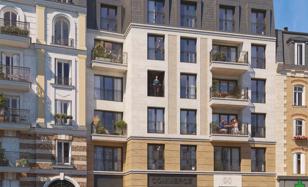 From 392,000 €
Completion in: 2029.II Total of 18 apartments
 From 1,920,000 €
Completion in: 2026.IV Total of 9 apartments
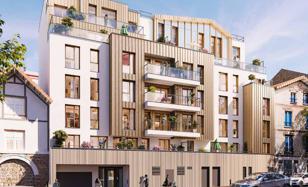 From 323,000 €
Completion in: 2027.IV Total of 35 apartments
 From 748,000 €
Completion in: 2026.IV Total of 9 apartments
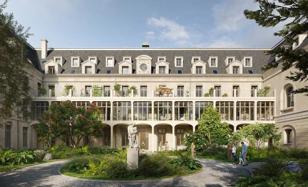 From 395,000 €
Completion in: 2029.I Total of 173 apartments
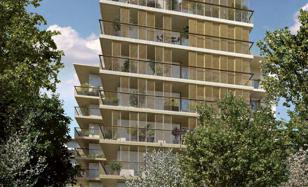 From 530,000 €
Completion in: 2028.II Total of 70 apartments
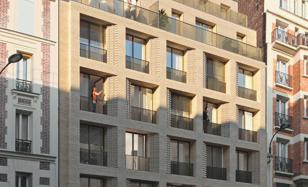 From 479,000 €
Completion in: 2027.III Total of 13 apartments
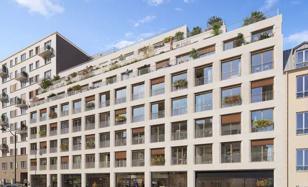 From 362,000 €
Completion in: 2028.IV Total of 16 apartments
One of the most important ways of minimising the tax on property ownership is to set up a non-profit company (SCI) specifically for the purpose of buying property. The participants in such an organisation are members of the same family, or a group of people, each of whom has their own share and is an equal owner of the property.
A family organisation may own more than one property. In this case, they can also be divided into shares between the members. Such a system makes it possible to simplify the inheritance process, which in France involves the payment by the heirs of up to 60% of the cost of the property, and also avoid paying luxury tax if the amount of your property investment exceeds 1.3 million euros.
The Tranio team can help with SCI registration and tax planning in France.
Contact us
Tax Optimisation in France
The principle of operation of a civil property company is that, upon registration, a family company charter is drawn up, which determines the number of participants and their shares in the cost of property. The charter determines the order of inheritance, sale, purchase and operation of real estate. According to the articles of association, there may be an unlimited number of shareholders, including both residents and non-residents of France. SCI participants may also be minor children. The standard duration of such a company is 99 years, with the possibility of renewal.
Setting up a family business is an optimal strategy, as there is no luxury tax to pay if the amount of your investment exceeds 1.3 million euros.
According to the legislation, if this limit is exceeded, property owners must pay a tax of up to 1.5% of the property value. However, if the cost of the property is divided according to the SCI charter between several owners — members of a family business — in accordance with the SCI Charter, and the size of each share does not exceed the specified limit, there is no need to pay the luxury tax.
Rental of Property in France
Real estate owned by an SCI can be rented out as unfurnished property (location nue). In this case, the SCI’s income is taxed under the Impôt sur le Revenu (IR) regime, with each shareholder paying tax proportionally to their ownership share.
French law distinguishes between unfurnished and furnished rentals. To qualify as a “furnished” rental, the property must contain a minimum set of items — a bed with a mattress, table, chairs, stove, refrigerator, dishes, and kitchen utensils. If any of these essentials are missing, the rental is considered unfurnished.
Rental income under the IR regime is included in the personal income tax return of each SCI shareholder and is taxed according to the progressive income tax scale (from 0% to 45% in 2025). In France, taxation applies not to an individual but to the entire foyer fiscal — that is, the household or PACS partnership, including dependent children.
Inheritance and Donation in France
The inheritance and donation procedure in France involves the compulsory payment by heirs of up to 60% of the value of the inherited property in the form of inheritance tax. The creation of a family real estate company allows you to reduce the percentage of tax paid, depending on the strategy chosen. Our experts recommend taking this factor into account when buying a home.
One possible strategy is to take advantage of the tax benefits for the heirs of SCI family businesses. According to this benefit, every 15 years during his or her lifetime, a child is entitled to receive a share of 100,000 euros from each parent without having to pay inheritance tax. The remaining amount is taxed at a progressive rate ranging from 5% to 45%.
Another strategy is the initial division of property rights between parents and children. In such a decision, the actual ownership of the property is registered to the children, but at the same time the parents are given a lifelong right to use and profit from the property. Such a system is called «usufruct» and comes from Roman law. At the end of the period for which the usufruct was established, it is cancelled and the children become full owners without paying any tax. It is important to note that if the term was not initially set, children receive full ownership rights when they reach the age of 16.
In addition, it is worth mentioning the process of adding a new member to an already established family real estate company. The entry of a new member is possible in two cases. The first is when a new member contributes to the company’s capital in any form (property, securities, money). In exchange for the contribution, he receives shares and rights to manage his share in the family business. The second is the sale of a share by an existing SCI member to a new participant in exchange for financial compensation.
We always advise our clients to register a family company in order to optimise the inheritance process when buying property in France. For more detailed information please contact our managers for a personal consultation.


How to Register an SCI in France
The procedure for registering a family real estate company is relatively quick. It is registered in the process of buying a property, in the interval between the signing of the preliminary contract and the final contract for the purchase of the property. All registrations are carried out by a notary.
The registration process has four stages:
- Drafting of the company’s charter.
- Publication in the Journal of Legal Notices (JAL).
- Registration with the Chamber of Commerce and Industry.
- Registration with the tax authorities.
A certificate of registration is then issued with information about the company and its founders.
In the charter of the company, it is important to list all the shareholders and the amount of their share in the value of the property. The company must also choose its name and legal address. The address can be either the actual address of the property, or any other address associated with the SCI participants. The founders can choose a manager from among the participants to optimise home accounting.
In 2025, all SCIs are required to register their ultimate beneficial owners (bénéficiaires effectifs) in the RBE (Registre des bénéficiaires effectifs). This obligation stems from European anti–money laundering and ownership transparency regulations.
The information must be submitted through the greffe du tribunal de commerce (online via Infogreffe or INPI) within 15 days of the SCI’s registration, and within 30 days in case of any change in shareholding. Failure to comply with these deadlines or providing false information may result in fines of up to €7,500 and even criminal liability for the manager.
SCI Annual Declaration
An annual declaration of the company’s activities must be submitted by 1 May each year. If the property is not used for rental, then the declarations are submitted zero. If there is a commercial rental activity (unfurnished), then the income of each participant is declared separately, as well as the income of an individual. Property and residence taxes for SCI participants do not differ from those of individuals.
Sale of an SCI in France
When a property is sold through an SCI (Société Civile Immobilière), it is the company itself that legally acts as the seller: the sale is executed in the name of the SCI, and the proceeds are credited to its account. These funds do not automatically belong to the shareholders — they remain part of the company’s assets. What happens next depends on the decision of the partners.
Option 1 — The SCI continues to operate.
The funds can be used to purchase another property, make new investments, repay debts, or build reserves. Shareholders receive income either through profit distribution (under the IR regime) or as dividends (under the IS regime), both of which are subject to taxation.
Option 2 — The funds are distributed among the shareholders.
In an SCI under the IR regime, the profit is declared in each shareholder’s personal tax return. Under the IS regime, the distribution is treated as dividends and taxed accordingly.
Option 3 — Dissolution of the SCI.
If the property sold was the company’s only asset and there are no plans for future investment, the partners may decide to liquidate the SCI. A shareholders’ meeting is held to appoint a liquidator, settle debts, and distribute the remaining assets. The liquidation is then registered with the commercial court.
Tax implications depend on the chosen regime.
- In an SCI taxed under IR, capital gains are subject to the individual capital gains tax rules, with allowances depending on the holding period.
- In an SCI taxed under IS, gains are subject to corporate income tax, and any subsequent distribution to shareholders is taxed again at the individual level.
In practice, if the partners intend to continue investing jointly, the SCI is usually maintained and the proceeds are reinvested. If the property was the company’s only asset, liquidation is the most common outcome.
We will send you a content digest not more than once a week
Сheap apartment in Paris for sale
Cheap houses for sale in Paris, France