Oman Regions — Administrative and Territorial Structure

The Sultanate of Oman was unified in 1970. Before this, the country was known as the Sultanate of Muscat and Oman, reflecting the historical distinction between the coastal areas around the capital and the autonomous inland regions.
Today, Oman is divided into 11 governorates (muhafazat), each further subdivided into smaller wilayats (districts), administered by local governors. This article provides an overview of the Sultanate’s administrative structure and assesses the investment appeal of its regions.
Dhofar Governorate
512,057 | 4.7% |
population | share of real estate transactions |
Dhofar, located in the southernmost part of Oman, borders Al Wusta governorate to the east, the Arabian Sea to the south, Yemen to the west, and Saudi Arabia to the north and northwest.
Its strategic location and coastline have enabled the development of one of the largest ports in the Persian Gulf region. The Salalah Free Zone in Dhofar is among Oman’s most significant industrial and investment hubs, attracting multinational corporations, regional enterprises, and local businesses.
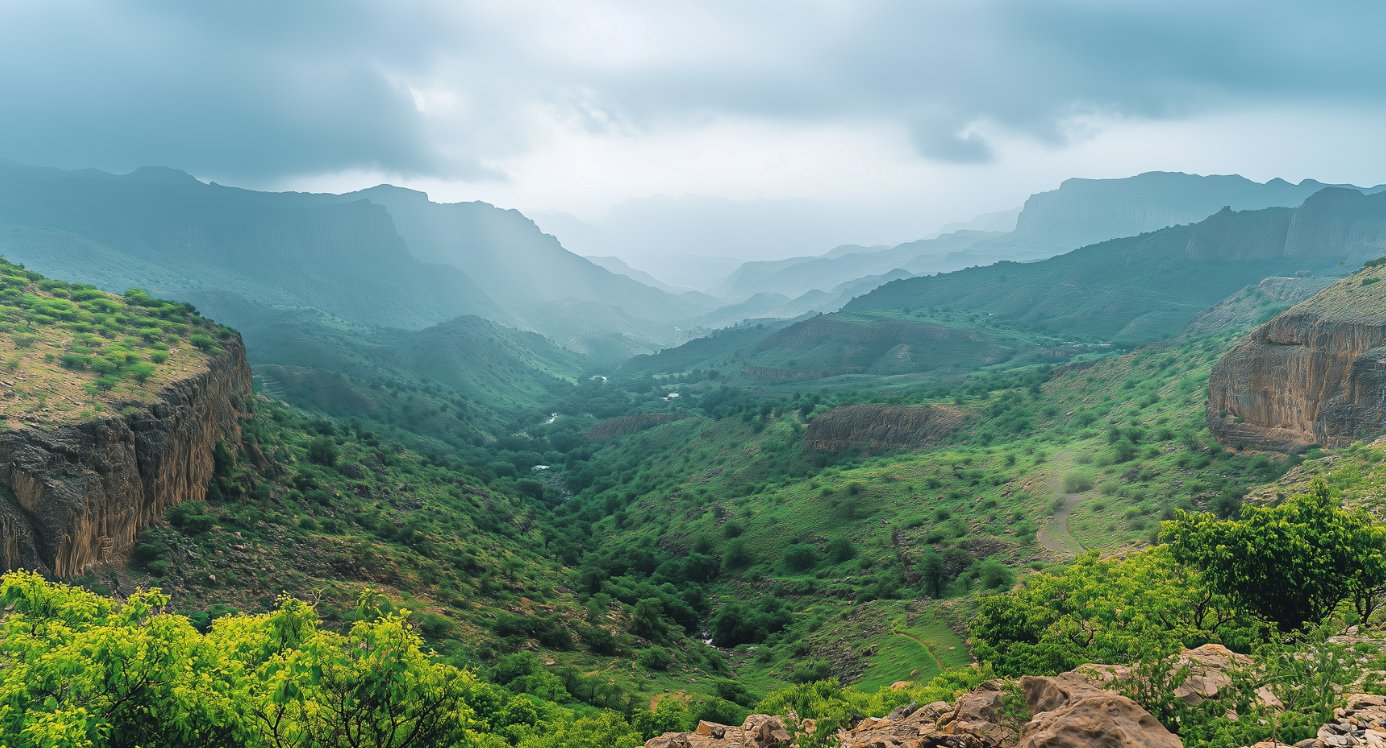
Dhofar is famous for its lush landscapes, freshwater springs, waterfalls, and tropical climate during the monsoon season.
The capital Salalah is a key investment destination for those interested in tourism real estate. The mild summer climate makes it a popular retreat for affluent residents of neighbouring countries, where temperatures are much higher.
Investment in Salalah’s Real Estate
Salalah primarily offers four- and five-star hotels with professional management, alongside luxury villa complexes. Short-term rental yields for resort properties in the region currently range from 8% to 10%, with long-term owners achieving up to 12%.
According to Hawana Salalah’s official website, one-bedroom villas in the Laguna Gardens community rent for $220 per night, while two-bedroom villas command $460 per night.
The resort operates year-round, and its carefully designed bays with breakwaters ensure that swimming conditions remain ideal for visitors.
Beyond Gulf residents, Salalah is attracting tourists from Eastern Europe, including visitors from Slovakia, Poland, and the Czech Republic. This emerging trend suggests potential real estate investments from Eastern European buyers and a gradual capital influx into Oman.
Muscat Governorate

1,461,020 | 25.8% |
population | share of real estate transactions |
Muscat stretches along the Gulf of Oman and has been an important trading hub since the 1st century AD, connecting East and West. Historically, it attracted merchants and settlers, and today, it continues to draw international investors due to its business-friendly environment.
Muscat is a rapidly growing metropolis with affluent residents and well-developed urban and tourism infrastructure. Several new communities are under construction in central districts, while coastal and hillside villas are being developed in the suburbs.
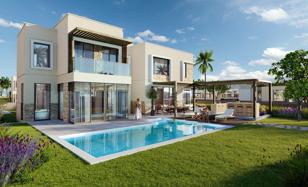 From $516,000
Completion in: 2028 84 units in total
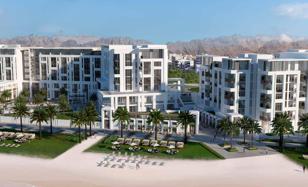 From $442,000
Built in 2023 Total of 156 apartments
 From $491,000
Completion in: 2028.IV Total of 140 apartments
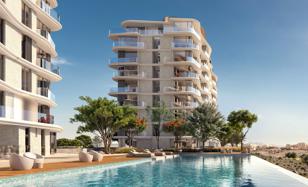 From $362,000
Completion in: 2028.III Total of 244 apartments
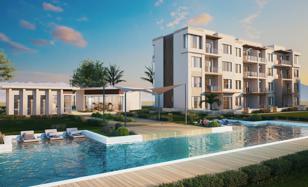 From $96,000
Completion in: 2028.IV Total of 45 apartments
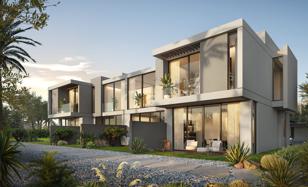 From $495,000
Completion in: 2028.I 20 units in total
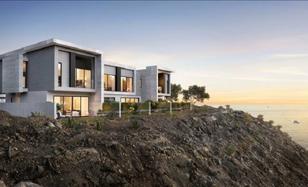 From $1,258,000
Completion in: 2028.IV 30 units in total
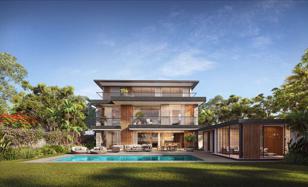 From $3,896,000
Completion in: 2027.I 43 units in total
Investment in Muscat’s Real Estate: Promising Districts
By 2025, demand is increasing in western districts such as Al Ghubra, Al Khuwair, and Airport Heights. These areas are seeing the development of residential and mixed-use complexes, the establishment of corporate headquarters, hotels, and shopping centres, and government-backed infrastructure improvements.
Muscat’s expansion westward extends beyond Al Ghubra and Al Khuwair to include Al Maabela, where a key urban project is underway: Sultan Haitham’s Smart City, a 1,480-hectare megaproject.
AIDA — Muscat’s Largest Resort Community and a Prime Investment Opportunity

One of Oman’s most ambitious real estate projects, AIDA aims to create a world-class resort cluster in the Gulf region. Located just 20 minutes from Muscat city centre, AIDA is set amid picturesque mountains and coastal hills overlooking the Gulf of Oman.
Major brands have shown confidence in AIDA, with Trump Hotels and Marriott developing branded residences and villas. Additionally, Trump International Golf Club is investing $500 million in a state-of-the-art golf course.
Purchasing any property in AIDA qualifies investors for Oman’s Golden Visa Programme.
Shatti Al Qurum
Shatti Al Qurum, a prestigious beachfront district, resembles Greek coastal towns with its white-and-blue villas.
The area is home to some of Muscat’s finest restaurants, bars, and cafés, as well as the Royal Opera House, Opera Gallery, and luxury boutiques including Armani and Patek Philippe. Rental prices and property values here are among the highest in Muscat.
From $516,000
Completion in: 2028 84 units in total
From $495,000
Completion in: 2028.I 20 units in total
From $1,258,000
Completion in: 2028.IV 30 units in total
From $3,896,000
Completion in: 2027.I 43 units in total
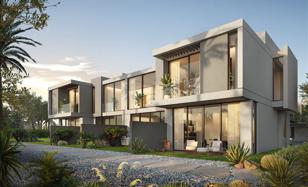 From $469,000
Completion in: 2027.IV 150 units in total
Al Mouj (The Wave)
Al Mouj, known as The Wave, is a high-end gated community popular with expats. It offers a private beach, playgrounds, and top-tier hotels like Kempinski. Water sports enthusiasts can enjoy the marina and sailing schools.
Tranio’s experts can help you select the best real estate opportunities in Oman and other Gulf countries. Contact us to receive a tailored selection of investment properties.
Submit a Request
Musandam Governorate
54,088 | 0.4% |
population | share of real estate transactions |
Musandam is a peninsula exclave of Oman, separated from the country’s main territory by the United Arab Emirates. Today, it is primarily a tourism-focused region, with cruise ships frequently docking at its port.
Nicknamed the «Norway of Arabia», Musandam is famous for its rugged fjord-like coastline surrounded by dramatic mountains. The fjords are the region’s main attraction, and traditional dhow boats continuously navigate its waters, offering tours to visitors.
Developers show moderate interest in this market, as it lacks significant investment potential and strong demand. Most tourists visit Musandam as part of a short stopover or cruise itinerary, rather than as a long-term destination.
North Al Batinah Governorate
900,705 | 7.4% |
population | share of real estate transactions |
North Al Batinah is a key industrial and transportation hub in Oman, with well-developed infrastructure, including the Port of Sohar and the Sohar Free Zone.
The region has experienced significant growth in manufacturing, logistics, and services, though it remains dependent on the oil sector. Many investors focus on low-risk industries, leaving sectors like agriculture and small businesses underfunded.
The Sohar Free Zone provides direct access to markets in the Middle East, India, and East Africa. Since 2010, it has become one of the largest and most successful industrial zones in the GCC, attracting $27 billion in investment.
As Oman’s real estate market stabilises, housing prices in North Al Batinah have outpaced all other regions. Since September 2023, the region’s price index has risen by 13.2%.
South Al Batinah Governorate
535,357 | 15.1% |
population | share of real estate transactions |
This region holds high potential in the tourism and agricultural sectors. It is home to historical sites, forts, and natural landmarks, such as Rustaq Fort and mineral hot springs.
The Ayn Al Kasfa hot springs serve as a basis for recreational resorts, while valleys and pristine beaches offer great opportunities for tourism development.
South Al Batinah is also known for its fertile land, making modernisation of agriculture and agritourism development viable investment areas.
Despite its significant share of real estate transactions, property demand in South Al Batinah remains largely local — foreign buyers typically prefer Muscat or Salalah.
Ash Sharqiyah North Governorate
311,993 | 2.3% |
population | share of real estate transactions |
This northeastern province is an important tourism and cultural hub, bordered by the Arabian Sea and the Sharqiyah Sands Desert.
North Ash Sharqiyah connects the Eastern Hajar mountains with fertile oases like Al Huwayah. The region remains a centre for traditional agriculture and livestock farming, with camel, horse, and cattle breeding forming an integral part of Bedouin culture.
Tourists are drawn to ancient forts and castles, including over 1,000 fortified structures that were once political and social hubs. Among them, Al Muntarib Fort, located in Bidiya, stands out as a prominent landmark.
The Sharqiyah Sands is one of Oman’s most renowned desert destinations, featuring vast dunes that shift from red to golden hues. It attracts camping and adventure tourism enthusiasts.
Ash Sharqiyah South Governorate
361,795 | 2.1% |
population | share of real estate transactions |
South Ash Sharqiyah is the first place in the Arabian Peninsula to witness the sunrise. Stretching along the Arabian Sea, the region is a major centre for Oman’s fishing industry.
The capital, Sur, played a key historical role in shipbuilding and maritime trade. Today, Sur remains a symbol of Oman’s seafaring heritage.
This governorate also boasts UNESCO-listed sites, including Qalhat, and the Masirah Island, a key nesting ground for rare turtles, making it a major ecotourism attraction.
Ad Dakhiliyah Governorate
546,218 | 6.1% |
population | share of real estate transactions |
The majority of this region consists of an elevated plateau descending from the northern slopes of the Green Mountain (Jabal Akhdar) to the desert in the south. Nizwa, the administrative centre of the region, is located 164 kilometres from the capital, Muscat. It serves not only as a transportation hub but also as the cultural heart of the region. Nizwa Fort, built in the 17th century, stands here, along with a traditional market that continues to showcase Arabian craftsmanship, including carpet weaving and copperwork.
Ad Dhahirah Governorate
238,954 | 2.9% |
population | share of real estate transactions |
A semi-desert plain stretching from the southern slopes of the Western Hajar Mountains towards the Rub’ al Khali desert. Once a famous caravan trading post, it now holds more historical than economic significance. The proportion of local residents employed in the region is declining, while foreign visitors are primarily drawn to its historical sites.
The governorate is home to more than a thousand forts, castles, and watchtowers that have historically safeguarded Oman’s plains, valleys, and mountains. One of its key historical landmarks is the Ibri Fort, which stood at the heart of the city and regional capital 400 years ago.
Al-Buraimi Governorate
130,618 | 1.7% |
population | share of real estate transactions |
The Sultanate’s government has high hopes for Al-Buraimi as a future economic centre. Plans include the construction of a railway to strengthen ties with the UAE, the renovation of 100 km of roads, and the development of a special economic zone with attractive conditions for investors.
In 2025 the region is implementing 77 projects worth approximately 14 million rials ($36.3 million), including the «Al-Buraimi Oasis» and Downtown Al Buraimi projects, the creation of artificial lakes and irrigation systems, and the expansion of tourism and economic infrastructure. Additionally, roads in villages and smaller districts of the governorate are being constructed and upgraded with modern lighting.
Al-Wusta Governorate
60,266 | 0.8% |
population | share of real estate transactions |
In January 2024, Al-Wusta planned to invest around 6 million rials ($15 million) into tourism development projects. Primarily recognised as a hub for energy and mineral resource investments, the region plays a crucial role due to its Special Economic Zone in Duqm.
The government of Al-Wusta is focusing on the development of coastal areas such as Sawqrah in Al-Jazir, Al-Lakbi in Ras Madrakah, and Shannah in Mahut. Additionally, plans are underway to expand green spaces, with the creation of parks and gardens in every wilayat.
How Many Governorates Oman Had Before 2011
Before 2011, Oman was divided into five major administrative governorates (muhafazat) and four smaller regions (mintaqat):
- Muscat — the capital and principal city of the country.
- Musandam — a northern exclave bordering the UAE, strategically significant for controlling the Strait of Hormuz.
- Dhofar — the southernmost region.
- Al-Buraimi — the northwestern part of Oman, bordering the UAE.
- Al-Batinah — a coastal region north of Muscat.
Smaller regions (mintaqat) before 2011:
- Ad Dakhiliyah.
- Ash Sharqiyah.
- Ad Dhahirah.
- Al-Wusta.
In 2011, an administrative reform transformed the mintaqat into governorates, and some existing governorates were further subdivided into northern and southern sections.
We will send you a content digest not more than once a week