Education in Greece: International schools in Athens
The Greek education system has three levels: primary, secondary and tertiary. Each level has two
Primary education
A child can be sent to a kindergarten when he/she turns 2½ years old. Although it is not necessary, many parents do so as this allows them to go to work, and their children to gain knowledge, develop learning skills and learn to socialise with other children. Parents will have to prepare their children for school themselves if they do not enrol them in kindergarten. Most children start attending preschool two years before admission to primary school, at 4 to 6 years old.
For a child to be admitted to kindergarten, a small package of documents needs to be submitted: application for admission to the kindergarten, birth certificate, medical records containing proof of vaccination of the child, a certificate from the dentist and a document confirming
The next level of education is primary education which lasts for six years. To enrol a child in primary school, parents will have to submit the same package of documents as they did for the kindergarten, adding a certificate of attendance to kindergarten. The period to submit the documents is from June 1 to June 21.
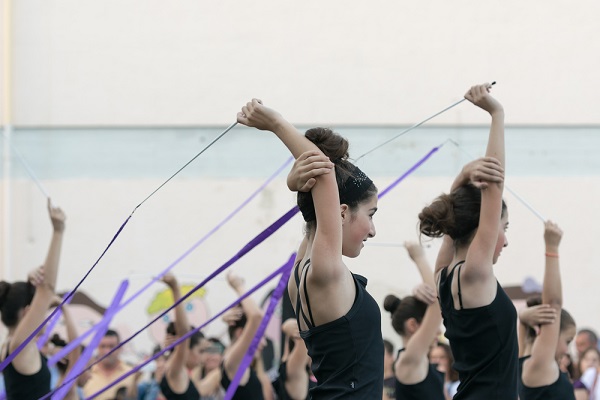
Foreign students can attend special Greek language classes after school, as well as other activities alongside where knowledge of Greek is not required. The main goal
For the first two years pupils do not receive any marks, while in the third and fourth years, children are graded A (excellent), B (very good), C (good) or D (fair). From the fifth year,
Secondary education
Secondary education is also divided into two levels: middle school (gymnasium), and high school (general lyceum or vocational school). Each level lasts 3 years, while
Usually, children are automatically enroled in secondary school, unless his/her family has changed their place of residence. In this case, parents must provide the new school with a certificate of primary education and a document confirming the residence or registration address.
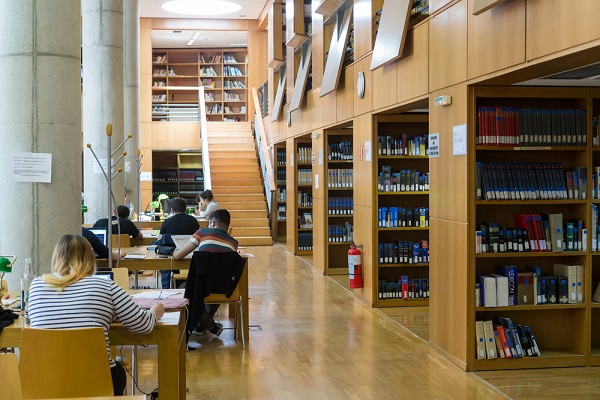
Secondary schools use
International schools in Athens
In addition to free public and municipal schools in Greece, there are private educational institutions and international schools for children of expats. The syllabus in international schools is based on unified standards, which facilitate the integration of students from abroad. Most often classes are in English, but they can also be in German, French or even Japanese. Education in such schools is usually
ACS Athens (American Community Schools)
ACS Athens is an international school that pursues the principles and values of the American educational system. The school focuses on developing the talents and abilities of every student.
ACS Athens is accredited by Middle States Association of Colleges & Schools and authorised by International Baccalaureate Organization to teach the IB program. Diplomas awarded under this program are recognised by universities around the world.
Children from more than 60 countries attend the school. Teaching and communication are in English, while Greek, Arabic, French, German, Chinese and Spanish are taught as foreign languages.
Activities, including sports like basketball, football, volleyball, athletics, archery, tennis and swimming are available for students after classes.
School fees for the 2017-2018 academic year at ACS Athens (€)
| Kindergarten (for children 3 to 4 years old) |
7,220 |
| Preschool (for children 5 to 6 years old) |
9,150 |
| Primary school (grades 1–5, 6–10 years of age) |
11,805 |
| Middle school (grades 6–8, 11–13 years old) |
12,876 |
| High school (grades 9–12, 14–17 years old) |
14,074 |
ISA (International School Athens)
More than 3.000 students have graduated from ISA international school in its
This school is in Kifissia, a northern suburb of Athens. Its three modern buildings have classes and laboratories and several sports grounds where children can play volleyball, football, basketball or tennis. The school has a theatrical stage, a ballroom, and art studios.
School fees for the 2017-2018 academic year at ISA (€)
| Kindergarten (for children 3 to 4 years old) |
7,500 |
| Preschool (for children 5 to 6 years old) |
7,900 |
| Primary school (grades 1–5, 6–10 years of age) |
10,500 |
| Middle school (grades 6–8, 11–13 years old) |
11,500 |
| High school (grades 9–12, 14–17 years old) |
12,350 |
Byron College (The British International School)
Byron College (The British International School) educates students in the spirit of Lord Byron. Students are to be idealists and advocates of justice, ready to challenge any scientific authority. the school pursues British values such as tolerance and a belief in personal and social responsibility.
Byron College is an accredited member of the Council of British International Schools (COBIS). Classes are conducted following the British educational system. After 11 years of study, students receive the International General Certificate of Secondary Education (IGCSE). Students spend the following two years preparing for entering university and sit for
Today, about 300 students from more than 50 countries are enroled at the school. Classes are in English.
School fees for the 2017-2018 academic year at Byron College (€)
| Kindergarten (for children 3 to 4 years old) |
6,450 |
| Key Stage 1 (1–2 grades, 5–6 years old) |
8,600 |
| Key Stage 2 (3–6 grades, 7–10 years old) |
8,900 |
| Key Stage 3 (7–9 grades, 11–13 years old) |
9,900 |
| Key Stage 4 (10–11 grades, 14–15 years old) |
10,500 |
| Key Stage 5 (12–13 grades, 16–17 years old) |
11,550 |
St. Catherine's British School
Senior students usually take part in charity projects. For example, they can teach languages at local refugee centres or save sea turtles, while others take part in projects in developing countries.
School fees for the 2017-2018 academic year at St. Catherine's British School (€)
| Kindergarten (for children 3 to 4 years old) |
8,050 |
| Key Stage 1 (1–2 grades, 5–6 years old) |
11,030 |
| Key Stage 2 (3–6 grades, 7–10 years old) |
11,160 |
| Key Stage 3 (7–9 grades, 11–13 years old) |
11,580 |
| Key Stage 4 (10–11 grades, 14–15 years old) |
12,510 |
| Key Stage 5 (12–13 grades, 16–17 years old) |
13,040 |
Olga Anisimova, Tranio
We will send you a content digest not more than once a week