Invest in Cambodia: Investment Opportunities for Foreigners in 2026
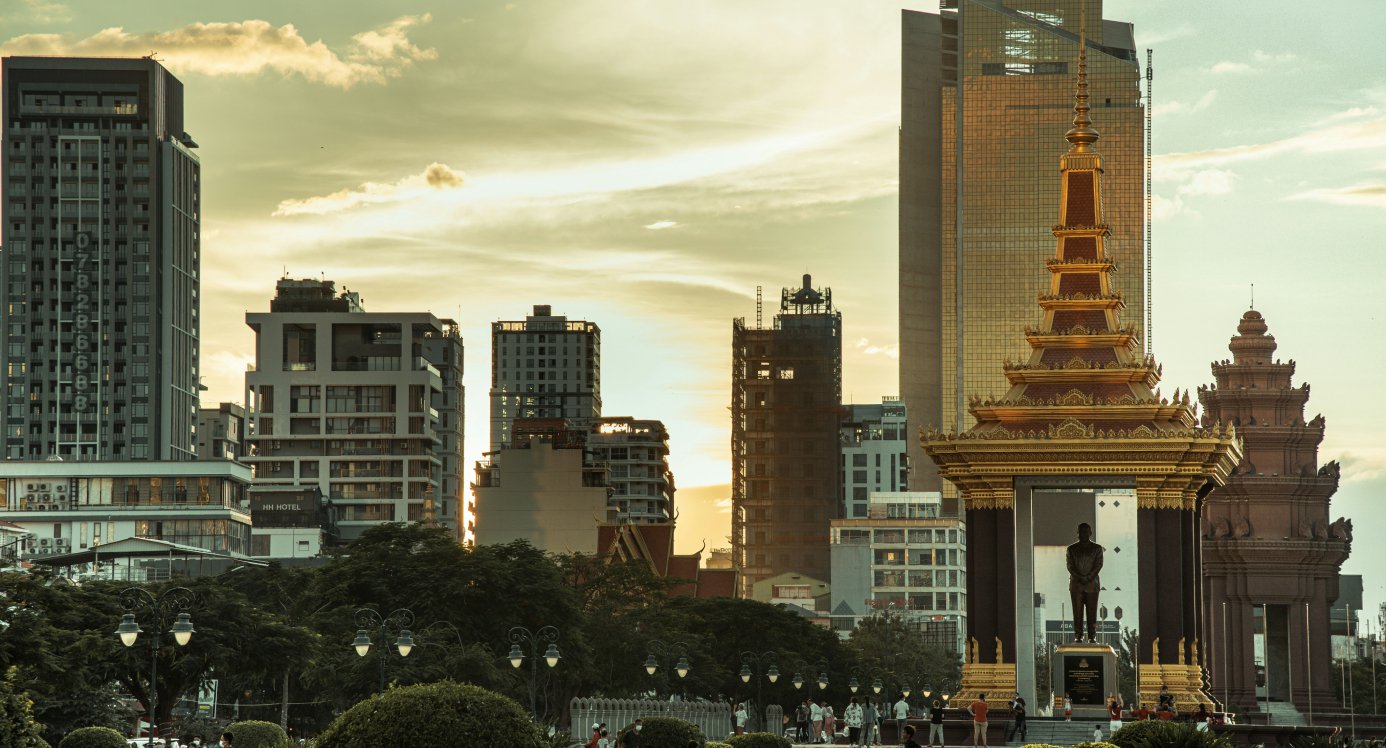
Cambodia has become an increasingly visible destination for international capital in Southeast Asia. Investors can access opportunities in manufacturing, real estate, agriculture, tourism, logistics, infrastructure, digital services and renewable energy, while Cambodia’s investment legislation generally allows foreign investors to establish fully foreign-owned businesses.
Foreign direct investment remains an important driver of the economy. According to the World Bank, FDI reached $5.1 billion in 2025, while exports continued to expand strongly. At the same time, Cambodia is facing slower economic growth and weakness in the property sector: the World Bank forecasts real GDP growth of 3.9% in 2026 and describes the real estate market as being in a downturn.
For anyone planning to invest in Cambodia, this combination creates both opportunities and risks. Entry costs can be relatively accessible compared with some more mature Asian markets, but careful selection of the investment structure, asset and local partners is particularly important.
Why Invest in Cambodia?
Cambodia offers investors a combination of an open investment framework, a relatively young workforce, access to the ASEAN market and developing infrastructure. The country is integrated into regional manufacturing and supply chains and participates in major trade arrangements including ASEAN and the Regional Comprehensive Economic Partnership. Its location between Thailand and Vietnam also supports manufacturing, logistics and cross-border trade.
Foreign investors are generally not required to have a local shareholder merely to establish a Cambodian business. The Council for the Development of Cambodia states that there is no general requirement for local equity participation, although land ownership and certain regulated sectors are subject to separate restrictions.
Investment activity has continued to grow. The Cambodian Investment Board reports that 630 investment projects worth almost $10 billion were approved in 2025, including 243 projects in Special Economic Zones. Industry accounted for approximately $5.6 billion of the approved capital.
Approved investment capital and actual FDI inflows are different statistical measures, so these figures should not be treated as interchangeable. Nevertheless, both indicate substantial continuing foreign investment in Cambodia.
Cambodia Investment Overview
The Cambodian investment market includes both domestic and international investors. Manufacturing remains one of the most important areas, particularly garments, footwear, travel goods, automotive components, electronics and other export-oriented industries. Infrastructure, agriculture, agro-processing, energy and tourism also attract substantial investment.
China remains a major source of foreign capital. During the first ten months of 2025, Chinese investors accounted for approximately 49% of CDC-approved investment capital, followed by Cambodian investors and foreign capital from countries including Singapore and Vietnam.
The investment environment is supported by the Law on Investment of 2021 and its implementing regulations. The Council for the Development of Cambodia, or CDC, acts as the principal investment promotion body and administers the Qualified Investment Project regime.
However, investors should distinguish between general company registration and QIP registration. A business does not need QIP status simply to operate in Cambodia. QIP status is relevant primarily where a qualifying project seeks investment incentives.
Foreign Investment in Cambodia
Cambodia is generally open to foreign investors. The country’s investment framework provides for equal treatment of foreign and domestic investors in many areas. The main major exception is land ownership, which is reserved for Cambodian nationals and qualifying Cambodian legal entities.
A foreign investor may therefore own 100% of a Cambodian company in many sectors without bringing in a Cambodian shareholder. Restrictions may still apply to regulated activities, licensing requirements and land ownership.
The exact structure should be determined according to the activity. A software company, manufacturing facility and real estate development, for example, may all require different licences, assets and ownership arrangements.
Foreign Direct Investment in Cambodia
Foreign direct investment in Cambodia plays a major role in manufacturing, exports and job creation. The World Bank estimates that actual FDI inflows reached $5.1 billion in 2025 and supported significant formal employment creation. Growth is increasingly linked to new export-oriented manufacturing capacity, although Cambodia remains vulnerable to external trade conditions and domestic property-market weakness.
Manufacturing has been especially important. CDC data for 2025 show that industry accounted for more than half of the capital value of approved investment projects. Infrastructure, agriculture, agro-industry and tourism also attracted investment.
Legal Protection for Foreign Investors
Cambodian investment legislation provides several protections to registered investors. Foreign investors generally receive non-discriminatory treatment, subject principally to the country’s restrictions on land ownership. The investment framework also includes protections relating to nationalisation and expropriation.
Investors are permitted, subject to applicable banking and foreign-exchange rules, to convert currency and repatriate funds associated with their investments. These can include investment income, capital gains, dividends, royalties, interest and proceeds from the sale or liquidation of an investment.
Cambodia Investment Opportunities
There are numerous investment opportunities in Cambodia, but the risk and return profiles vary substantially between sectors.
Real Estate
Cambodia real estate investment includes condominiums, serviced apartments, commercial property, hospitality assets and development projects. Phnom Penh is the country’s principal urban property market. Siem Reap is more closely connected with tourism, while Sihanoukville combines tourism, logistics, industrial development and port-related activity.
The property sector should currently be approached selectively. The World Bank reports that Cambodia is experiencing a property-sector downturn, with financial-sector stress linked partly to real estate. This does not eliminate property investment opportunities, but it makes developer quality, completed demand, rental fundamentals and resale liquidity particularly important.
Manufacturing
Manufacturing is one of the strongest areas for investment in Cambodia. Traditional industries such as garments and footwear remain important, while government policy increasingly encourages diversification into electronics, automotive components, machinery, higher-value manufacturing and industries integrated into global supply chains.
Cambodia’s investment incentive system specifically includes electronics, machinery, spare parts, assembly, high-tech activities and industries serving regional and global production chains among priority sectors.
Agriculture and Food Processing
Cambodia has a large agricultural base, creating opportunities in production, processing, packaging, cold storage and exports. Priority areas include agro-industry and food processing. Investors can also consider value-added processing of crops that have traditionally been exported in less processed form. Cambodia’s investment legislation specifically identifies agriculture, agro-industry, agro-processing and food processing as sectors that may qualify for investment incentives.
Tourism and Hospitality
Tourism creates opportunities in hotels, resorts, serviced apartments, restaurants and tourism-related services. Siem Reap remains closely associated with Angkor and cultural tourism, Phnom Penh combines business and leisure demand, while coastal destinations provide opportunities for resort and hospitality projects. Tourism and tourism-related activities are included among the sectors eligible for QIP incentives where the relevant conditions are met.
Infrastructure and Logistics
Cambodia continues to invest in roads, ports, logistics facilities, industrial parks and supporting infrastructure. Its position between Thailand and Vietnam makes logistics an important long-term sector, particularly for companies serving regional production chains. Physical infrastructure and logistics are explicitly identified as incentive-eligible investment sectors.
Digital Economy and Technology
Digital industries are another priority area. Potential opportunities include fintech, e-commerce, software, digital services, business-process outsourcing and technology infrastructure. For an international technology company considering how to invest in Cambodia, the ability to establish a wholly foreign-owned operating company can make the corporate structure comparatively straightforward, subject to the licences required for the particular activity.
Renewable Energy and Green Investment
Cambodia also provides opportunities in solar, wind and other energy infrastructure. Green energy, environmental management, circular-economy activities and technologies supporting climate adaptation or mitigation are specifically included in the investment incentive framework.
Cambodia Real Estate Investment
Real estate investment in Cambodia attracts both regional and international buyers, but foreign ownership rules need to be understood before purchasing. Foreign investors generally have much greater freedom to buy qualifying condominium units than landed property.
Why Consider Real Estate Investment in Cambodia?
The long-term arguments for Cambodian property include urbanisation, economic development, infrastructure improvements and the growth of Phnom Penh as a regional commercial centre. Entry prices can also be lower than in some established Asian capitals.
However, investors should distinguish between the long-term development story and current market conditions. In 2026, Cambodia’s property market remains under pressure, meaning buyers may have negotiating opportunities but also face higher vacancy, developer and resale risks.
For investment property, the fundamental question should therefore be whether there is sustainable end-user or tenant demand rather than whether the project is marketed primarily to overseas buyers.
Main Destinations for Cambodia Property Investment
Phnom Penh is the country’s largest and most diversified property market. Demand includes Cambodian residents, expatriates, businesses and international organisations.
 From $98,000
Completion in: 2029.I Total of 600 apartments

 From $82,000
Completion in: 2027 Total of 700 apartments
 From $275,000
Built in 2026 Total of 138 apartments
 From $308,000
Completion in: 2028 Total of 360 apartments

 From $126,000
Built in 2026 Total of 591 apartments
 From $50,000
Yield 7.0% Built in 2024
Siem Reap has a more tourism-oriented economy and can suit hospitality-related investments. Sihanoukville has undergone rapid development connected with tourism, Chinese investment, industry and Cambodia’s principal deep-water port.
It can offer investment opportunities but has also experienced particularly pronounced development cycles. Other locations may offer lower entry prices, but typically have shallower rental and resale markets.
Cambodia Property Investment by Property Type
Condominiums are generally the simplest direct ownership option for foreign individuals. Serviced apartments may appeal to investors targeting expatriate or corporate tenants.
From $98,000
Completion in: 2029.I Total of 600 apartments
 From $177,000
Completion in: 2029.III Total of 1300 apartments
From $82,000
Completion in: 2027 Total of 700 apartments
From $275,000
Built in 2026 Total of 138 apartments
From $308,000
Completion in: 2028 Total of 360 apartments
From $126,000
Built in 2026 Total of 591 apartments
Commercial real estate can offer opportunities where the investor understands local business demand. Hotel and resort property has greater exposure to tourism cycles and operational performance. Land and landed property require different structures because foreigners cannot directly own Cambodian land.
Can Foreigners Buy Property in Cambodia?
Foreign Ownership of Condominiums
Foreigners can directly own qualifying private units in registered co-owned buildings under Cambodia’s foreign ownership regime. Ownership is generally permitted from the first floor above the ground floor upward; foreigners cannot own ground-floor or underground units under the relevant law. Foreign ownership is also capped at 70% of the total private-unit area of a co-owned building.
A properly registered strata title is therefore particularly important for Cambodia property investment by foreigners. The buyer should verify that the building legally qualifies for strata ownership and that sufficient foreign ownership quota remains available before completing the purchase.
Can Foreigners Own Land in Cambodia?
Foreigners cannot directly own land in Cambodia. Cambodia’s Constitution and Land Law reserve land ownership for Khmer nationals and Cambodian legal entities. A Cambodian company can qualify to own land if 51% or more of its shares are Cambodian-owned.
A foreign-controlled company therefore cannot simply purchase Cambodian land in its own name. This restriction applies regardless of whether the foreign investor intends to build a villa, commercial property or other development.
Alternatives to Direct Foreign Land Ownership
Foreign investors may consider a registered long-term lease where appropriate. A Cambodian-majority company can also own land, but such structures must reflect genuine legal ownership rather than merely using a Cambodian nominee to conceal foreign beneficial ownership.
Because the underlying land is often the most valuable element of a landed property transaction, the ownership and control structure should be reviewed carefully before money is transferred.
Cambodia Property Investment in Phnom Penh
Why Investors Choose Phnom Penh
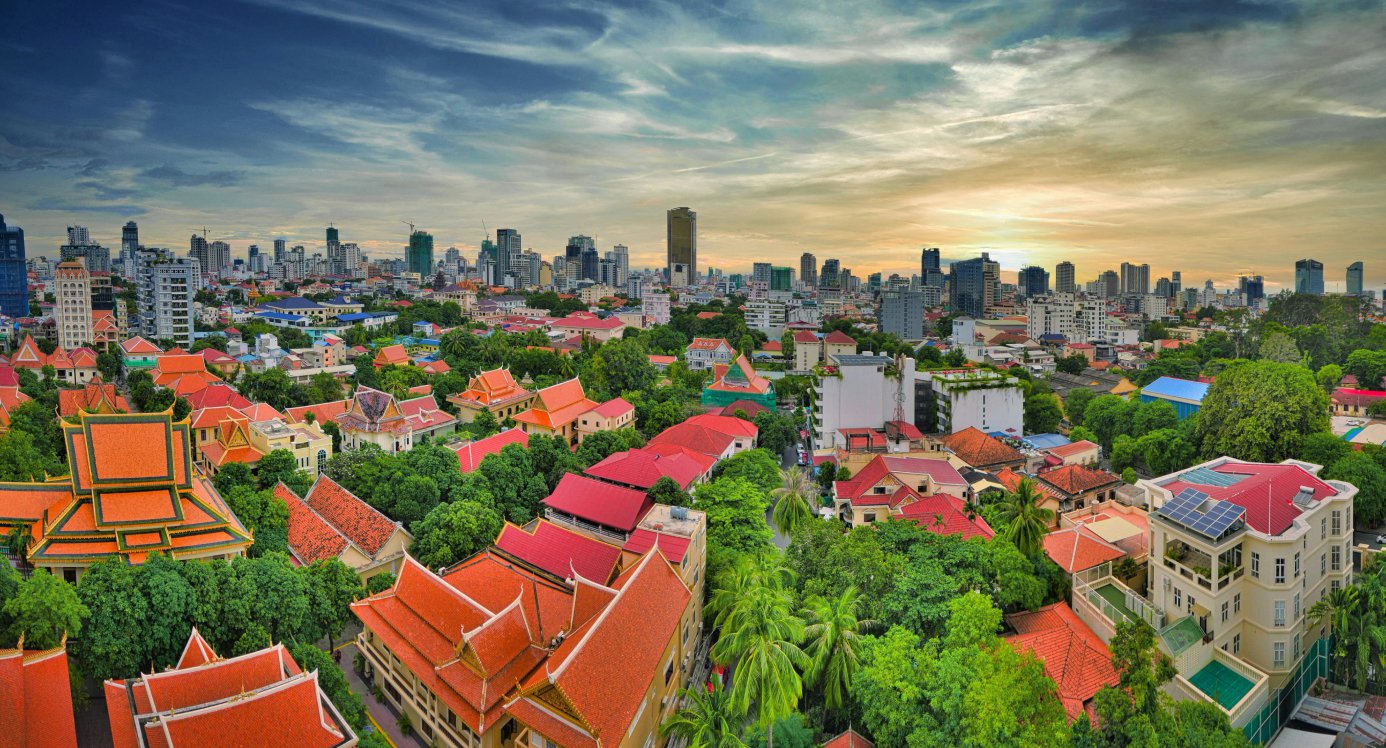
Phnom Penh is Cambodia’s political, financial and commercial centre and has the country’s deepest residential rental market. Its demand base is broader than a pure resort market because it includes local professionals, business owners, foreign employees, diplomatic missions and international organisations. This makes Phnom Penh the most obvious starting point for many international investors researching Cambodia real estate investment.
Popular Areas for Real Estate Investment
BKK1 is one of the best-known central districts and has traditionally attracted expatriate tenants, offices, restaurants and serviced apartments. Tonle Bassac offers central residential developments and proximity to major commercial areas.
Daun Penh includes the historic city centre and riverside areas. Toul Kork has a more established residential character, while Chroy Changvar and peripheral districts contain newer large-scale developments.
No district is automatically a good investment. An investor should compare the specific project’s pricing, competition, tenant profile and future supply.
What to Consider before Buying a Phnom Penh Property
Developer history is particularly important when buying off-plan. Investors should verify title status, construction approvals, financing, expected completion, foreign ownership eligibility and the contractual remedies available if the project is delayed.
For completed buildings, occupancy provides useful information about real rental demand. A project with strong physical occupancy can be easier to evaluate than one where projected rental returns are based primarily on developer forecasts.
Cambodia Real Estate Investment Returns
Property returns can come from rental income and capital appreciation, but neither should be assumed. A useful investment calculation starts with net rental yield, not an advertised gross yield. Management fees, furnishing, maintenance, vacancy, agency commissions, taxes and repairs can significantly reduce the income received by the investor.
Capital appreciation depends on local supply and demand. Cambodia’s rapid construction cycle has created substantial condominium supply in certain markets, while the current property downturn illustrates why past development rates should not automatically be extrapolated into future price growth. Investors should therefore stress-test a property assuming lower rent, several months of vacancy and a longer resale period.
Investment Incentives in Cambodia
Qualified Investment Projects
A Qualified Investment Project, or QIP, is an investment registered with the CDC or the appropriate provincial or municipal investment authority that meets the conditions for incentives.
QIP status is particularly relevant for manufacturing, agriculture, infrastructure, tourism, logistics and other priority activities. Cambodia identifies 19 broad sectors and activities that may receive incentives.
Tax Incentives for Investors
Eligible QIPs can choose between different incentive packages. Under one option, qualifying projects may receive an exemption from Tax on Income for three, six or nine years, depending on their investment category. After the exemption period, tax can be phased back in over six years.
Other incentives can include exemptions from prepayment of income tax, minimum tax subject to audit conditions, export tax and specified customs duties and VAT on qualifying imports. An alternative incentive package provides special depreciation and enhanced deductions for specified expenses.
Special Economic Zones
Special Economic Zones can be particularly relevant to export-oriented manufacturing. They provide designated areas where factories, logistics services and supporting infrastructure are concentrated.
QIPs operating in SEZs may benefit from the investment incentives available under Cambodian law where their activities qualify. Of the 630 investment projects approved in 2025, 243 were located within SEZs.
How to Invest in Cambodia
The process depends on whether the investment is a passive real estate acquisition, a business or a major investment project. A practical sequence is:
- Choose the sector and asset. Decide whether the investment will be real estate, an operating company, manufacturing, agriculture, tourism or another activity.
- Select the ownership structure. Determine whether the asset can be owned personally, through a wholly foreign-owned Cambodian company, a joint venture, lease structure or another vehicle.
- Complete legal and financial due diligence. Check titles, licences, corporate ownership, debts, permits and contracts before transferring funds.
- Register the company and investment where required. An operating business generally needs commercial and tax registrations, while qualifying projects seeking incentives can apply for QIP status.
- Arrange banking and capital flows. Maintain clear evidence of investment capital and source of funds.
- Complete the transaction and maintain compliance. Accounting, taxation, employment and sector-specific licensing continue after the original investment is made.
The CDC states that eligible investment applications are handled through a single-window process and that registration certificates for qualifying applications can be issued within 20 working days where the project meets the relevant requirements.
Starting a Business in Cambodia as a Foreign Investor
Cambodia allows 100% foreign ownership in many ordinary business sectors. A foreign investor can generally establish a Cambodian company without mandatory Cambodian equity participation. Land ownership remains a major exception, and additional restrictions or licences can apply to regulated industries.
After incorporation, businesses normally need to address commercial registration, tax registration, accounting, labour obligations and any industry-specific licences. Foreign employees can also be subject to immigration and employment requirements. Investors should therefore treat company incorporation as the first stage of compliance rather than the entire process.
Taxes on Investment in Cambodia
Cambodia’s standard corporate income tax rate for medium and large taxpayers is 20%. Small taxpayers are subject to progressive rates, while specific sectors such as oil, gas and certain mineral activities have different rates.
The standard VAT rate is 10%. Payments of Cambodian-source income to non-residents can generally attract 14% withholding tax, subject to the precise nature of the payment and any applicable treaty.
Property investors should also consider tax on immovable property. It is generally charged annually at 0.1% of the taxable property base after the applicable KHR 100 million threshold. Transfers of assets such as land and buildings are generally subject to 4% stamp tax.
Cambodia’s capital gains tax regime is being phased in. The 20% individual capital gains tax became applicable to several classes of assets from 1 January 2026, while implementation for gains from immovable property is scheduled for 1 January 2027. Qualified Investment Projects may receive substantial exemptions from ordinary taxes under the investment incentive framework.
Financing an Investment in Cambodia
Investment can be financed with investor equity, local or international bank lending, developer financing or a combination of these sources. Foreign investors should not assume that mortgage financing will be available on the same terms as in their home country. Banks may apply stricter criteria to foreigners and to investment properties.
Conditions in Cambodia’s financial system also deserve attention. The World Bank reported that non-performing loans reached 8.9% in 2025 amid property-sector stress, highlighting broader credit risks associated with the real estate correction.
For off-plan property, developer instalment plans can reduce the immediate capital requirement, but they also expose the buyer to the financial strength and construction performance of the developer.
Foreign Exchange and Repatriation of Investment
Cambodia has a relatively open foreign-exchange framework. The CDC states that foreign exchange operations can generally be conducted through authorised banks and residents may hold foreign currencies. Cambodian investment legislation also provides investors with the ability to repatriate qualifying investment-related funds, including profits and invested capital, through authorised banking channels.
Investors should retain records showing the original transfer of investment capital into Cambodia. This can simplify subsequent bank compliance when transferring dividends, sale proceeds or capital out of the country.
Risks of Investing in Cambodia
Legal and Regulatory Risk
Cambodia has developed a relatively open investment framework, but regulatory implementation can differ by sector and type of transaction. Foreign land ownership restrictions are particularly important for real estate investors.
Real Estate Market Risk
The current property downturn is one of the clearest risks for Cambodia property investment in 2026. High supply in certain condominium segments can affect rents, occupancy and resale liquidity. A low purchase price alone does not make a property attractive if the local market has insufficient end-user demand.
Title and Due Diligence Risk
Real estate investors should independently verify the title rather than relying solely on marketing materials or a seller’s description. For condominium acquisitions, the investor should confirm strata-title eligibility, the foreign ownership quota and any encumbrances. For land-related structures, the investor must understand who legally owns the underlying land and what contractual rights the foreign investor actually receives.
Currency and Financing Risk
Cambodia’s widespread use of the US dollar can reduce some currency friction for dollar-based investors, but business revenues and operating expenses may still involve Cambodian riel. Financing costs and credit availability can also change during economic or property-market downturns.
Governance and Execution Risk
The performance of an investment may depend heavily on local management, contractors, business partners and advisers. Shareholder arrangements, signing authority, access to company bank accounts and contractual protections should therefore be clearly documented.
Cambodia Investment vs Other Southeast Asian Markets
Cambodia has a different risk and ownership profile from larger regional markets. Compared with Thailand, Cambodia permits a higher foreign share in qualifying condominium buildings: Cambodia’s cap is generally 70%, whereas Thailand generally limits foreign ownership in a registered condominium to 49%.
Vietnam permits qualifying foreigners to own residential property but generally limits foreign ownership to 30% of apartments in an individual condominium building and applies a time-limited ownership framework to most foreign individuals.
Malaysia is comparatively accessible to foreign property buyers, but minimum purchase prices and approval requirements vary by state. Indonesia does not generally allow foreigners to hold full freehold land title in their own names. Foreigners can instead acquire specified residential and land-use rights, subject to immigration, property-value and other conditions.
Cambodia can therefore offer relatively simple direct condominium ownership and generally liberal company ownership, but its property and capital markets are smaller and less mature than those of several regional alternatives.
Is Cambodia a Good Place to Invest?
Cambodia can be attractive to investors prepared to accept an emerging-market level of risk. Its strengths include an open foreign investment regime, relatively straightforward foreign company ownership, investment incentives, expanding manufacturing, regional trade integration and long-term urban development.
The main disadvantages include restrictions on foreign land ownership, a less mature real estate market, variable liquidity and greater dependence on careful legal and commercial due diligence.
Current conditions also require selectivity. Strong FDI and manufacturing investment coexist with a property downturn and slower economic growth. The World Bank expects growth of 3.9% in 2026 before a recovery to 4.9% in 2027 under its baseline forecast.
For long-term investors, the strongest Cambodia investment opportunities are therefore likely to be those connected with genuine economic demand — manufacturing, logistics, infrastructure, processing, technology and well-located income-producing real estate — rather than investments that rely primarily on speculative price appreciation.
FAQ about investment in Cambodia
Yes. Cambodia permits foreign investment in most sectors, and companies can generally be 100% foreign-owned. Land ownership and some regulated activities are exceptions.
Major opportunities include manufacturing, agriculture and food processing, logistics, infrastructure, tourism, digital industries, renewable energy and selected real estate. Many of these sectors are specifically encouraged under Cambodia’s investment incentive framework.
An investor can establish a Cambodian company, acquire eligible real estate, enter into a joint venture, finance an existing business or develop a qualifying investment project. The correct structure depends on the asset and sector.
Yes. Cambodia generally applies an open investment regime and does not require local equity participation in ordinary businesses, subject to specific restrictions such as land ownership.
China has been the leading foreign source of CDC-approved investment capital in recent years. Singapore, Vietnam and investors from several other Asian and international markets are also active.
Yes. Foreign investors can generally own 100% of a Cambodian company unless the activity falls within a sector subject to specific ownership or licensing restrictions.
Foreigners can directly own qualifying strata-title units in co-owned buildings, subject to statutory restrictions. Direct ownership of Cambodian land is prohibited.
No. Land ownership is reserved for Cambodian citizens and qualifying Cambodian legal entities. A Cambodian company must be at least 51% Cambodian-owned to qualify as a Cambodian legal entity for land ownership purposes.
It can be, but investment quality varies substantially by project and location. The 2026 market requires particular caution because Cambodia is currently experiencing a property-sector downturn.
Phnom Penh has the largest and most diversified urban rental market. Siem Reap is more tourism-oriented, while Sihanoukville combines property, tourism, industry and port-related investment. The best location depends on the investor’s target tenant and risk profile.
Yes. Foreigners can generally own qualifying condominium units above the ground floor, provided the property has the appropriate strata title and the building remains within the 70% foreign ownership limit.
The standard corporate income tax rate is 20% for medium and large taxpayers, standard VAT is 10%, and additional taxes can include withholding tax, property tax, stamp tax and capital gains tax depending on the transaction. QIPs can qualify for substantial exemptions.
Qualified Investment Projects may qualify for income tax exemptions of three, six or nine years, phased relief after the exemption period, customs and VAT exemptions, special depreciation or enhanced deductions, depending on the project and incentive option.
Key risks include property-market weakness, limited liquidity in some asset classes, land ownership restrictions, title and developer risk, regulatory compliance, financing conditions and reliance on local execution. Thorough legal, financial and commercial due diligence is particularly important for foreign investors.
We will send you a content digest not more than once a week