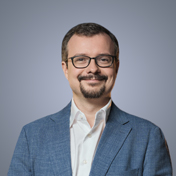
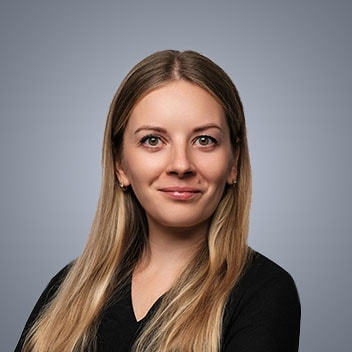
Mikhail Bulanov
Managing Partner & Co-Founder Tranio
- About the expert
- Quotes 27
With more than 15 years of experience in brokerage management, investment projects, and international team leadership, Mikhail is responsible for developing Tranio’s brokerage operations while also contributing to the company’s development investments, which exceed $500 million in total.
Date of birth: January 4, 1990, Moscow
Career
- 2007–2010 — Optimism.ru: advanced from optimization specialist to head of business process management and contextual advertising.
- 2010 — Co-founded Tranio with Georgiy Kachmazov. From the company’s inception, he has overseen core operations including IT development, marketing, and finance.
- Spearheaded the creation of Tranio’s proprietary CRM system, one of the company’s strongest competitive advantages.
- Built Tranio’s financial accounting framework and established the company’s corporate structure across five jurisdictions.
- Set up local offices in Cyprus, Turkey, Thailand, and Dubai, handling staff relocation and team building on the ground.
- Since 2020 — additionally supervises the editorial and marketing departments. Under his leadership, Tranio.ru consistently ranks among the most cited real estate platforms in Russia (according to Medialogia).
- Since 2022 — leads Tranio’s entire brokerage business while also engaging in the company’s investment and development projects.
Expertise
Mikhail combines expertise in brokerage, development investments, and internal operations management. His core competencies include:
- Building effective partnership models between investors and developers.
- Structuring complex investment projects with entry points starting from $1 million.
- Managing brokerage teams and expanding Tranio’s international network.
- Launching IT and marketing products that drive business scalability.
- Overseeing financial and legal management of multinational structures.
His approach blends strict risk control with innovative strategies, enabling investors to achieve returns above market averages.
Education
Moscow State University (2010), degree in Banking Information Technology.
Thought Leadership
- Author of expert articles and presentations on advanced investment strategies in real estate.
- Runs a Telegram channel where he shares insights on alternative investment products and engages directly with investors.
- Regular speaker at industry conferences on investment and project management.
- Frequently cited in leading global media including Bloomberg, Forbes, and Reuters.
Key Achievements
- Built Tranio’s distributed development team and implemented systems that enabled international scalability.
- Established local offices abroad, securing Tranio’s presence in key markets.
- Designed the management structure that integrates brokerage, development, and investment under a single brand.
Source: «Property Prices in Bali, Indonesia in 2026», 29 Sep. 2026The market in Bali is currently experiencing a surge in foreign investment, with developers from abroad entering the premium segment and offering a high level of quality. This is attracting foreign investors to the location: local developers in Bali often fail to match the quality of their foreign counterparts, which may provide an additional incentive for international investment in the region.
Source: «Rawai — a Place to Live in the South of the Phuket Island», 10 Oct. 2025Foreigners are not permitted to register land plots along with villas as personal property in Thailand. Instead, land rights can only be obtained through a company with Thai participation or through leasehold (right of ownership for a limited period). However, freehold ownership (unlimited right of ownership) of the villa itself is allowed. Apartments in condominiums can be issued either in freehold or leasehold. Many buyers are aware of these conditions and often purchase Thai real estate with leasehold rights to reduce tax payments and property declaration requirements.
Source: «Laguna Phuket: Hotels And Beaches Review», 10 Oct. 2025Around 90% of demand in Thailand is generated by clients with investment objectives who wish to place capital in stable assets abroad. The Thai currency is very stable: the volatility of the baht exchange rate has typically not exceeded 10% in recent decades and is around 6% this year.
The developed tourist industry allows you to generate a stable and relatively high rental income from Thai property: the average rental yield for apartments in Phuket is now 7–8% per annum, whereas in many southern European countries similar projects in tourist locations can be expected to yield only 3–4%.
Source: «Mueang Phuket Amphoe — the Hub of Phuket’s Activity», 18 Sep. 2025Phuket has the highest percentage of foreigners in Thailand. The island has a significant amount of infrastructure specifically designed for expats, including over 10 international schools, international medical clinics, numerous restaurants and shopping centres, rental services, and well-maintained roads.
Source: «Karon: the Best Family Beaches in the Phuket Region», 18 Sep. 2025When purchasing a property in Thailand, it is recommended to choose one with north-facing windows to prevent excessive heat inside. Additionally, apartments located on the top floor tend to consume more electricity due to the frequent use of air conditioning.
Source: «Mai Khao Beach: 12 Kilometres of Tranquillity in Phuket», 18 Sep. 2025Following the 2004 tsunami in Thailand, building regulations changed, even though tsunamis rarely reach Thailand and it is Indonesians who suffer most from disasters in the Pacific and Indian Oceans. As a result, it is now forbidden to build within 400 metres of the sea.
Furthermore, the latest regulations allow only two-storey buildings close to the shore. Three-storey buildings must be constructed a little further from the water, four-storey buildings even further away, and so on. The maximum height allowed for buildings in Thailand is 23 metres, or 7–8 storeys. This regulation creates a cosy atmosphere on the beaches and provides homeowners with excellent
Source: «Karon: the Best Family Beaches in the Phuket Region», 18 Sep. 2025When purchasing an apartment during the early stages of construction, investors receive a 25–30% «discount» from the developer. This is due to the fact that prices tend to increase during the final stages of construction.
As usual, payment by instalments is available, with the developer typically offering a plan for the duration of the construction. In some cases, the developer may offer an instalment plan for up to 5 years to cover the remaining 50% of the payment.
An additional commission of around 5–7% will be charged in this case. However, it is sometimes possible to negotiate without a commission, especially for villas and during the low season.
Source: «Nai Harn Beach: the Best Beach in the South of the Phuket Island», 18 Sep. 2025Thailand, and Phuket in particular, has a very limited supply due to the terrain. In addition to the fact that Phuket is an island and the amount of land on it is limited, there are over 30 nature reserves and a lot of land devoted to agriculture. There is very little land left on which to build homes. Add to this the restrictions on the height of buildings, and it becomes clear that the amount of housing that can be built in Thailand is limited.
Source: «Phuket Town: Things to Do in the Historical Centre of Phuket», 18 Sep. 2025For a low-budget investment, we recommend considering real estate in Phuket, particularly serviced apartments or aparthotels. These properties have shown high profitability, with an average of 7–8% per annum gross, rising up to 10–12% per annum in popular locations. The influx of tourists in Phuket has recovered since the pandemic.
The occupancy rate of rental units is already high, and seasonality is less pronounced: there is a demand for short-term rental housing on the island almost all year round. However, there is still potential for growth in resort locations. The authorities are implementing measures to increase the number of tourists from India and strengthen partnerships with China.
Buyers from China have traditionally been active in the Thai market. Over the past year, the number of apartment purchases from them has increased by 84%, but has not yet reached pre-pandemic levels. Demand for Thai real estate is also growing among buyers from the US, EU countries, and the UK, who invest in rental units at local resorts and often purchase second homes in Thailand.
Source: «Chalong — the Ideal Winter Destination in Phuket», 18 Sep. 2025Many of our clients in Thailand belong to the middle class and have a budget of up to 200,000 US dollars per purchase. Most Thai resorts cater primarily to this segment. In developed locations, there are premium and custom luxury projects.
 >
>
 >
>
 >
>