Greece Golden Visa for US Citizens in 2026



Greece Golden Visa is one of the most accessible pathways to an EU residence permit (RP), starting from 250,000 euros and requiring no minimum stay. For US citizens, it offers an ideal «Plan B»: keep your US citizenship, diversify investments, and secure long‑term optionality in Europe. In 2025, the rules changed — here is everything investors must know.
Why Americans Use It
For US citizens, the Greek Golden Visa provides a unique combination of freedom, flexibility, and long‑term options that few other EU residency schemes offer.
No minimum stay requirement. Unlike many residence-by-investment programmes, Greece does not require you to live in the country to keep your residence permit. You can maintain US residency, spend zero days a year in Greece, and still renew your permit indefinitely.
The US allows dual citizenship. Obtaining Greek nationality in the future does not require giving up your US citizenship. This provides flexibility and long-term global mobility without sacrificing the rights and benefits of holding a US passport.
Remote-friendly process. The majority of the process — tax ID, bank account opening, and document submission — can be completed remotely via local lawyers. Americans only need one trip to Greece for biometrics.
Strong lifestyle and retirement appeal. Greece remains attractive for US expats due to its stable and safe environment, high-quality healthcare, Mediterranean climate, and significantly lower cost of living than major US cities.
Path to citizenship after 7 years. If a US citizen chooses to live in Greece long term, they can qualify for naturalisation after 7 years of physical presence. This is a right, not an obligation, giving Americans strategic flexibility.
Property can generate rental income. Unlike several EU Golden Visa schemes, Greece allows rental income. Americans can offset costs or generate a rental yield while holding their qualifying property.
A 5-year residence permit is renewable. The initial Greek residence permit is valid for 5 years, not the typical 1–2 years found in many countries. Renewal only requires maintaining the investment and the basic documentation.
Main Requirements and Investment
This section provides a detailed breakdown of eligibility, investment pathways, and the updated regional thresholds for 2025.
Core Eligibility Criteria
To qualify for the Greek Golden Visa, applicants must meet the following criteria:
- non‑EU/EEA national over 18 years old;
- clean criminal record from the United States;
- valid private health insurance covering Greece;
- proof of the lawful source of funds for the investment.
Government and Administrative Fees
- €2,000 — government fee;
- €16 — cost of the biometric residence permit card;
- €150—€300 — consular/legalisation fees for US documents (apostille and certified translation);
- 1.5–3% of the property value for legal checks, document preparation, due diligence, and closing costs.
The 7-Year Path to Greek Citizenship
Naturalisation is possible after 7 years of lawful residence in Greece.
The key requirements:
- live in Greece;
- pass the Greek language exam (B2 level);
- pass the history and culture assessment;
- demonstrate integration into Greek society.
This is a right, not an obligation — many investors maintain residence without pursuing citizenship.
Property Investment: Updated Thresholds for 2025
Property remains the most popular route for US citizens. In 2025, Greece introduced a 3‑tier investment system. The required minimum depends on the zone, property type and size, and whether the property is residential, newly built, or converted.
€800,000+ zones include high‑demand areas:
- Attica;
- Thessaloniki;
- Mykonos;
- Santorini;
- islands with a population of over 3,100 inhabitants;
- property size of at least 120 m².
€400,000+ zones cover other parts of the country. For example:
- Crete;
- Halkidiki;
- Peloponnese;
- property size of at least 120 m².
€250,000+ threshold applies nationwide and to property of any size, but only for specific property types:
- properties classified as commercial-to-residential conversions;
- renovation of objects with cultural or historical significance.
Rental income is permitted, and the property must be rented out on a long-term basis for at least 5 years.
Always confirm the property’s exact zone classification before proceeding. Zoning rules are updated periodically, and a property advertised at €250,000 may not qualify for the €250,000 threshold.
Top Areas to Invest in Property in Greece
- Athens. The capital city offers strong rental demand, especially in central, northern, and southern neighbourhoods. Ideal for both short-term and long-term rentals.
- Halkidiki. Known for its stunning beaches and green resorts, Halkidiki is perfect for holiday homes and high-end holiday rentals. Investment here may benefit from seasonal tourism.
- Crete. Greece’s largest island combines natural beauty with vibrant cities like Heraklion and Chania. Property in Crete offers opportunities in both the tourism and local rental markets.
- Peloponnese. With historic sites, charming towns, and a coastline, the Peloponnese attracts travellers seeking quieter and more authentic Greek experiences. Properties here may offer good value and potential capital appreciation.

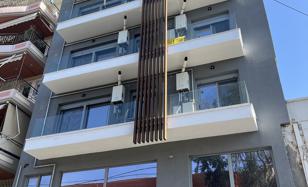 From 177,000 €
Built in 2025 Total of 11 apartments
 From 200,000 €
Built in 2024 Total of 17 apartments
 From 167,000 €
Completion in: 2027 Total of 56 apartments
 From 302,000 €
Completion in: 2027.III Total of 48 apartments
 From 500,000 €
Built in 2026 Total of 13 apartments
 From 240,000 €
Completion in: 2027.I Total of 35 apartments
 From 335,000 €
Completion in: 2027.IV Total of 159 apartments

Alternative Investment Routes
Beyond real estate, investors may qualify with minimum investments ranging from 350,000–800,000 euros:
- deposit in a Greek bank;
- purchase of government or corporate bonds;
- shares in Greek companies;
- participation in qualifying venture capital or private equity funds.
These alternatives are less common but fully eligible and may appeal to investors who prefer liquid assets.
Application Process from the US
Most steps can be completed remotely via a lawyer.
- Preliminary due diligence and eligibility checks.
- Choose the investment and sign a reservation agreement or preliminary agreement.
- Obtain a Greek tax number (AFM).
- Open a Greek bank account.
- Complete the investment and transfer funds.
- Gather the required documents.
- Submit the application to the Greek Ministry of Migration and Asylum.
- Travel to Greece once to provide biometrics.
- Receive the 5‑year residence permit.
For investors, one of the risks is incomplete paperwork. Working with an experienced local lawyer saves your time and prevents mistakes.


Family and Tax Points
Family Inclusion Rules
The Golden Visa allows the following family members to be included in a single application:
- spouses or registered partners;
- children aged under 21 (unmarried);
- student children aged under 24 (unmarried);
- parents of either spouse.
Children lose dependent status at 21–24 and may need their own permit thereafter.
Tax Implications for US Citizens
Holding a Greek Golden Visa does not make an investor a Greek tax resident. Tax residence generally requires spending more than 183 days in Greece in a tax year.
Greek tax residents are taxed on global income, including salaries, rental income, dividends, interest, and pensions. Progressive rates range from 9–44%. However, the US—Greece Double Taxation Treaty helps US citizens avoid paying tax twice.
Main property-related taxes include:
- Property Transfer Tax (PTT): 3.09% of the purchase price;
- 24% VAT on new-build properties;
- Annual property tax (ENFIA), calculated based on property size, zone, and age.
When investing in Greek property, it is strongly recommended to consult a tax adviser. Rules can vary by investment type and may change. Professional guidance ensures compliance and helps optimise your investment structure.
FAQ
Yes, but with a strict age limit: children must be aged under 21 and unmarried, or under 24 if they are students. Older children usually need to apply separately.
Yes, rental income is permitted. Rental earnings are taxed in Greece.
Typically, 4–6 months, depending on processing times. A Blue Certificate allows legal stay while you wait.
Most steps can be done remotely, but one in‑person visit is required for biometrics.
Yes, but only for specific property types. The 250,000 euros threshold applies mainly to renovation projects.
We will send you a content digest not more than once a week