Residence permit in France for financially independent individuals (VLS-TS Visiteur) in 2026

For decades, France has remained one of the leading destinations for affluent foreigners who view Europe as a jurisdiction for living, educating their children, and long-term planning. One of the established routes for such relocation is the Visiteur status — a residence category for financially independent individuals, introduced under the 1945 reforms of French immigration law and later incorporated into the modern residence permit system.
Advantages of the Visiteur Visa
- Visa-free travel to the EU and the Schengen area. Holders of a residence permit for financially independent persons may stay in the Schengen countries for up to 3 months in any 6-month period.
- The right to live permanently in France. A residence permit is issued for one year and can be renewed while maintaining the basis for obtaining it. You can live in France 365 days a year, not just 3 months on a visa.
- The same rights as French citizens, except political rights.
- Family reunification. A financially independent foreigner can bring his or her family to France: spouse and minor children.
- Prospects of obtaining permanent residence and citizenship. Foreigners with a residence permit can obtain permanent residence in France and apply for French citizenship after 5 years of residence.
- Free education and good quality healthcare. Residents can study at French universities under the same conditions as French students (not as foreign students), and can use the medical services (treatment costs covered by health insurance).
- European driving license. A foreigner who has obtained a residence permit may exchange his or her driving license for a European driving license.
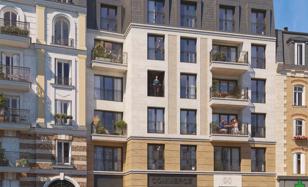 From 392,000 €
Completion in: 2029.II Total of 18 apartments
 From 1,920,000 €
Completion in: 2026.IV Total of 9 apartments
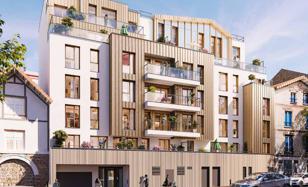 From 323,000 €
Completion in: 2027.IV Total of 35 apartments
 From 748,000 €
Completion in: 2026.IV Total of 9 apartments
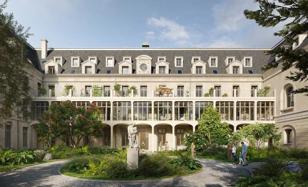 From 395,000 €
Completion in: 2029.I Total of 173 apartments
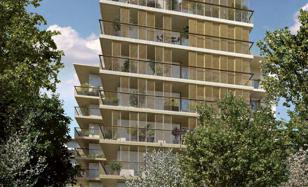 From 530,000 €
Completion in: 2028.II Total of 70 apartments
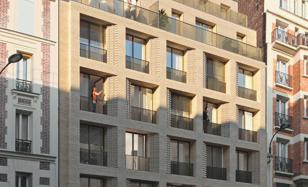 From 479,000 €
Completion in: 2027.III Total of 13 apartments
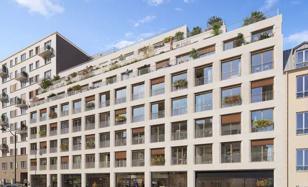 From 362,000 €
Completion in: 2028.IV Total of 16 apartments
Who Is the French Visiteur Visa For?
The Visiteur status is designed for applicants who do not need employment in France and can support themselves through their own resources. It is most commonly chosen by the following categories of foreign nationals:
- Business owners outside France
Owners of active companies who receive income from overseas businesses and do not depend on a French employer. - Investors and private wealth holders
Individuals living on dividends, interest, bond income, portfolio returns, or other forms of capital income. - Property owners with rental income
Applicants receiving regular income from letting residential or commercial property abroad. - Retirees
Foreign nationals with stable pension income and sufficient savings who view France as a country for comfortable long-term living. - Families with independent income
Families wishing to live in France, provide their children with access to European education, and use the country as a long-term base in Europe. - Internationally mobile individuals
Those who divide their time between several countries and seek a stable European residence status without mandatory investment in local business or property.
Requirements for the French Visiteur Visa
- The applicant must be over 18 years old.
- The applicant must not be himself or be a relative of a person with EU, Eurozone or Swiss citizenship.
- The applicant should not be on the EU sanctions list.
- The applicant should not have been previously deported from EU countries, and should also have no violations of the visa regime.
- No criminal record in the country of his citizenship and residence.
- Absence of dangerous infectious diseases (it is necessary to provide a certificate from a medical institution).
- Availability of own or long-term rented housing in France.Demonstrate financial independence. Have more than 25,000- 35,000 euros per person in a French or other international bank account or have a stable income of at least 1,823 euros per month per person. Have several different sources of income: salary, property rental, deposits, fees, bank savings, etc.
- Not to work for hire and not to carry on business in France. A financially independent person undertakes not to engage in any income-generating activity in France.
- It is not necessary to live permanently in France. To maintain the status of a residence permit, you do not have to live permanently in the country and become a French tax resident. A foreigner who has been granted a residence permit on the basis of financial independence becomes a French tax resident if he lives in the country for more than 183 days a year. However, if the person plans to obtain permanent residence and French citizenship in the future, then they must live in the country permanently for at least most of the year and become a tax resident.
- A European health insurance policy is required, covering medical expenses in France for the initial period of residence.
To obtain a residence permit on the basis of financial independence, the applicant must be over 18 years of age, able to pay and of impeccable reputation. The French authorities may refuse to grant a residence permit if the applicant has shown insufficient financial resources, has provided false information or has been in trouble with the law.
Cost of Buying or Renting Property in France
Property prices in France vary significantly by region: Paris and the French Riviera require a higher budget, while the north of the country is generally more affordable.
In Paris, average prices are around €9,500—10,500 per sq m. In Nice, Cannes, and other French Riviera cities, prices often range between €5,000 and €10,000 per sq m. In northern cities, including Lille and neighbouring regions, prices often start from €1,700—2,400 per sq m.
As for renting, a small flat in Paris typically costs €1,300—1,800 per month. In Nice, Cannes, and coastal areas, rents are usually around €1,200—2,500 per month. In northern France, renting accommodation is more commonly in the range of €700—1,200 per month.
From 392,000 €
Completion in: 2029.II Total of 18 apartments
From 1,920,000 €
Completion in: 2026.IV Total of 9 apartments
From 323,000 €
Completion in: 2027.IV Total of 35 apartments
From 748,000 €
Completion in: 2026.IV Total of 9 apartments
From 395,000 €
Completion in: 2029.I Total of 173 apartments
From 530,000 €
Completion in: 2028.II Total of 70 apartments
From 479,000 €
Completion in: 2027.III Total of 13 apartments
From 362,000 €
Completion in: 2028.IV Total of 16 apartments
Required Documents
- Application for a residence permit according on the state model;
- Letter of motivation explaining the reasons why the applicant and his/her family wish to live in France;
- International passport, valid for at least 1 year and 1 month;
- Internal passport of the country of residence;
- Valid visitor visa D —Visiteur card;
- Confirmation from the bank that there are sufficient funds in the account;
- Property purchase or lease agreement;
- Proof of employment or business;
- Certificates of marriage, birth of children;
- Receipts for payment of government fees for residence permit application;
- Certificate of no criminal record;
- Medical insurance.
This is a basic list and the French authorities may ask for additional documents. The forms must be completed in English or French. Copies of documents from the country of residence must be submitted in the original language with a notarised translation.
The procedure for obtaining a French residence permit for financially independent individuals
- Preparation of documents, conclusion of a lease /purchase agreement for property. At this stage, the investor collects all the necessary documents for a financially independent visa, enters into a rental agreement or chooses a property in France for purchase. Tranio experts can help the client with the choice of an object, as well as with the documentation of the transaction. All stages of the purchase can be completed remotely when obtaining a power of attorney for a lawyer in France, or you can attend in person.
- Obtaining a financially independent visa at the French Consulate in the country of residence. The applicant personally submits his dossier for consideration to the French Consulate, or to the visa application center in the country of permanent residence.
- Validating a residence permit for a financially independent in France. Within 3 months from the issuance of the financially independent visa at the consulate, the applicant must enter the territory of France to validate his visa and undergo a medical examination.
- Applying for a residence permit extension and receiving a card. 4 months before the expiry of the residence permit, the applicant must apply to the prefecture for a visa extension. If the decision is positive, the applicant is issued a residence permit card.
Term and Renewal
France’s Visiteur residence permit is typically issued for one year and may be renewed repeatedly, provided the applicant continues to meet the requirements. The main grounds for approval are sufficient financial resources and suitable accommodation in France, whether rented or owned.
After five years of lawful residence in France, the holder may become eligible to apply for permanent residence, and subsequently for French citizenship, subject to meeting the relevant legal conditions.
FAQ
Individuals who can support themselves through their own resources — such as income from business, investments, rental property, pensions, or accumulated capital — without the need to work in the country of relocation.
It allows lawful residence in France, free travel within the Schengen Area and the ability to maintain a European base without mandatory investment or employment.
Applicants must demonstrate sufficient financial means for living expenses, suitable accommodation in France, health insurance, and an intention not to take salaried employment in the country.
A passport, proof of income and savings, bank statements, accommodation documents in France, health insurance, and evidence of the lawful source of funds.
Yes, a spouse and children can usually be included as dependent family members of the main applicant, provided there is sufficient financial capacity to support the whole family in France.
We will send you a content digest not more than once a week