Digital Nomad Visa in Spain in 2026



The Spain Digital Nomad Visa is an immigration pathway for non-EU nationals who work remotely for a foreign employer or provide professional services to clients based outside Spain. Introduced under Spain’s Startup Act, it has become one of the main legal routes to relocate to Spain without investing in real estate.
Today, Spain offers digital nomads the most convenient and straightforward conditions for obtaining a residence permit compared to other EU countries.
 1,433,000 €
Total area 133 m² 2 bedrooms
 1,299,000 €
Total area 101 m² 3 bedrooms
 1,309,000 €
Total area 78 m² 2 bedrooms
 1,839,000 €
Total area 163 m² 3 bedrooms
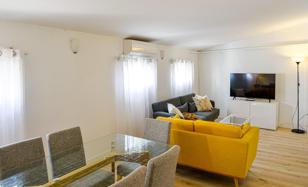 725,000 €
Total area 113 m² 3 bedrooms
 1,809,000 €
Total area 144 m² 3 bedrooms
 1,250,000 €
Total area 170 m² 3 bedrooms
 1,349,000 €
Total area 120 m² 2 bedrooms
What Is Spain’s Digital Nomad Visa and Who Is It For?
Spain’s Digital Nomad Visa is a residence permit introduced in 2023 for remote professionals who work for overseas companies or provide freelance services to clients outside Spain. It allows eligible applicants to live in Spain while continuing to work remotely without being tied primarily to the Spanish labour market.
The scheme was introduced under Spain’s Startup Act and is aimed mainly at professionals working in the digital economy.
Self-employed professionals and sole traders may also qualify for Spain’s Digital Nomad Visa, provided that they work with corporate clients. Under Spanish law, digital nomads may earn up to 20% of their professional income from Spanish clients after obtaining residence status.
How Does It Differ from Other Spanish Visa Routes
Criterion | Digital Nomad Visa | Spanish Non-Lucrative Visa | Spanish Golden Visa (closed to new applicants on 3 April 2025) |
Basis for application | Remote employment or freelance work, primarily for companies or clients outside Spain | Sufficient financial means without working in Spain | A qualifying investment, including at least €500,000 in Spanish property |
Minimum income or funds | Main applicant: at least €2,849 per month, equivalent to 200% of Spain’s 2026 minimum wage calculated over 12 monthly payments.*First accompanying family member: €1,068 per month, equivalent to 75% of the minimum wage.Each additional family member: €356 per month, equivalent to 25% of the minimum wage. | Main applicant: €2,400 per month, equivalent to 400% of the IPREM.Each accompanying family member: an additional €600 per month. | No separate minimum-income requirement, although applicants had to prove that they had sufficient financial means in addition to making the qualifying investment |
Right to work | Yes. Employees must work for companies based outside Spain. Self-employed professionals may work with Spanish clients, provided that this activity does not exceed 20% of their total professional activity | No. The permit does not authorise employment, self-employment or remote work | Yes |
Initial validity | A visa issued through a Spanish consulate is valid for up to one year. Applicants who apply from within Spain may receive a three-year residence permit | The initial residence permit is valid for one year; subsequent renewals are generally granted for two years | The investor visa was generally valid for one year, while the residence authorisation could be granted for three years |
Renewal and long-term residence | Renewable for two-year periods. After five years of continuous legal residence, the applicant may qualify for long-term residence | Renewable, provided that the applicant continues to meet the financial and residence requirements. It may also lead to long-term residence after five years | Existing permits may continue to be renewed under the applicable transitional rules |
Tax treatment | Applicants who qualify for Spain’s special expatriate tax regime may pay non-resident income tax at 24% on employment income of up to €600,000. The regime is not granted automatically | Standard Spanish tax-resident rules generally apply if the holder becomes tax resident in Spain | Standard Spanish tax rules generally apply if the holder becomes tax resident in Spain |
Who Is Spain’s Digital Nomad Visa Designed For?
Spain’s Digital Nomad Visa is suitable for:
- employees of foreign companies who work remotely, including software developers, designers and digital marketing specialists;
- freelancers with regular contracts and clients based outside Spain;
- entrepreneurs who own a company registered abroad and continue to manage it remotely;
- non-EU nationals who wish to live in Spain without investing in local property or establishing a business in the country.
Eligible applicants may also bring qualifying family members, including a spouse or unmarried partner, minor children, financially dependent adult children who have not formed their own family, and dependent parents. Additional financial means must be demonstrated for each accompanying family member.
The Spain Digital Nomad Visa advantages
The Digital Nomad Visa allows you to live in Spain for an unlimited amount of time. The main condition is to have a valid work contract in another country, which guarantees a high level of income. Among the main advantages, the following can be distinguished:
- Permanent residence in Spain. The residence permit allows the applicant and their family members to live legally in the Kingdom of Spain. The Digital Nomad Visa may also be granted to a spouse, a partner in an equivalent relationship, minor children, financially dependent adult children who have not formed their own family, and dependent parents. An additional 75% of the required income must be demonstrated for the first family member and 25% for each subsequent family member.
- Travelling around the Schengen area. A resident of Spain can move freely within the Eurozone.
- Getting income in Spain. The applicant can receive up to 20% of the total income from individuals and legal entities in Spain.
- Opening an account with an EU bank. A resident has the right to open accounts in banks of Spain and other EU countries.
- The possibility of obtaining Spanish citizenship after 10 years of stay in Spain.
- Treatment. «Cuadro medico sin copago» health insurance provides free doctor visits, ambulance calls, hospitalisation, treatment and operations.
- EU driver’s licence. The visa holder can buy and register a car.
- You do not need to take exams for knowledge of the Spanish language and the history of the country.
Spain Digital Nomad Visa requirements

Main Requirements for Applicants
- The applicant must be over 18 years of age.
- The applicant must not be a citizen of the EU, the European Economic Area or Switzerland, or a family member entitled to residence under the EU freedom of movement rules.
- The applicant must demonstrate that their work can be performed remotely and does not require their physical presence at the employer’s or client’s premises.
- The applicant must have worked for their current employer or provided services to their clients for at least three months before submitting the visa application.
- The applicant must demonstrate that the company they work for, or the clients they provide services to, have been operating for at least one year.
- The applicant must not be subject to EU sanctions.
- The applicant must not have previously been deported from an EU country and must have no record of immigration or visa violations.
- The applicant must have no criminal record in their country of nationality or in any country where they have resided.
- The applicant must own or have long-term rented accommodation in Spain.
- The applicant must obtain private medical insurance from an insurer authorised to operate in Spain.
- The applicant must not have any infectious disease that could pose a serious threat to public health. A medical certificate must be provided.
Financial Requirements and Income
To obtain Spain’s Digital Nomad Visa, applicants must meet financial requirements that depend on the number of accompanying family members and the method of application.
The main applicant must demonstrate that their income under an employment contract or contracts with clients is equal to or higher than the required minimum of €2,849 per month. Financial means of €1,068 per month, equivalent to 75% of the SMI, must be demonstrated for the first accompanying family member, and €356 per month, equivalent to 25% of the SMI, for each additional family member.
Example calculation for a family with two children:
- €2,849 for the main applicant;
- €1,068 for the spouse or partner;
- €356 × 2 for two children.
Total: €4,629 per month.
To demonstrate compliance with the financial requirements for Spain’s Digital Nomad Visa, applicants must provide the following documents:
- Employment contract: valid for at least three months before the application date and stating the applicant’s income and permission to work remotely from Spain.
- Bank statements: showing regular income payments during the previous three months.
- Proof of income: such as tax returns or certificates issued by the employer.
- Company registration certificate: self-employed applicants must provide documents confirming that the company has been operating for at least 12 months.
- Self-employed applicants may receive no more than 20% of their professional income from clients registered in Spain.
Documents Required for Spain’s Digital Nomad Visa
The main applicant and accompanying family members must provide the general documents required for the selected application route. The main applicant must additionally submit evidence of their employment or professional activity, qualifications, income and social security coverage. Family members must provide documents confirming their relationship to and, where applicable, financial dependence on the main applicant.
Mandatory Document Package
- a valid passport and copies of the pages required by the relevant Spanish consulate or immigration authority;
- a recent passport-size colour photograph that meets the requirements of the relevant consulate;
- a completed and signed national visa application form when applying through a Spanish consulate, or the relevant residence permit application form when applying from Spain;
- evidence of professional qualifications relevant to the applicant’s position, such as a university degree, professional certificates or proof of at least three years of professional experience;
- a CV describing the applicant’s education and professional experience;
- documents confirming the applicant’s employment or contractual relationship with a foreign employer or clients, including the remuneration payable;
- a letter from the employer or client confirming that the relationship has existed for at least three months and that the applicant is authorised to work remotely from Spain;
- evidence that the foreign company or client has been operating continuously for at least one year;
- evidence of sufficient financial means, such as employment or service contracts, payslips, bank statements and tax returns;
- public or private health insurance valid in Spain, unless the applicant is covered by the Spanish public healthcare system under the applicable social security arrangements;
- a criminal record certificate issued by the relevant authorities in the applicant’s country or countries of residence, where required;
- a signed declaration confirming the absence of criminal convictions during the period specified by the Spanish authorities;
- a medical certificate confirming that the applicant does not suffer from any disease that could have serious public health implications under the International Health Regulations, when applying for a national visa through a Spanish consulate;
- proof of payment of the applicable visa or residence permit fee;
- proof of legal entry or legal stay in Spain when applying for a residence permit from within Spain;
- a NIE, the Spanish foreign national identification number, where required by the relevant consulate or for the residence permit procedure.
Foreign public documents must generally be legalised or apostilled, unless an exemption applies under an international agreement, and accompanied by an official translation into Spanish where required.
Applicant’s Social Security Coverage
The application must also include documents confirming the applicant’s social security position:
- an employee must provide a certificate confirming continued coverage under the social security system of the country in which the employer is established, provided that this country has a social security agreement with Spain that covers the applicant’s circumstances. Where continued foreign coverage is not available, the foreign employer must register with the Spanish Social Security system and register the employee before work begins in Spain;
- a self-employed applicant must provide evidence of continued coverage under an applicable international social security agreement or undertake to register with the Spanish Social Security system as a self-employed worker.
The exact certificate depends on the country in which the applicant is insured and the applicable bilateral or multilateral social security agreement.
Documents for Family Members
When applying for accompanying family members, the following documents must also be provided:
- a completed and signed national visa application form for each family member when applying through a Spanish consulate, or the relevant family residence permit form when applying from Spain;
- a valid passport and copies of the pages required by the relevant Spanish authority;
- a recent passport-size colour photograph;
- a marriage certificate or evidence of a registered or durable partnership;
- birth certificates for children;
- documents confirming that an adult child is financially dependent on the main applicant and has not formed a family unit of their own;
- documents confirming that a parent or other eligible relative in the ascending line is financially dependent on the main applicant;
- evidence of sufficient additional financial means for each accompanying family member;
- health insurance valid in Spain for each family member, unless they are covered by the Spanish public healthcare system;
- a criminal record certificate for each family member of criminal responsibility age, where required;
- a medical certificate for each family member when required for a consular visa application;
- a NIE for each family member, where required by the relevant consulate or residence permit procedure.
Civil-status documents and criminal record certificates issued abroad must generally be apostilled or legalised, unless an exemption applies, and officially translated into Spanish where required.
How to Obtain Spain’s Digital Nomad Visa
Stage 1 — Preparing the Documents
At this stage, the applicant collects all the documents required for the Digital Nomad Visa, obtains an apostille or legalisation where necessary, arranges official translations into Spanish, takes out medical insurance, obtains a Spanish foreign national identification number (NIE), where required, and submits the application.
Preparation Stage | Completion Time | Estimated Cost per Applicant | Comments |
Collection and preparation of documents | 2–4 weeks | €0—€200 | Includes completing application forms and preparing a CV, employment contracts, proof of income and other supporting documents. |
Obtaining an NIE (Número de Identidad de Extranjero) | 1–3 weeks | €9.84 government fee | The NIE may be obtained through a Spanish consulate or after arrival in Spain. |
Translation and apostille of documents | 1–2 weeks | €300—€600 | Official documents may require an apostille and a sworn translation into Spanish by a traductor jurado. |
Arranging medical insurance | 1–3 days | €50—€100 per month | The policy must cover the required period of residence and be issued by an insurer authorised to operate in Spain. |
Consular fee for a Type D visa | Payable on the application date | €80 | Paid when the application is submitted to the Spanish consulate. |
Application fee under Form 790-038 | Payable on the application date | €89.96 | A mandatory government fee payable when the application is submitted. |
Additional expenses, including notarial and courier services | As required | €100—€300 | May include notarisation, delivery of documents and other related expenses. |
Total Preparation Costs
Individual applicant: approximately €800—€1,200.
Family of three or four: approximately €2,000—€2,500, including additional costs for translations, insurance and government fees for each family member.
Total Preparation Time
The full document preparation process usually takes four to six weeks, depending on how quickly the required documents are collected, the NIE is obtained and the translations are completed.
Stage 2 — Submitting the Application
The Digital Nomad Visa application stage includes booking an appointment with the Spanish consulate, submitting the documents in person, paying the required fees and providing biometric data. This stage determines whether the applicant receives authorisation to enter and reside in Spain.
Stage | Completion Time | Estimated Cost per Applicant | Comments |
Booking an appointment (Cita Previa) | 2–4 weeks | Free of charge | The appointment is booked through the consulate’s website. Waiting times depend on the consulate’s workload. |
Submitting the documents | On the appointment date | Free of charge | Personal attendance may be required. The applicant must submit a complete set of supporting documents. |
Payment of the visa fee | On the application date | €80 | The amount may vary depending on the applicant’s nationality and the consulate where the application is submitted. |
Payment of the government fee under Form 790-038 | On the application date | €89.96 | A mandatory government fee payable when the application is submitted. |
Submission of biometric data, including fingerprints and a photograph | On the application date | Included in the visa fee | Biometric data must be provided where required as part of the application procedure. |
The application stage usually takes between three and six weeks, including the time required to secure an appointment and submit the documents.
Stage 3 — Receiving the Visa and Entering Spain
At this stage, the applicant receives the issued visa and enters Spain. If the applicant enters the Schengen Area through another country rather than Spain, they may need to submit a declaration of entry at a Spanish police station within 72 hours of arrival. This document may be required for the subsequent residence permit procedure.
Stage | Completion Time | Estimated Cost per Applicant | Comments |
Visa application processing | 15–45 working days | — | Processing times depend on the consulate and its workload. Additional documents may be requested in some cases. |
Collecting the visa | 1–2 weeks after approval | — | Once the application has been approved, the visa is usually collected from the consulate or returned using the delivery method permitted by that consulate. |
Entering Spain | Within the visa’s validity period | Depends on travel costs | The applicant must enter Spain before the visa expires. |
Registering at the local address (empadronamiento) | Within 30 days of arrival | Free of charge | The applicant must register with the local municipality at their place of residence. |
Total Time Required for Receiving the Visa
The visa approval, collection and entry process usually takes approximately six weeks, although the exact timeframe depends on the relevant consulate and the applicant’s travel arrangements.
Spain Digital Nomad Residence Permit

How to Obtain a Residence Permit After Receiving the Visa
A Digital Nomad Visa issued by a Spanish consulate is generally valid for up to one year and already authorises the holder to live and work in Spain during this period. To obtain a longer-term residence permit, the applicant must submit an electronic application while legally residing in Spain. The application may be filed personally using a digital certificate or by an authorised representative.
Applications are submitted electronically to the Large Companies and Strategic Groups Unit (UGE-CE). The statutory decision period is 20 working days. Notifications and requests for additional documents can be accessed through the electronic portal used to submit the application.
If the application is approved, the residence permit may be granted for up to three years and can subsequently be renewed for two-year periods. Where the applicant’s employment or service contract is valid for less than three years, the residence permit may be issued only for the remaining term of that contract. An indefinite contract is therefore not mandatory, but the contract term can affect the duration of the permit.
Stage | Completion Time | Estimated Cost per Applicant | Comments |
Obtaining a digital certificate (Certificado Digital) | 1–2 weeks | Free of charge | An NIE is generally required. The procedure usually includes an online application and identity verification, either in person or through an available remote identification method. An authorised representative may also submit the residence application on the applicant’s behalf. |
Submitting the electronic residence permit application | 1–2 days | Government fee applies | The application is submitted electronically to the UGE-CE with all supporting documents. The applicable government fee must also be paid. |
Waiting for a decision on the residence permit application | Up to 20 working days | — | The decision or any request for additional documents is delivered electronically through the relevant notification system. |
Booking an appointment to apply for the TIE | 1–3 weeks | Free of charge | After the residence permit has been approved, the applicant books an appointment through the Cita Previa system at the relevant police station. Waiting times depend on local availability. |
Submitting the TIE application and biometric data | On the appointment date | Approximately €15—€25 | The applicant pays the fee under Form 790, Code 012, submits the required documents and provides fingerprints. |
Collecting the TIE | Usually 30–45 days after fingerprinting | — | The physical residence card is collected from the police station indicated at the time of application. |
Individual applicant: approximately €20—€100, excluding professional representation, document translation and other optional services.
Family of three or four: approximately €60—€300, including separate residence card fees for each family member and possible related expenses.
The residence permit application itself is normally decided within 20 working days. After approval, booking the biometric appointment and receiving the physical TIE may take an additional one to two months, depending on appointment availability and the workload of the local police station.
The entire process, from preparing the initial visa documents to receiving the residence card, may take several months. However, it is inaccurate to state that obtaining the Digital Nomad residence permit always takes up to six months: the actual timeframe depends on the application route, the completeness of the documents, the relevant consulate and local appointment availability.
Renewal of the Digital Nomad Residence Permit
In 2026, Spain’s Digital Nomad Residence Permit may be granted for an initial period of up to three years. Once this period expires, the permit may be renewed for a further two years. This means that the total period of legal residence under the programme may reach five years. After five years of continuous legal residence, the applicant may qualify for long-term residence, provided that all applicable residence requirements are met.
Renewal Requirements
The residence permit may be renewed provided that the applicant continues to meet the conditions under which it was originally granted.
First, the applicant must continue to comply with the applicable residence requirements. Spending at least 183 days per year in Spain generally determines Spanish tax residence, but it is not a separate statutory requirement for renewing the Digital Nomad Residence Permit.
Second, the applicant must demonstrate that they continue to work remotely for foreign employers or clients and that their income remains stable and sufficient. In 2026, the required minimum for the main applicant is €2,849 per month.
The renewal application may be submitted during the 60 calendar days preceding the expiry of the current residence permit. Applicants are advised to apply within this period to avoid complications or a lapse in their legal residence status.
Renewal Procedure
The renewal application is submitted electronically to the Large Companies and Strategic Groups Unit (UGE-CE), either by the applicant using a Certificado Digital or by an authorised representative. The applicant must provide updated documents confirming that all eligibility requirements continue to be met and pay the applicable government fee.
Once the renewal has been approved, the applicant must book an appointment at the relevant police station, provide fingerprints and apply for a new Foreigner Identity Card (TIE). The TIE fee is paid using Form 790, Code 012.
Taxes for Digital Nomads in Spain
Holding Spain’s Digital Nomad Visa or Residence Permit does not automatically require the applicant to become a Spanish tax resident. However, a person will generally be treated as a tax resident in Spain if they spend more than 183 days in the country during a calendar year or if Spain is the main centre of their economic activities or interests.
Ordinary Spanish tax residents are generally subject to Spanish tax on their worldwide income, including income earned both in Spain and abroad. The applicable double taxation treaty may affect where particular income is taxed and whether a foreign tax credit is available.
Tax Residence and Rates
Spain applies a progressive personal income tax system under which the rate depends on the taxpayer’s annual income and autonomous community of residence. Digital nomads who do not apply for the special expatriate tax regime, do not qualify for it or have reached the end of its validity period are normally taxed under the standard Personal Income Tax regime, known as IRPF.
Annual Income (€) | Indicative Tax Rate |
Up to €12,450 | 19% |
€12,450—€20,200 | 24% |
€20,200—€35,200 | 30% |
€35,200—€60,000 | 37% |
€60,000—€300,000 | 45% |
Over €300,000 | 47% |
These are indicative combined rates. The final tax burden may vary depending on the autonomous community, the type of income, available allowances and the taxpayer’s personal circumstances.
Digital nomads who become tax resident in Spain and qualify for the special expatriate tax regime, commonly known as the Beckham Law regime, may instead be taxed under special rules based on the Non-Resident Income Tax framework.
The Beckham Law Regime: Tax Benefits
The Beckham Law regime, officially known as the régimen fiscal especial aplicable a los trabajadores, profesionales, emprendedores e inversores desplazados a territorio español, was extended under Spain’s Startup Act to include certain remote workers, professionals, entrepreneurs and their qualifying family members.
It may allow qualifying taxpayers to:
- pay tax at a fixed rate of 24% on qualifying employment income of up to €600,000 per year and 47% on the excess;
- be taxed primarily on Spanish-source income, although employment income is generally treated as taxable in Spain under the special rules;
- avoid certain reporting obligations that apply to taxpayers under the ordinary worldwide-income regime, depending on their assets and individual circumstances;
- be subject to Spanish wealth taxation generally only in respect of assets and rights located in Spain;
- use the regime during the tax year in which Spanish tax residence is acquired and the following five tax years.
The regime is not granted automatically. The taxpayer must meet the statutory eligibility conditions and submit Form 149 to the Spanish Tax Agency within six months of the date on which the professional activity begins, as shown by the Spanish Social Security registration or the relevant document confirming continued foreign social security coverage.
Legal Framework: Spain’s Digital Nomad Law
Law 28/2022 of 21 December 2022, commonly known as the Startup Act (Ley de Startups), is the principal legislation governing Spain’s support for innovative entrepreneurship. It establishes a favourable legal and tax framework for start-ups, investors and digital nomads.
Key Provisions of the Law
Law 28/2022 establishes a framework for supporting the creation and growth of start-ups and attracting international talent and investment.
Definition of a start-up: a company established no more than five years ago, or seven years ago in certain sectors, which has not distributed dividends, is not listed on a regulated market and operates an innovative and scalable business model. At least 60% of its workforce must be employed in Spain. The company must also obtain start-up certification from ENISA.
Tax incentives:
- a reduction in the corporate income tax rate from 25% to 15% during the first four tax periods in which the company records a positive taxable result;
- an increase in the annual tax exemption for employee share options from €12,000 to €50,000;
- an increase in the personal income tax deduction for investments in newly established companies from 30% to 50%, with the maximum annual investment base rising to €100,000.
Simplified administrative procedures: Spain allows limited liability companies to be incorporated with share capital of €1 and provides electronic company formation procedures through the CIRCE system. The exact registration time depends on the documents, corporate structure and authorities involved.
Support for digital nomads: the law introduced a dedicated immigration route for remote employees and self-employed professionals, allowing eligible non-EU nationals to live and work legally in Spain.
Law 28/2022 complements and expands the existing legal framework, including Law 18/2022 on the creation and growth of companies, by introducing specific support measures for start-ups and innovative businesses. It also aims to reduce administrative barriers and compliance costs for newly established companies.
Future Development
Since the law entered into force, Spain has continued to develop its start-up certification system and related support programmes. Further development of the start-up ecosystem may include new financing instruments, public support schemes and initiatives designed to attract entrepreneurs, investors, digital nomads and other international professionals.
Best Cities in Spain for Digital Nomads
In 2026, Spain remains one of the most attractive countries for digital nomads. Its developed infrastructure, mild climate and wide variety of destinations allow remote workers to choose between major business centres, coastal cities and islands. However, rental costs in Spain’s largest cities have increased considerably, particularly in central districts.
City | Rent for a One-Bedroom Flat in the City Centre | Availability of Coworking Spaces | Public Wi-Fi Availability | Comments |
Madrid | approximately €1,200—€1,700 per month | Extensive | Extensive | Developed infrastructure, major business centre and strong professional networks |
Barcelona | approximately €1,100—€1,600 per month | Extensive | Extensive | Major start-up hub, international community and broad cultural offering |
Valencia | approximately €900—€1,300 per month | Good | Good | Coastal location, developed infrastructure and lower living costs than Madrid or Barcelona |
Málaga | approximately €1,000—€1,300 per month | Good | Good | Warm climate, growing technology sector and international community |
Canary Islands | from approximately €700—€1,100 per month, depending on the island and location | Good in Las Palmas and Santa Cruz de Tenerife | Good in major urban and tourist areas | Mild year-round climate, established remote-working communities and island lifestyle |
Rental prices are indicative and vary depending on the district, property condition, lease term and whether the property is offered as a long-term or seasonal rental. Current listings show a wide range of prices in Madrid, Barcelona, Valencia and Málaga, while Málaga’s rental market continued to rise in 2026.
The Tranio team provides professional advice on obtaining a Spanish residence permit through the purchase of property. We will consider your application as soon as possible.Contact us
FAQ about Spain Digital Nomad Visa
The visa allows eligible applicants and their family members to reside legally in Spain, travel within the Schengen Area, work remotely and, subject to the relevant conditions, benefit from Spain’s special tax regime for expatriates. Permit holders may open an EU bank account and access public healthcare if they are registered with the Spanish Social Security system or otherwise entitled to public healthcare. Periods of legal residence may also count towards long-term residence and, where the relevant conditions are met, Spanish citizenship.
The main applicant must demonstrate an income of at least €2,849 per month. An additional €1,068 per month is required for the first accompanying family member and €356 per month for each subsequent family member.
Applicants must provide a valid passport, a completed application form, an employment or service contract stating their income, evidence of sufficient financial means, health insurance or proof of social security coverage, and a criminal record certificate. Additional documents confirming professional qualifications, permission to work remotely and the employer’s or client’s business activity are also required.
Yes, provided that the applicant demonstrates sufficient financial means for the entire family. Based on the 2026 thresholds stated above, a family of three consisting of the main applicant, a spouse or partner and one child would need to demonstrate at least €4,273 per month.
Digital nomads who become ordinary Spanish tax residents are generally subject to progressive personal income tax on their worldwide income. The final rate depends on the amount and type of income, the taxpayer’s personal circumstances and the autonomous community in which they live.
Qualifying applicants who opt for the special expatriate tax regime may instead pay 24% on qualifying employment income of up to €600,000 and 47% on the amount exceeding €600,000.
The Beckham Law is a special tax regime available to certain individuals who move to Spain and become Spanish tax residents. Qualifying taxpayers may pay tax at 24% on qualifying employment income of up to €600,000 and 47% on the excess.
Under this regime, foreign assets are generally outside the scope of Spanish wealth tax, although Spanish assets may still be taxable. The regime applies during the tax year in which Spanish tax residence is acquired and the following five tax years. It is not granted automatically: eligible taxpayers must submit Form 149 within six months of the date on which their professional activity begins, as evidenced by their social security registration or equivalent document.
Yes. A Spanish long-stay visa or residence permit allows its holder to travel to other Schengen countries for up to 90 days within any 180-day period. It does not grant the right to reside or work in another Schengen country.
A Digital Nomad Visa issued by a Spanish consulate is valid for up to one year. Applicants who are legally present in Spain may apply for a residence permit valid for up to three years. The residence permit may be renewed for additional two-year periods, provided that the eligibility requirements continue to be met.
After five years of continuous legal residence, the applicant may qualify for long-term residence, subject to the applicable conditions.
Employees applying under the Digital Nomad route must work for companies based outside Spain. Self-employed professionals may work with Spanish clients, provided that such activity does not exceed 20% of their total professional activity.
A permit holder may establish a company in Spain, but operating a business primarily in the Spanish market may fall outside the conditions of the Digital Nomad route and require another type of residence authorisation, depending on the nature of the activity.
The overall timeframe depends on the application route and how quickly the supporting documents can be prepared.
Applicants applying through a Spanish consulate must first collect and legalise or apostille the required documents, arrange official translations and submit a national visa application. Applicants who are legally present in Spain may apply directly for a residence permit through the Large Companies and Strategic Groups Unit.
The statutory decision period for a residence permit application is 20 working days. Preparing the documents, securing appointments and obtaining the physical TIE residence card may extend the overall process to several months.
Alternatives to Spain’s Digital Nomad Visa
The Digital Nomad Visa is only one of several immigration routes available to those wishing to relocate to Spain. Depending on the applicant’s circumstances and objectives, other residence permits may be more appropriate. These include the Non-Lucrative Residence Permit, work permits, student visas and family reunification.
Non-Lucrative Residence Permit (Residencia No Lucrativa)
This residence permit is intended for individuals with sufficient independent financial means who do not intend to work in Spain. Applicants must demonstrate that they have adequate financial resources to support themselves and any accompanying family members throughout their stay.
The permit does not authorise employment or self-employment in Spain, although it allows long-term residence. It is commonly chosen by retirees and financially independent individuals.
Work Permit (Permiso de Trabajo por Cuenta Ajena)
This residence permit is available to applicants who have received a job offer from a Spanish employer. In most cases, the employer must obtain prior authorisation before the employee applies for the visa.
The procedure is generally more restrictive than other residence routes because it depends on the position offered, labour market conditions and the applicable immigration rules.
Student Visa
A student visa is issued for the duration of studies at a recognised Spanish educational institution, including universities and eligible language schools.
The permit allows students to reside in Spain and, subject to the applicable conditions, work for up to 30 hours per week. It may also provide a pathway to another residence status after completing the course of study.
Family Reunification
Family reunification allows eligible family members to join a person who is already legally resident in Spain.
Applicants must demonstrate the relevant family relationship, while the sponsoring resident must meet the applicable accommodation and financial requirements. The route is commonly used by spouses, partners, children and, in certain circumstances, dependent parents.
Comparison of Spanish Residence Permit Types
Residence Route | Right to Work | Minimum Financial Requirement | Initial Validity | Family Members | Comments |
Digital Nomad Visa | Yes, subject to the programme rules | From €2,849 per month | Up to 1 year (visa) or up to 3 years (residence permit) | Yes | Intended for remote employees and self-employed professionals working primarily for employers or clients outside Spain |
Non-Lucrative Residence Permit | No | Sufficient financial means (currently based on 400% of IPREM) | 1 year | Yes | Suitable for financially independent individuals who do not intend to work in Spain |
Work Permit | Yes | Depends on the employment contract | Usually 1 year | Yes, subject to the applicable conditions | Requires sponsorship by a Spanish employer |
Student Visa | Yes, subject to legal limits | Sufficient funds to cover tuition fees and living expenses | For the duration of the course | Limited | Students may work up to 30 hours per week, subject to the applicable conditions |
Family Reunification | Depends on the type of permit held | Depends on the sponsoring resident | Depends on the sponsor’s residence status | Not applicable | Available only to eligible family members of Spanish citizens or foreign residents in Spain |
📉 24% tax rate under Beckham Law
👨👩👧 Relocate with your family
🚀 Apply from within the country
We will send you a content digest not more than once a week