Montenegro Mortgage for Foreigners: Financing Property Purchases in 2026

Foreign buyers do not necessarily need to purchase real estate in Montenegro entirely with cash. A Montenegro mortgage for foreigners is available through some local banks, although eligibility varies significantly depending on the applicant's residence status, employment, income, nationality and the property being purchased.
Some banks explicitly accept non-resident borrowers. Adriatic Bank, for example, currently states that its housing loan can be issued to a resident citizen of Montenegro or a non-resident who meets the bank's creditworthiness requirements. CKB also offers housing loans to certain non-residents, although its published conditions require employment and regular residence in Montenegro.
This distinction is important. There is no single standard set of conditions for mortgages in Montenegro available to every foreign buyer. A person working and living in Montenegro may have considerably more financing options than someone who lives abroad and receives all income outside the country.
Mortgage rates and conditions also differ between banks. Published housing-loan offers in 2026 include fixed, variable and combined interest structures, with some loans extending for up to 30 years. For foreign property buyers, financing should therefore be investigated before committing to a purchase.
Can Foreigners Get a Mortgage in Montenegro?
Yes, foreigners can obtain mortgages in Montenegro, but approval is not automatic. Banks assess each application according to their lending policies and the borrower's financial profile.
Adriatic Bank currently describes its housing loan as available to both qualifying residents and non-residents. The loan can be used to purchase real estate in Montenegro either as a primary residence or as an investment property.
CKB takes a somewhat narrower approach in its published conditions. Its housing loan is available to residents and certain non-residents with employment and regular residence in Montenegro. Eligible groups include employees, pensioners, seafarers, entrepreneurs with at least one year of business activity and applicants with other regular income that can be documented.
These examples illustrate why the term Montenegro mortgage for foreigners covers several different borrower profiles:
- foreigners permanently living and working in Montenegro;
- foreigners with temporary residence and local employment;
- entrepreneurs operating businesses in Montenegro;
- non-residents earning income abroad;
- property investors who already own assets in Montenegro.
The more closely an applicant's financial life is connected to Montenegro, the easier it may be for a local bank to verify income and collect repayments. A foreign buyer living entirely abroad may still find financing, but the number of available lenders can be smaller and additional collateral, documentation or equity may be required.
Cash purchases therefore remain attractive to some international buyers, particularly when they want to complete quickly or cannot satisfy a local bank's underwriting requirements.
How Mortgages in Montenegro Work
A housing mortgage normally involves a bank advancing part of the purchase price and taking security over the property. The borrower repays the loan through monthly instalments consisting of principal and interest. If the borrower fails to meet the loan obligations, the bank may ultimately enforce its mortgage against the property.
Property as Collateral
Banks normally require a first-ranking mortgage over real estate acceptable to them. Adriatic Bank's current housing-loan conditions, for example, require a first-rank mortgage and property insurance assigned in favour of the bank.
The bank therefore assesses not only the borrower but also the property. A buyer may have sufficient income but still fail to obtain financing if the property:
- has unclear ownership;
- contains unregistered construction;
- has problematic cadastral records;
- is difficult to value;
- has existing legal encumbrances;
- does not meet the bank's collateral standards.
Loan-to-Value Ratio
The loan-to-value ratio, or LTV, compares the amount borrowed with the bank's valuation of the property. For example:
- €180,000 mortgage ÷ €200,000 property value = 90% LTV
There is no single LTV limit applying to all foreign borrowers. Adriatic Bank currently publishes a maximum LTV of 0.90, or 90%, for its housing loan, although the bank retains the right to request additional security according to the borrower's creditworthiness.
This does not mean every foreign buyer can borrow 90% of the purchase price. Banks can require considerably more equity depending on the applicant, income source and property.
Interest Rates
Mortgage interest can be fixed, variable or combined. With a fixed rate, the interest rate remains unchanged for the agreed period. A variable rate normally consists of a fixed bank margin plus a reference rate such as six-month EURIBOR. A combined mortgage starts with a fixed rate and later switches to a variable formula.
Repayment
Housing loans are normally repaid through monthly annuities. A longer repayment period reduces the monthly instalment but increases the total amount of interest paid over the life of the loan.
Mortgage Requirements for Foreign Buyers
Banks apply their own underwriting standards, but foreign applicants should expect to demonstrate several things.
Identity
A passport or other acceptable identification document is required. Where the applicant has Montenegro residence status, the bank may also ask for a residence permit.
Stable Income
The borrower needs to demonstrate regular income sufficient to support the proposed mortgage. This may come from:
- salary;
- pension;
- self-employment;
- business activity;
- other documented recurring income.
CKB expressly includes employees, pensioners, entrepreneurs and clients with other types of regular provable income among potential housing-loan borrowers.
Employment Documentation
Banks may request:
- employment certificate;
- employment contract;
- salary confirmation;
- evidence of employment history.
Adriatic Bank's published documentation includes verified income confirmation, while CKB requests an employment certificate and may request an employment contract.
Bank Statements and Credit Information
Banks generally evaluate existing obligations and repayment capacity. Montenegrin lenders can also request consent to access the Central Bank's Credit Registry where applicable. Both Adriatic Bank and CKB list Credit Registry documentation among their application requirements. For a foreign borrower, statements or credit information from another country may also be relevant.
Source of Funds
International buyers should be able to demonstrate the legitimate origin of their down payment and other funds involved in the transaction. Possible evidence can include:
- employment income;
- accumulated savings;
- proceeds from another property sale;
- dividends;
- business income;
- investment income;
- inheritance.
Bank compliance requirements are separate from mortgage affordability. A person may have sufficient assets to buy the property but still need to document where those assets originated.
Property Documentation
The bank will require documentation for the property that will secure the mortgage. This can include:
- preliminary or final purchase agreement;
- title deed;
- cadastral information;
- property valuation;
- insurance.
Adriatic Bank currently requires a recent title deed and makes property valuation mandatory for its housing-loan product.
Resident vs Non-Resident Mortgage Applicants
The distinction between residents and non-residents can materially affect mortgage availability.
Foreign Residents
A foreigner who lives and works in Montenegro may have access to a wider range of standard retail mortgage products. Useful factors can include:
- Montenegro residence permit;
- local employment;
- salary paid into a Montenegrin bank;
- local bank account;
- established credit history;
- regular documented income.
CKB's housing-loan criteria specifically accommodate certain non-citizens with regulated residence and employment in Montenegro. For the bank, local employment also makes income easier to verify and loan repayment easier to administer.
Non-Residents
A genuine non-resident who lives and earns income abroad may face stricter underwriting. Adriatic Bank currently states that a qualifying non-resident can be a borrower under its housing-loan product.
However, the lender still evaluates creditworthiness and can request additional security. Issues that may receive greater attention include:
- country of residence;
- employer;
- income stability;
- currency of income;
- overseas debt;
- documentation standards;
- source of funds;
- ability to enforce obligations internationally.
Documents issued abroad may also require translation or certification. Foreign buyers should therefore avoid assuming that a product advertised to “non-residents” automatically applies to every nationality or income structure.
How Much Can Foreigners Borrow in Montenegro?
There is no universal maximum mortgage amount for foreign property buyers. The amount available generally depends on two limits:
- the value of the property;
- the borrower's ability to repay.
Loan-to-Value Limit
A bank may lend only a specified proportion of the property's appraised value. Adriatic Bank currently publishes a maximum housing-loan LTV of 90%. Suppose a buyer agrees to purchase an apartment for €300,000 and the bank also values it at €300,000.
At a hypothetical 80% LTV, the financing would be:
- mortgage: €240,000;
- buyer equity: €60,000.
At 60% LTV:
- mortgage: €180,000;
- buyer equity: €120,000.
The actual permitted LTV is determined by the lender.
Affordability Limit
Even if the property can support a large mortgage, the applicant must have sufficient income to service it. Banks consider existing obligations alongside the new monthly payment.
For example, an applicant already paying substantial amounts on:
- personal loans;
- mortgages abroad;
- credit cards;
- leasing arrangements;
may qualify for a smaller mortgage than an applicant with the same salary and no debt.
Bank Valuation
The lender normally bases its collateral decision on its own accepted valuation rather than solely on the agreed purchase price. This can become important if the buyer pays above the bank's assessment of market value.
Mortgage Interest Rates in Montenegro
Mortgage rates vary by bank, borrower, loan term and product. Current published offers demonstrate that both fixed and EURIBOR-linked financing is available. Adriatic Bank currently advertises a 4.99% fixed nominal rate on its housing loan. Its representative example shows an effective interest rate of 5.03%.
CKB currently publishes a representative housing-loan example with a 4.99% fixed nominal rate for some terms, while another option uses a variable structure based on 2.99% plus six-month EURIBOR. Its published loan range extends from €10,000 to €300,000 and up to 360 months.
NLB Bank also currently publishes fixed, variable and combined-rate housing products. Its 2026 examples include fixed rates as well as variable formulas linked to six-month EURIBOR. These are published examples, not guaranteed rates for every foreign applicant.
Current Lending Environment
In broader context, the Central Bank of Montenegro reported that the weighted average effective lending rate on newly approved loans was 5.96% in July 2026, while the weighted average effective rate across outstanding loans was 6.12%. These figures cover lending generally rather than residential mortgages specifically.
Nominal vs Effective Interest Rate
Foreign borrowers should compare the effective interest rate, not only the nominal headline rate. The effective rate can incorporate costs such as:
- interest;
- account-related charges;
- valuation costs;
- insurance;
- registry fees;
- other mandatory expenses included under the applicable calculation rules.
Two loans with similar nominal interest rates can therefore have different overall costs.
Mortgage Terms and Repayment Periods
Long mortgage terms are available in Montenegro, although each bank and borrower category has its own limits. CKB currently advertises repayment periods of 12 to 360 months, meaning up to 30 years, for its standard housing loan. NLB's current housing-loan examples also include repayment schedules extending to 360 instalments.
Age restrictions may limit the actual term. Banks generally require the final instalment to be paid before a specified borrower age. Longer terms reduce the monthly payment but can substantially increase the total interest paid.
For example, a €150,000 mortgage paid over 15 years will normally have a higher monthly instalment but lower total interest than the same mortgage paid over 30 years.
Early Repayment
Early repayment rules should be checked before signing. Adriatic Bank currently states that partial or full early repayment is permitted on its housing loan without an early-repayment fee. Other lenders may apply different contractual conditions.
Which Properties Can be Financed?
Not every property offered for sale will necessarily be acceptable mortgage collateral.
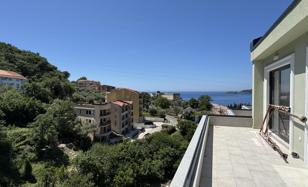
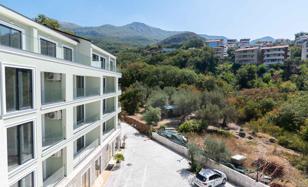
Apartments
Registered apartments are among the most straightforward properties to finance. Banks will normally check:
- title;
- cadastral registration;
- property valuation;
- legal encumbrances;
- building status.
Both new-build and resale apartments may qualify.
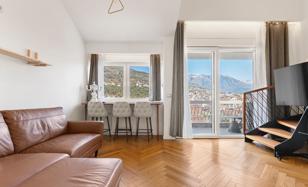 315,000 €
Total area 68 m² 2 bedrooms
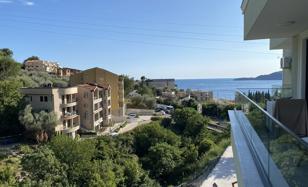 189,000 €
Total area 54 m² 1 bedroom
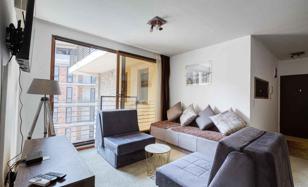 186,000 €
Total area 40 m² 1 bedroom
 871,000 €
Total area 136 m² 3 bedrooms
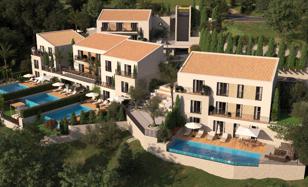 From 3,200,000 €
Completion in: 2027.I 5 units in total
 97,000 €
Total area 28 m² 1 bathroom
 104,000 €
Total area 45 m² Studio
 98,000 €
Total area 26 m²
Houses and Villas
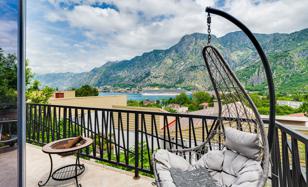
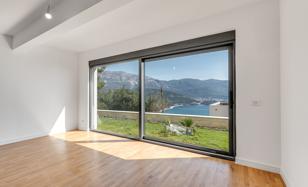
Houses require additional attention because both the building and land need to be legally suitable. Problems can arise when:
- part of the house is unregistered;
- extensions are not reflected in the cadastre;
- access is legally unclear;
- land classification is problematic;
- the property's market value is difficult to establish.
A luxury villa may also be worth a large amount but have a smaller resale market, which can affect how conservatively a bank values it.
 600,000 €
Total area 120 m² 4 bedrooms
 1,199,000 €
Total area 600 m²
 738,000 €
Total area 223 m² Land area: 379 m²
 687,000 €
Total area 220 m² Land area: 262 m²
From 3,200,000 €
Completion in: 2027.I 5 units in total
 620,000 €
Total area 179 m² Land area: 616 m²
 950,000 €
Total area 195 m² 2 bedrooms
 1,100,000 €
Total area 153 m² 3 bedrooms
New Developments
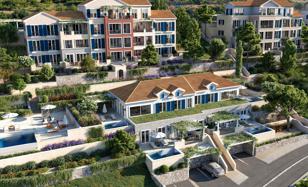
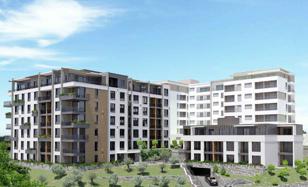
Banks can finance some new developments and even properties under construction. Adriatic Bank states that its housing loan can finance flats under construction. CKB also publishes special housing-loan arrangements for particular projects under construction.
For example, its cooperation with Ventura Partners includes financing for units under construction secured by a mortgage over the purchased residential unit. This type of cooperation can simplify financing because the bank is already familiar with the developer and project.
97,000 €
Total area 28 m² 1 bathroom
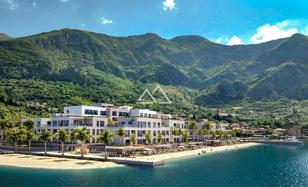 1,131,000 €
Total area 131 m² 2 bedrooms
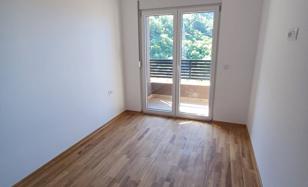 325,000 €
Total area 88 m² 2 bedrooms
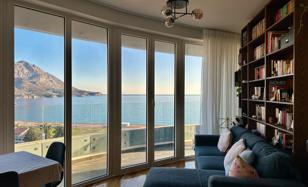 270,000 €
Total area 65 m² 2 bedrooms
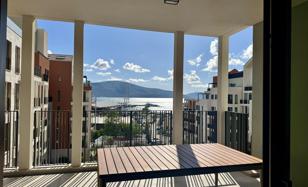 1,069,000 €
Total area 138 m² 2 bedrooms
 1,340,000 €
Total area 119 m² 3 bedrooms
 650,000 €
Total area 292 m² Land area: 400 m²
 105,000 €
Total area 33 m²
Land Plots
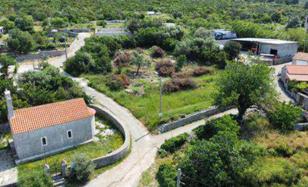
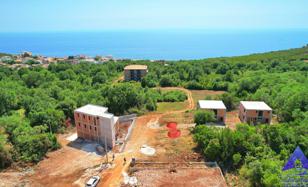
Land can be more difficult to finance than a completed home. The bank must consider:
- cadastral classification;
- planning status;
- legal access;
- development rights;
- marketability;
- value as collateral.
Foreign ownership restrictions applying to some categories of land can create an additional complication.
 219,000 €
Land area: 1,538 m²
 685,000 €
Land area: 1,240 m²
 290,000 €
Land area: 1,262 m²
 195,000 €
Land area: 1,002 m²
 1,272,000 €
Land area: 5,000 m²
 150,000 €
Land area: 1,000 m²
 542,000 €
Land area: 542 m²

Mortgage for New-Build Property in Montenegro
New-build purchases often involve a different payment structure from resale transactions. A developer may request payments at stages such as:
- reservation;
- contract signing;
- completion of structural work;
- completion of construction;
- handover.
A mortgage may finance the purchase at completion or, in certain bank-approved projects, while construction is still underway. Adriatic Bank explicitly provides for financing apartments under construction. CKB also has project-specific arrangements in which the purchased unit under construction can serve as the eventual collateral.
Foreign buyers should establish early whether the bank will release money according to the developer's proposed payment schedule. If a developer requires 40% of the price before the bank is prepared to release mortgage funds, the buyer will need sufficient personal capital to bridge the gap.
Developer Financing
Some developers offer instalment plans without traditional bank financing. These can be attractive to foreigners who do not qualify for a local mortgage. However, developer instalments and mortgages are not equivalent.
A developer plan may:
- have a shorter repayment period;
- require a large final instalment;
- be interest-free for part of the construction period;
- require full payment before or shortly after completion.
The total cash-flow requirements should therefore be compared carefully.
Mortgage for Resale Property
Resale transactions generally involve a completed property that the bank can inspect and value immediately. The typical process includes:
- agreement between buyer and seller;
- property due diligence;
- bank valuation;
- final mortgage approval;
- loan documentation;
- mortgage registration;
- payment to the seller.
If the seller already has a mortgage, the existing loan must also be dealt with. Part of the buyer's purchase funds may be used to repay the seller's bank so that the existing mortgage can be discharged and the new lender's security registered. The payment mechanism should be structured carefully so that neither buyer nor bank is left without adequate protection.
How to Apply for a Mortgage in Montenegro
1. Define Your Budget
Determine how much personal capital is available for:
- down payment;
- acquisition taxes;
- transaction expenses;
- furnishing;
- renovation;
- reserves.
Do not assume that the bank will finance every purchase cost.
2. Check Your Eligibility
Before choosing a specific property, determine whether banks are prepared to consider your borrower profile. Important questions include:
- Are non-residents eligible?
- Is local employment required?
- Is overseas income accepted?
- What currencies of income are accepted?
- What is the maximum term?
- What LTV might apply?
3. Prepare Financial Documents
Prepare income, employment and banking documentation before formal application. A foreign borrower may need more paperwork than a standard locally employed applicant.
4. Obtain Preliminary Bank Approval
Preliminary affordability assessment is useful before signing a binding property contract. It does not normally guarantee final approval because the property itself still has to pass valuation and legal checks.
5. Find a Property
Once the approximate financing range is known, the buyer can focus on properties within budget.
6. Complete the Property Valuation
The bank appoints or accepts an authorised appraiser. Adriatic Bank states that mortgage valuation is mandatory and performed by an authorised bank appraiser, with the cost borne by the borrower.
7. Pass Legal and Compliance Checks
The bank reviews:
- title;
- mortgageability;
- transaction documentation;
- borrower information;
- source of funds;
- creditworthiness.
8. Sign the Loan Agreement
Once approved, the borrower signs the credit and security documentation.
9. Register the Mortgage
The bank's mortgage is registered over the property in the cadastre.
10. Complete the Property Purchase
Funds are released according to the conditions of the loan and purchase agreements.
Documents Required for a Montenegro Mortgage
Requirements depend on borrower type, but typical documentation may include:
- passport or identity document;
- Montenegro residence permit where applicable;
- mortgage application;
- employment certificate;
- employment contract;
- salary confirmation;
- bank statements;
- tax returns where applicable;
- company financial statements for entrepreneurs;
- evidence of existing debts;
- preliminary property purchase agreement;
- title deed;
- property valuation;
- insurance documentation.
CKB's published requirements include identification, residence documentation for applicable non-residents, employment confirmation, preliminary purchase contract, title documentation and valuation authorisation.
Adriatic Bank similarly lists income confirmation, identification, purchase documentation, Credit Registry consent and a current title deed. Documents issued outside Montenegro may require certified translations or additional authentication depending on the circumstances.
Mortgage Costs in Montenegro
The interest rate is only one part of the cost of borrowing. A foreign borrower should budget for potential expenses including:
- Down payment. The amount depends on the permitted LTV and the bank's assessment of the borrower.
- Property valuation. Banks generally require an approved valuation. Adriatic Bank's current representative example uses a €100 valuation cost, while NLB's representative example uses €90. Actual charges may differ.
- Notary costs. Mortgage and security documentation may require notarial processing.
- Mortgage registration. Registration in the cadastre generates administrative costs.
- Property insurance. Banks generally require the mortgaged property to be insured and the policy assigned in favour of the lender. Adriatic Bank expressly requires property insurance for the entire loan period.
- Life insurance. Life insurance requirements vary by lender and borrower. It may become mandatory depending on age, loan term and product.
- Bank and account charges. Some lenders charge account, transfer or other servicing costs even where the mortgage itself has no origination fee. The effective interest rate is useful for comparing these broader expenses.
Property Valuation for Mortgage Purposes
A property valuation protects the bank against lending more than the collateral reasonably supports. The valuation usually considers:
- location;
- property size;
- condition;
- comparable sales;
- construction quality;
- legal status;
- market liquidity.
The bank does not have to accept the seller's asking price. Suppose the buyer agrees to pay €300,000 but the lender values the property at €260,000. If the bank finances 70% of valuation:
- €260,000 × 70% = €182,000 maximum mortgage
The buyer would then need to provide €118,000 personally, plus transaction expenses. This is why buyers should avoid committing all available cash to the contractual deposit before the bank valuation has been completed.
Income Requirements for Foreign Borrowers
Income is one of the most important factors in mortgage approval.
Salary Income
Regular employment income is usually the easiest form for banks to assess. Borrowers may need salary certificates, employment contracts and statements showing regular payments.
Self-Employment Income
Entrepreneurs may need to demonstrate a longer financial track record. CKB currently lists entrepreneurs who have operated for at least one year among potential housing-loan clients.
Business and Dividend Income
Banks may examine:
- business profitability;
- company accounts;
- tax filings;
- dividend history;
- consistency of distributions.
One unusually large dividend is generally less predictable than stable recurring income.
Overseas Income
Foreign income may be acceptable with some lenders, but treatment varies substantially. The bank may consider:
- country where income arises;
- employer;
- currency;
- regularity;
- supporting documents;
- taxation;
- transferability of funds.
Currency Risk
Montenegro uses the euro and local mortgages are generally euro-denominated. Adriatic Bank, for example, states that its housing loan is issued in euros. A borrower earning in USD, GBP or another currency therefore assumes exchange-rate risk. If the borrower's home currency falls against the euro, the mortgage becomes more expensive relative to their income.
Mortgages for Self-Employed Buyers and Business Owners
Self-employed applicants can obtain financing, but underwriting may be more detailed. Banks may request:
- company registration documents;
- annual financial statements;
- tax returns;
- business bank statements;
- ownership information;
- evidence of dividends or salary;
- proof of continuing operations.
The bank will generally focus on sustainable income rather than company turnover alone. A company generating €500,000 of annual revenue but little profit may not support a large personal mortgage. Similarly, recently established companies can be harder to assess because there is little historical financial information.
Can Rental Income be Used to Qualify for a Mortgage?
Existing documented rental income may potentially form part of a borrower's financial assessment, depending on the lender. However, buyers should not assume that expected income from the property being purchased will automatically be counted in full.
Projected short-term rental income is particularly uncertain because it depends on:
- seasonality;
- occupancy;
- nightly rates;
- management;
- competition;
- regulation.
A bank may therefore value existing stable and documented income more highly than an optimistic rental forecast. For the buyer's own investment calculation, the same conservative approach is useful.
Mortgage Financing vs Developer Payment Plans
Foreign buyers frequently choose between bank mortgages and developer financing.
Bank Mortgage
Advantages can include:
- longer repayment term;
- regulated lending framework;
- ability to spread the purchase cost over many years;
- potentially lower annual payments.
Disadvantages include:
- underwriting;
- extensive documentation;
- valuation requirements;
- mortgage registration;
- interest costs.
Developer Instalments
Advantages can include:
- simpler qualification;
- less financial documentation;
- instalments linked to construction;
- potentially interest-free periods.
Disadvantages can include:
- short repayment period;
- large final payment;
- dependence on developer completion;
- limited refinancing options.
A buyer should compare the actual timing and total cost rather than focusing only on whether a plan is described as “interest-free”.
Cash Purchase vs Mortgage in Montenegro
Factor | Cash purchase | Mortgage |
Upfront capital | High | Lower |
Speed | Usually faster | Approval process required |
Bank approval | Not required | Required |
Financing cost | None | Interest and related expenses |
Investment leverage | None | Yes |
Documentation | Property and compliance documents | Additional financial documentation |
Interest-rate risk | None | Possible |
Flexibility | Capital tied up in property | More liquidity can be retained |
Cash is simpler, but a mortgage can allow a buyer to preserve capital for other investments. The correct choice depends on liquidity, borrowing costs and the expected return from alternative uses of the buyer's capital.
Risks of Taking a Mortgage in Montenegro
Interest-Rate Risk
Variable mortgages can become more expensive if EURIBOR rises. NLB and CKB currently publish products linked to six-month EURIBOR, demonstrating that variable-rate borrowing remains part of the Montenegro mortgage market.
Currency Risk
A euro mortgage creates exchange-rate exposure for borrowers who earn in another currency.
Property-Price Risk
Property values can fall. A borrower with a high LTV has less equity protecting them if market prices decline.
Refinancing Risk
A buyer should not assume that a better refinancing option will always be available in the future.
Income Risk
Loss of employment, business problems or lower rental income can make monthly payments difficult.
Default Risk
The mortgage is secured against the property. Adriatic Bank explicitly warns that serious failure to fulfil loan obligations can lead to enforcement of collateral and ultimately loss of the property.
How to Improve Your Chances of Mortgage Approval
- Increase the down payment. Lower borrowing reduces the bank's risk and the borrower's monthly payment.
- Maintain stable documented income. Regular income with a clear history is easier for the lender to assess.
- Reduce existing debt. Lower existing monthly obligations improve affordability.
- Prepare source-of-funds evidence. Organised compliance documentation can prevent delays.
- Keep bank statements clear. Large unexplained cash movements may generate additional questions.
- Choose a legally clean property. Clear title and registration make the property more suitable collateral.
- Obtain preliminary approval. Understand the approximate financing available before signing a binding purchase agreement.
Buying Property in Montenegro with a Foreign Mortgage
A buyer is not limited to borrowing from a Montenegrin bank. Depending on the person's home country and finances, alternatives may include:
- refinancing property abroad;
- home-equity lending;
- investment-backed credit;
- international private banking;
- borrowing through another jurisdiction.
This can sometimes provide better conditions for a buyer with strong assets outside Montenegro. However, a mortgage from a foreign lender secured directly over Montenegrin property can be more complex because the lender needs an enforceable security structure in Montenegro.
Many buyers therefore borrow against assets in their home country and purchase the Montenegro property with the resulting cash. Currency should also be considered. Borrowing in euros against a euro-denominated Montenegro property removes one source of exchange-rate mismatch, particularly when rental income is also received in euros.
Can You Refinance a Mortgage in Montenegro?
Refinancing may be possible depending on bank policy and the borrower's circumstances. Potential reasons include:
- obtaining a lower rate;
- switching from variable to fixed interest;
- extending or shortening the term;
- consolidating other debt;
- changing lenders.
CKB's home-equity mortgage product currently advertises the possibility of refinancing existing obligations. Refinancing is not free. Costs may include:
- new valuation;
- mortgage discharge;
- new mortgage registration;
- notary expenses;
- bank charges;
- insurance changes.
The interest saving should therefore be compared with the total refinancing cost.
Mortgages and Property Investment
Borrowing can increase investment returns when the property performs well, but it also increases risk. Consider an investor buying a €300,000 apartment. If the buyer pays entirely in cash, the full €300,000 of capital is committed.
If the buyer contributes €120,000 and borrows €180,000, considerably less equity is tied up. If the property rises in value, leverage can increase the return on the investor's equity. However, the property must now generate enough income to cover:
- mortgage payments;
- property management;
- service charges;
- insurance;
- taxes;
- maintenance;
- vacancies.
Gross Yield vs Mortgage Cost
An investor should not compare the gross rental yield only with the nominal mortgage rate. For example, a property advertising a 6% gross yield does not necessarily generate positive cash flow with a 5% mortgage.
Operating expenses may reduce a 6% gross yield to 3.5–4% net. The correct calculation is:
- Net rental income – Mortgage payments = Annual cash flow
Vacancy Risk
A coastal holiday property can produce strong income during summer but significantly less during winter. Mortgage instalments, however, continue throughout the year. Investors should therefore maintain cash reserves.
Appreciation
Capital appreciation can improve leveraged returns, but future price growth should not be relied upon to service the loan. A mortgage should remain manageable even if property prices remain unchanged for several years.
Common Mistakes Foreign Mortgage Applicants Make
- Signing a purchase agreement before financing approval. A buyer may become contractually committed before knowing whether the bank will lend.
- Underestimating the required down payment. The bank may offer a lower LTV than expected or value the property below the purchase price.
- Assuming overseas income will automatically be accepted. Each lender applies its own rules to foreign income and non-resident borrowers.
- Ignoring additional costs. Valuation, insurance, notary work and mortgage registration can increase the effective cost of borrowing.
- Choosing a property that cannot be financed. A property's legal or cadastral status may prevent the bank from accepting it as security.
- Relying heavily on projected rental income. Expected holiday income can be volatile and may not be accepted by the lender.
- Ignoring variable-rate risk. A low EURIBOR-linked mortgage rate today can increase if the reference rate rises.
FAQ about mortgage in Montenegro
Yes. Some Montenegrin banks provide housing financing to qualifying foreign and non-resident borrowers. Adriatic Bank currently expressly includes qualifying non-residents in its housing-loan eligibility. CKB also accepts certain non-residents, although its published criteria include employment and regular residence in Montenegro.
Potentially yes, but the definition and conditions vary by bank. Applicants living entirely outside Montenegro may have fewer options than foreigners who have local residence and employment.
There is no single deposit requirement for all banks or foreign borrowers. Adriatic Bank currently publishes a maximum LTV of 90% for its housing loan, but actual lending may be lower depending on creditworthiness and collateral.
Published 2026 housing-loan offers include fixed rates around the 5% range and variable or combined products linked to six-month EURIBOR. Actual rates depend on the lender, product and borrower.
Some banks offer terms of up to 30 years. CKB currently advertises housing-loan repayment periods of up to 360 months, subject to borrower eligibility and age requirements.
Typical requirements include identification, proof of residence where applicable, income and employment documentation, Credit Registry consent, purchase documentation, title information, valuation and insurance.
It may be possible with some lenders, but treatment of foreign income is bank-specific. The country, currency, employer and documentation can all affect eligibility.
Yes, some banks finance new construction and selected properties under construction. Adriatic Bank explicitly states that flats under construction can be financed, while CKB publishes dedicated mortgage arrangements with selected developers.
Potentially, but land can be more difficult to finance because the bank must assess planning, ownership, valuation and marketability. Foreign ownership restrictions may also apply to some land categories.
Some documented rental income may be considered, depending on the lender, but buyers should not assume that projected income from a future holiday rental will be accepted in full.
A mortgage usually provides a longer repayment term but requires formal underwriting and generates interest costs. Developer financing can be simpler and shorter-term. The better option depends on the buyer's liquidity and the specific terms.
This depends on the loan. Adriatic Bank's current housing-loan terms provide for partial or full early repayment without an early-repayment fee. Other products should be checked separately.
We will send you a content digest not more than once a week