France Student Visa in 2026
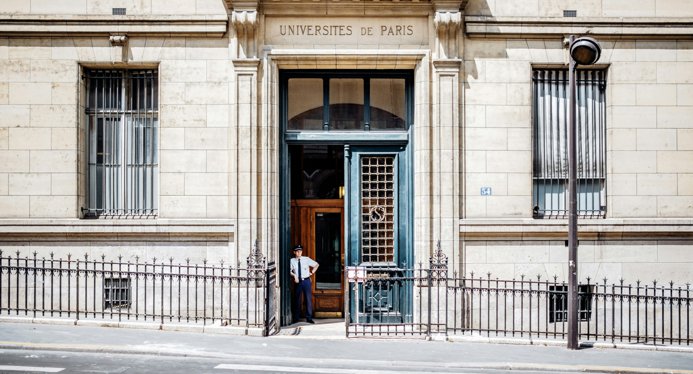
France has attracted international students for centuries, from the founding of the University of Paris in the Middle Ages to the development of today’s universities, grandes écoles, and specialised research institutions. In 2026, non-EU, EEA, and Swiss nationals planning to study in France for more than three months generally need a long-stay student visa, while shorter programmes are usually covered by a short-stay visa. This guide explains the current visa categories, application procedure, financial requirements, fees, and post-arrival formalities.
Do You Need a Student Visa to Study in France?
The visa requirement depends on the student’s nationality and the length of the study programme:
- Non-EU, non-EEA, and non-Swiss nationals generally need a student visa if their programme in France lasts more than three months. For courses lasting up to three months, students may need a short-stay Schengen visa, depending on their nationality.
- Citizens of Andorra and Monaco are not members of the EU or EEA but are exempt from the long-stay visa requirement for stays in France exceeding 90 days under special agreements with France. The same exemption applies to citizens of San Marino and Vatican City.
- Nationals of visa-exempt countries, including the United States, Canada, and the United Kingdom, may study without a visa for up to 90 days within any 180-day period, but must obtain a long-stay student visa for longer programmes.
Citizens of the European Union, European Economic Area, and Switzerland do not need a student visa or residence permit to study in France. This is because EU law guarantees them freedom of movement and residence within participating European countries. They must still enrol at an educational institution, hold valid identification, and have sufficient resources and health insurance.
Types of French Student Visas
The visa category depends primarily on the length and purpose of the study programme.
Short-Stay Student Visa in France (Visa de Court Séjour «Étudiant»)
This visa is intended for courses lasting no more than three months and authorises a stay of up to 90 days within any 180-day period. A residence permit is not required, and the visa generally cannot be extended or converted into a residence permit in France.
Student Examination Visa (Visa de Court Séjour «Étudiant-Concours»)
This short-stay visa is issued to applicants travelling to France to sit an entrance examination or attend an admission interview. If the applicant is admitted, they may apply for student residence status in France without returning to their country of residence, subject to the applicable conditions.
Long-Stay Student Visa in France (Equivalent to a Residence Permit — VLS-TS «Étudiant»)
Students enrolled in a programme lasting more than three months are generally issued a VLS-TS valid for between four months and one year. It serves as both an entry visa and a residence permit but must be validated online within three months of arrival in France.
If the programme continues beyond the validity of the VLS-TS, the student must apply for a carte de séjour «étudiant» before the visa expires. The residence permit is issued for the remaining duration of the study programme and may take the form of a one-year temporary card or a multi-year student residence card.
France Student Visa Requirements and Documents
Applicants must first be accepted or provisionally enrolled in a recognised educational institution in France. The visa application is completed through the France-Visas portal rather than directly on the website of an embassy or consulate. Students residing in a country covered by the Études en France procedure must normally complete the Campus France process before submitting their visa application.
The exact list of supporting documents is generated by the France-Visas Visa Wizard and may vary according to the applicant’s nationality, country of residence, course, and length of stay. Applicants for a long-stay student visa are generally required to provide:
- A valid passport. The passport must have at least two blank pages and meet the validity requirements shown in the personalised France-Visas checklist. It should generally remain valid for at least three months after the intended date of departure from France or the Schengen Area.
- A completed visa application form. The form must be completed through France-Visas, printed where required, dated, and signed.
- Two recent identity photographs. The photographs must comply with the applicable ICAO and France-Visas standards. They should be recent, measure approximately 35–40 mm in width, show the full face clearly, and have a plain, light-coloured background.
- Proof of admission or enrollment. Applicants must provide an enrollment certificate, pre-enrollment certificate, or formal admission letter from the French educational institution. The document should identify the programme, institution, and expected study period.
- Proof of sufficient financial resources. Students must normally demonstrate access to at least €615 per month for the duration of their stay. Evidence may include personal bank statements, a scholarship certificate, proof of regular income, or financial support from a guarantor.
- Proof of accommodation in France. This may include a tenancy agreement, university residence confirmation, hotel booking, accommodation certificate from a host, or another document showing where the student will live after arrival.
- Academic documents. Depending on the programme and the personalised checklist, applicants may need to submit diplomas, academic transcripts, certificates, or evidence of previous qualifications.
- Evidence of language proficiency, where required. The educational institution or Campus France may request proof of proficiency in French or English, such as DELF, DALF, TCF, IELTS, TOEFL, or another accepted qualification. There is no universal language test imposed on every French student visa applicant.
- Proof of health insurance, where requested. Insurance requirements depend on the type of visa, the applicant’s country of residence, and the personalised checklist. Short-stay students generally need travel medical insurance that complies with Schengen requirements. Long-stay students may be asked to hold private cover for the initial period before registering with the French health insurance system.
- Additional documents requested by Campus France or the consular authority. These may include a study plan, motivation letter, CV, proof of payment of tuition fees, a guarantor’s documents, or evidence of the coherence of the proposed academic programme.
- Payment of the applicable visa fee. The amount depends on the applicant’s country of residence and whether the application is processed through the Études en France procedure. Visa-centre or Campus France service fees may also apply.
France Student Visa Application Process
- Obtain admission to a French educational institution. Secure an official acceptance or pre-enrolment certificate indicating the programme, institution, and expected study period.
- Complete the Études en France procedure, where applicable. Applicants residing in a country covered by this system must create an account on the Études en France platform, submit their academic documents, pay the applicable Campus France fee, and complete any required academic interview before proceeding with the visa application.
- Complete the application through France-Visas. Use the official France-Visas portal to determine the correct visa category, complete the online application form, and obtain a personalised list of supporting documents. Students may also be able to upload digital copies of the requested documents.
- Book an appointment with the designated visa authority. Depending on the country of residence, the application is submitted to a French consulate or an authorised visa application centre. Applicants should follow the instructions generated by France-Visas rather than contacting an embassy directly unless specifically instructed to do so.
- Prepare and submit the application file. The standard documents generally include a valid passport, photographs, proof of admission, evidence of sufficient financial resources and accommodation, and any additional documents listed in the personalised France-Visas checklist.
- Pay the applicable fees. The visa fee is non-refundable and depends on the applicant’s country of residence and whether the Études en France procedure applies. Additional Campus France or visa-centre service fees may also be charged.
- Attend the appointment and provide biometric data. Applicants aged 12 or over are generally required to appear in person to submit their documents, fingerprints, and photograph. An interview may be conducted if required, but it is not a separate mandatory stage for every applicant.
- Collect the passport and check the visa. After a decision has been made, the applicant should verify the visa category, validity dates, and any conditions printed on the visa before travelling to France.
France Student Visa Fees and Cost
In 2026, the indicative fee for a long-stay student visa is:
- €50 for applicants residing in a country or territory covered by the Études en France procedure;
- €99 for applicants applying from other countries.
Additional Campus France and visa-centre service fees may apply and vary by country. Applicants should also budget for document translations, certification, travel to the visa centre, and courier services where required.
After arriving in France, holders of a VLS-TS «étudiant» must validate the visa online and pay a €150 tax. Visa application fees are generally non-refundable.
Travel Insurance for a France Student Visa
Health insurance requirements depend on the visa type and the personalised France-Visas checklist.
Applicants for a short-stay student visa generally need travel medical insurance valid throughout the Schengen Area, covering emergency medical treatment, hospitalisation, and repatriation, with minimum coverage of €30,000.
After enrolment in France, eligible international students must register free of charge with Assurance Maladie, the French national health insurance system. Students may also purchase complementary insurance, known as a mutuelle, to cover part of the medical costs not reimbursed by the state system.
Cover Letter for a France Student Visa
A cover letter is not mandatory for every French student visa application. Applicants should provide one only when requested by Campus France, the educational institution, or the consular authority.
The letter should briefly state:
- the programme and institution;
- the applicant’s academic background;
- the reasons for choosing the course and France;
- how the programme supports future academic or professional plans;
- how tuition fees and living expenses will be funded.
The information must be consistent with the admission letter, financial documents, and the rest of the application. The letter should be concise, factual, and submitted in the language requested by the relevant authority.
Bringing Family Members to France
A French student visa does not automatically allow the holder to bring a spouse, children, or other dependents under the same status.
Family members may instead:
- visit France for up to 90 days under a short-stay visa or visa-free regime, depending on their nationality;
- apply independently for a long-stay visitor, student, or work visa;
- apply through the standard family reunification procedure once the student has lived legally in France for at least 18 months and meets the income and housing requirements.
A spouse holding visitor status is not authorised to work. Simplified family arrangements may become available if the student later changes to an eligible «talent» or other professional residence permit.
France Student Visa Financial Requirements and Proof of Funds
Applicants for a French student visa must demonstrate that they have sufficient financial resources to support themselves during their studies without relying on French public assistance.
Minimum Financial Requirement
In 2026, students must prove access to at least €615 per month for the intended period of residence in France. For a 12-month stay, this is equivalent to €7,380.
This amount is intended to cover basic living expenses. Tuition fees, accommodation deposits, travel costs, and other expenses may need to be demonstrated separately if they have not already been paid or covered by a scholarship.
Accepted Proof of Funds
Financial resources may be demonstrated through one or several of the following:
- recent personal bank statements;
- proof of regular income or recurring bank transfers;
- an official scholarship certificate stating the amount and duration of the award;
- a financial guarantee from a parent, relative, or other sponsor;
- a bank statement from the sponsor;
- proof of prepaid accommodation, where relevant;
- another form of financial evidence accepted by the competent consular authority.
If a parent, relative, or sponsor is financing the stay, the applicant may also need to provide:
- a signed sponsorship or financial-support letter;
- proof of the sponsor’s identity;
- evidence of the relationship between the sponsor and the applicant;
- proof of the sponsor’s income and financial capacity.
Bank Statement Requirements
The bank statement should clearly identify the account holder, financial institution, account balance, and relevant transactions. The precise requirements concerning the statement’s date, format, certification, translation, and period covered vary by country and consular jurisdiction.
Digital bank statements may be accepted where their authenticity can be verified. A bank stamp, certified copy, or electronic signature should only be treated as mandatory when it appears in the applicant’s personalised France-Visas checklist or in the instructions issued by the local visa centre.
Statements issued in a language other than French or English may need to be accompanied by a certified translation.
Scholarships and Multiple Accounts
Students receiving a scholarship should provide an official certificate confirming the monthly or total amount and the period covered. If the scholarship is lower than €615 per month, additional evidence may be required to cover the difference.
Funds held across several accounts may normally be combined, provided that the applicant can demonstrate access to them and submit the supporting documents requested by the visa authority.
The final list of acceptable financial documents is generated through the France-Visas online visa assistant and may differ according to the applicant’s nationality, country of residence, and visa category.
SOP for a France Student Visa
A Statement of Purpose, motivation letter, or study plan may be required by Campus France, the educational institution, or the consular authority. Applicants should submit one only if it appears in their application instructions or personalised document checklist.
The document should briefly explain:
- the applicant’s academic background and relevant experience;
- the chosen programme and institution;
- the reasons for studying in France;
- how the programme fits the applicant’s academic and professional plans;
- the source of funding for tuition and living expenses;
- the applicant’s plans after completing the course.
The statement should be concise, specific, and consistent with the other documents in the application. General claims about the quality of French education should be supported by concrete reasons for choosing the institution and programme.
Applicants should avoid copying templates or providing information that cannot be verified. The document must be accurate, professionally written, and submitted in the language requested by Campus France, the institution, or the consular authority.
After Arrival in France
Students holding a VLS-TS «étudiant» must validate it online through the ANEF portal within three months of arriving in France and pay the applicable €150 tax. The validation activates the visa as a residence permit and is required to remain legally in France and travel across the Schengen border after the initial period.
After enrolment, eligible international students should also register with the French national health insurance system, Assurance Maladie.
There is no separate standard «long-duration student visa» requiring an immediate application at the prefecture. If the course continues beyond the validity of the VLS-TS, the student must apply online through ANEF for a carte de séjour «étudiant» before the visa expires. The residence permit may be issued for one year or for the remaining duration of the academic cycle.
How to Extend a Student Visa in France
A short-stay student visa normally cannot be extended, except in limited exceptional circumstances. Students holding a VLS-TS «étudiant» who continue their studies must apply for a student residence permit before the visa expires.
The application is submitted online through the ANEF portal:
- no earlier than four months before the current document expires;
- no later than two months before its expiry date.
Applicants generally need to provide:
- a valid passport and current VLS-TS or residence permit;
- proof of enrolment for the next academic year;
- evidence of sufficient resources of at least €615 per month;
- proof of accommodation;
- academic transcripts, attendance records, and evidence of progress;
- a recent identity photograph and any additional documents requested through ANEF.
The authorities assess whether the studies are genuine and serious, taking into account attendance, examination results, academic progress, and the consistency of the study programme.
After the first year, the student may receive either a one-year temporary residence card or a multi-year student residence card valid for the remaining duration of the academic cycle.
In 2026, the student residence permit costs €150, payable by fiscal stamp when the card is issued. A late application may also lead to an additional regularisation fee of €180.
An online submission receipt does not by itself extend the right to stay. If the application is still being processed when the current permit expires, the authorities may issue a temporary certificate confirming the applicant’s lawful residence.
Changing a Student Visa to a Work Permit in France
International graduates may remain in France after completing their studies by changing from student status to a professional residence status. The available route depends on the qualification obtained, the employment contract, salary, and the applicant’s nationality.
Working During Studies
A non-EU student holding a valid VLS-TS or residence permit marked «étudiant» may generally work up to 964 hours in each 12-month period, equivalent to 60% of the statutory annual working time. There is no general division into 670 hours during the academic year and 300 hours in summer.
In 2026, the statutory minimum wage is €12.02 gross per hour, or €1,823.03 gross per month for full-time employment.
Main Options After Graduation
- Employee or temporary worker — salarié / travailleur temporaire. Graduates who obtain an employment contract may apply to change their status. The employer generally applies for work authorisation unless an exemption applies. The authorities assess the contract, salary, qualifications, employer compliance, and, in some cases, the labour-market situation.
- Simplified route for recent master’s-level graduates. If the applicant obtained a French qualification equivalent to a master’s degree within the previous year, the labour-market test does not apply when the job is related to the qualification and pays at least €2,800.53 gross per month.
- Talent residence permit — carte de séjour «talent-salarié qualifié». A graduate with a French master’s-level qualification or an eligible diploma from a grande école may qualify with an employment contract lasting more than three months and annual gross remuneration of at least €39,582. The permit may be issued for the duration of the contract, up to four years.
- Job search or business creation — recherche d’emploi / création d’entreprise. Eligible graduates may apply for a one-year, non-renewable residence permit to look for employment or establish a business related to their studies. During this period, they may work without the 964-hour limit if the position is related to their qualification and pays more than €2,800.53 gross per month.
Graduates establishing a business may later apply for an entrepreneur / profession libérale permit or an eligible talent — porteur de projet permit.
Application Procedure
The application must be submitted before the student residence permit expires. For a direct change from student to professional status, the official deadline is generally within the two months preceding the expiry date.
The method of application depends on the status requested. Applications for certain talent permits are submitted online through ANEF, while other changes of status may follow the procedure established by the local prefecture.
The supporting documents generally include:
- a valid passport and current student residence document;
- proof of address;
- the French diploma or certificate of completion;
- an employment contract or binding job offer;
- the employer’s work-authorisation documents, where required;
- evidence that the job and salary meet the conditions of the requested permit.
FAQ
IELTS is not a general visa requirement, but the educational institution may require proof of French or English proficiency.
Applicants must normally demonstrate at least €615 per month, equivalent to €7,380 for one year, in addition to any unpaid tuition fees.
A UK student visa does not authorise entry into France; the need for a separate Schengen visa depends on your nationality.
A valid VLS-TS or student residence permit generally allows non-EU students to work up to 964 hours per year.
Non-EU, non-EEA, and non-Swiss nationals generally need a student visa for programmes lasting more than three months, while requirements for shorter courses depend on nationality.
A long-stay student visa generally costs €50 for applicants covered by Études en France or €99 for other applicants, plus a €150 tax after arrival.
Yes, provided your visa or residence permit remains valid; VLS-TS holders should validate it online before travelling outside France.
We will send you a content digest not more than once a week