France Tourist Visa: requirements in 2026
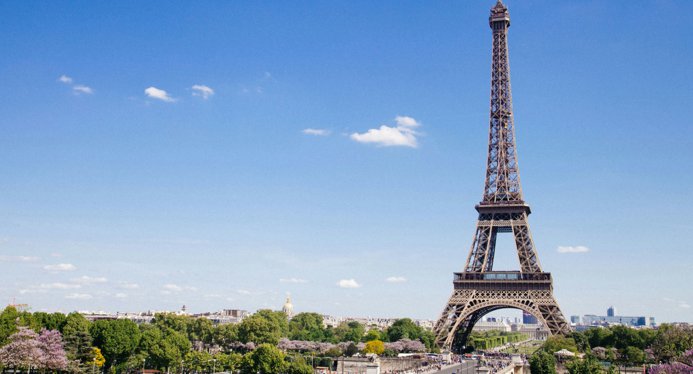
France remains one of Europe’s most visited destinations, combining centuries of political, cultural and architectural heritage with a strong tourism infrastructure. Since France is part of the Schengen Area, short-term tourist travel is regulated under common Schengen rules: visitors from visa-required countries must obtain a short-stay Schengen visa, while travellers from visa-exempt countries may enter for limited periods without a visa.
Do You Need a Tourist Visa for France?
A tourist visa is required for travellers to France unless they are citizens of countries that benefit from visa-free access to the Schengen Area.
Citizens of the EU, EEA and Switzerland, as well as travellers from visa-exempt countries such as the United Kingdom, the United States, Canada, Australia, New Zealand, Japan, South Korea, Singapore, Israel, Brazil, Mexico, Argentina, Chile and the United Arab Emirates, can usually enter France and other Schengen countries without a visa for up to 90 days within any 180-day period.
Travellers from visa-required countries must apply for a short-stay Schengen visa before their trip. This includes, for example, nationals of Russia, China, India, Turkey, Egypt, South Africa, Thailand, Indonesia, the Philippines, Vietnam, Pakistan, Nigeria, Kenya and Morocco. Applicants should always check their individual situation through the official France-Visas visa wizard, as rules may depend on nationality, residence status, passport type and purpose of travel.
Documents Required for France Tourist Visa
The application process for a France tourist visa generally includes submitting the following documents:
- Application form. A completed France-Visas online application form, printed and signed by the applicant.
- Passport. A valid passport issued within the last 10 years, valid for at least three months after the planned departure date from the Schengen Area, with at least two blank pages.
- Photographs. Recent passport-sized photos, usually 35 mm × 45 mm, meeting Schengen visa photo requirements. The exact number of photos may depend on the consulate or visa centre checklist.
- Travel itinerary. Evidence of travel plans, including round-trip flight reservations, transport bookings and the planned route within France or the Schengen Area.
- Travel insurance. A travel medical insurance policy valid throughout the Schengen Area for the entire duration of the stay. It should cover medical emergencies, hospital treatment, repatriation and expenses in the event of death, with a minimum coverage of 30,000 euros.
- Proof of financial means. Bank statements, employment or income documents, sponsorship letters or other evidence showing that the applicant can cover the cost of the trip. For France, the indicative minimum is 65 euros per day with a hotel booking, 120 euros per day without proof of accommodation, or 32.50 euros per day when staying with a private host and presenting an approved reception certificate.
- Accommodation proof. Hotel bookings, rental confirmation or other proof of accommodation for the whole stay. If the applicant is staying with a private host in France, they may need an attestation d’accueil — a formal reception certificate arranged by the host through the local town hall.
France Tourist Visa for Family
For a short-term family visit to France, applicants may need to provide:
- Standard France tourist visa documents: application form, passport, photos, travel insurance, itinerary, proof of funds, accommodation proof and visa fee payment.
- Proof of family relationship: birth certificate, marriage certificate or other civil status documents.
- Host’s documents: copy of the host’s passport, residence permit or French/EU identity document.
- Proof of accommodation: hotel booking or attestation d’accueil if staying with a private host in France.
- Proof of financial support: applicant’s bank statements or a sponsorship letter from the host, if the host covers the trip.
- Documents for minors: birth certificate, parental authorisation, copies of parents’ passports and, if applicable, custody documents.
- Evidence of return intention: employment documents, study confirmation, property ownership, family ties or other proof that the applicant intends to leave the Schengen Area on time.
France Tourist Visa Fees
The standard Schengen visa fee is 90 euros for adults and 45 euros for children aged 6–12. Children under 6 are exempt. Reduced fees or exemptions may apply to certain categories of applicants, depending on nationality and status.
France Tourist Visa Application Process
Before applying for a France tourist visa, applicants should start with the official France-Visas portal. The visa wizard helps determine whether a visa is required, which type of visa applies, what documents are needed and what fees must be paid.
The application process generally includes the following steps:
- Check your visa requirements. Use the France-Visas portal to confirm whether you need a short-stay Schengen visa for your nationality, residence status and purpose of travel.
- Complete the online application. Fill in the visa application form through France-Visas, then print and sign the completed form.
- Prepare the supporting documents. Gather the documents listed in the personalised checklist generated by France-Visas, including passport, photos, travel insurance, proof of accommodation, travel itinerary and proof of financial means.
- Book an appointment. Schedule an appointment with the competent French consulate or authorised visa application centre indicated by France-Visas for your country of residence.
- Submit the application. Attend the appointment, submit the application form and supporting documents, pay the visa and service fees, and provide biometric data if required.
- Track the application. After submission, the application can be tracked online. Short-stay visa applications are usually processed in around 15 days, but the timeframe may be longer during periods of high demand or if additional checks are required.
- Collect your passport. Once a decision has been made, the applicant is notified about passport collection or delivery, depending on the procedure available in the country of application.
Applicants should start the process well in advance, taking into account both the visa processing time and the availability of appointment slots. A short-stay visa application should be submitted at least two weeks before the planned trip, but not more than six months before the intended travel date. All documents should be complete, accurate and recent, and the travel insurance policy should meet Schengen requirements and cover the full duration of the stay.
Cover Letter for France Tourist Visa
A cover letter for a France tourist visa is a short supporting document that explains the purpose of the trip, planned travel dates, itinerary, accommodation, source of funds and the applicant’s intention to leave the Schengen Area before the visa expires. It should be concise, factual and consistent with the documents submitted, such as flight reservations, hotel bookings, bank statements and employment or family ties in the country of residence.
Sample Cover Letter for France Tourist Visa
To: Consulate General of France / Visa Officer
Subject: Application for a France Tourist Visa
Dear Sir or Madam,
I am applying for a short-stay tourist visa to visit France from [travel dates]. The purpose of my trip is tourism, including visits to [Paris / Nice / Lyon / other destinations], cultural landmarks, museums and other places of interest.
During my stay, I will be accommodated at [hotel name / private host address], and I have enclosed proof of accommodation, travel itinerary, return flight reservation, travel insurance and evidence of sufficient financial means. I am employed as [position] at [company name] / self-employed as [profession], and I will return to [country of residence]after my trip due to my professional, family and personal commitments.
I kindly ask you to consider my application for a France tourist visa. All supporting documents are attached.
Sincerely,
[Full name]
[Passport number]
[Contact details]
France Tourist Visa Rejection Rate
The refusal rate for a France tourist visa may vary from year to year and depends on several factors, including the applicant’s nationality, country of residence, consulate handling the application, travel history, financial situation, completeness of documents and the perceived risk of overstaying.
France is part of the Schengen Area, so applications for short-stay tourist visas are assessed under the common Schengen visa rules. A short-stay Schengen visa generally allows the holder to visit France and other Schengen countries for up to 90 days within any 180-day period. To obtain a visa, the applicant must provide credible evidence of the purpose of travel, sufficient financial means, accommodation arrangements, valid travel insurance and an intention to leave the Schengen Area before the visa expires.
Official visa statistics are published by the European Commission for short-stay Schengen visas. These figures cover all short-stay visa purposes, including tourism, family visits and business travel, so they should not be interpreted as a separate tourist-only refusal rate. According to the latest published EU data, consulates of EU and Schengen-associated countries received around 11.7 million short-stay visa applications in 2024, while the global refusal rate declined to 14.8%, compared with 16% in 2023.
Common Reasons for Refusal
- insufficient proof of financial means for the stay and return journey;
- incomplete, inconsistent or incorrectly completed application forms;
- unclear or unreliable travel purpose, itinerary or accommodation proof;
- travel insurance that does not cover the full Schengen Area or the entire period of stay;
- insufficient evidence of employment, family, property or other ties to the applicant’s country of residence;
- doubts about the applicant’s intention to leave the Schengen Area before the visa expires;
- previous immigration violations, overstays or security concerns.
To reduce the risk of refusal, applicants should prepare a complete and consistent file, provide recent and verifiable documents, clearly explain the purpose and duration of the trip, and show strong ties to their country of residence. If a visa is refused, the decision must be justified, and the applicant may have the right to appeal within the applicable deadline.
France Tourist Visa Refusal Appeal
If a France tourist visa is refused, the applicant has the right to challenge the decision. However, the appeal procedure for a short-stay Schengen visa must follow the current French rules and deadlines.
French and European law require visa refusal decisions to be justified. The refusal notice should indicate the reasons for the decision, such as insufficient proof of financial means, unclear travel purpose, incomplete documents, doubts about accommodation arrangements, lack of valid travel insurance or concerns that the applicant may not leave the Schengen Area before the visa expires.
For a short-stay France tourist visa, the applicant may file an appeal within 30 days of receiving the refusal decision. Since 1 January 2023, the mandatory prior appeal for a refused short-stay visa must be sent by post to the Deputy Director of Visas in Nantes. This prior administrative appeal must be reasoned, written in French and signed by the applicant or an authorised representative. It is a mandatory step before any appeal can be brought before an administrative judge.
The appeal should address the specific reasons for refusal and include supporting evidence. For example, if the refusal was based on insufficient financial means, the applicant may provide updated bank statements, income documents, sponsorship evidence or a clearer explanation of how the trip will be financed. If the refusal was linked to unclear travel plans, the appeal may include a more detailed itinerary, confirmed accommodation, return tickets or evidence of strong ties to the applicant’s country of residence.
A strong appeal file usually includes:
- a signed appeal letter in French;
- a copy of the visa refusal decision;
- a copy of the applicant’s passport;
- the original visa application reference, where available;
- additional documents responding to the reasons for refusal;
- a mandate, if the appeal is filed by a lawyer, family member or other representative.
For short-stay visa refusals, the appeal should be sent to:
Deputy Director of Visas
BP 83609
44036 Nantes Cedex 01
France
If the appeal is rejected, or if no response is received within the applicable period, the applicant may then consider bringing the case before the competent administrative court. This stage is more formal and may require assistance from a lawyer specialising in French immigration or administrative law.
Applicants should also keep in mind that an appeal may take time and may not be resolved before the planned travel dates. In some cases, especially where the refusal was caused by missing or weak documentation, it may be more practical to submit a new, stronger visa application rather than continue with an appeal.
FAQ
No, a tourist visa does not allow paid work in France; you need the appropriate work visa or residence permit.
Yes, it may be possible to get married in France on a tourist visa, but you must meet the local civil registry requirements.
A France tourist visa usually allows stays of up to 90 days within any 180-day period in the Schengen Area.
It can be straightforward if the applicant submits a complete file, proves the purpose of travel, has sufficient funds and shows an intention to leave the Schengen Area on time.
A tourist visa is required for travellers from countries that do not have visa-free access to the Schengen Area.
A France tourist visa is intended for short visits, so remote work should be limited to incidental tasks for a foreign employer and should not involve entering the French labour market.
We will send you a content digest not more than once a week