Property Investment in Thailand for Foreigners in 2026
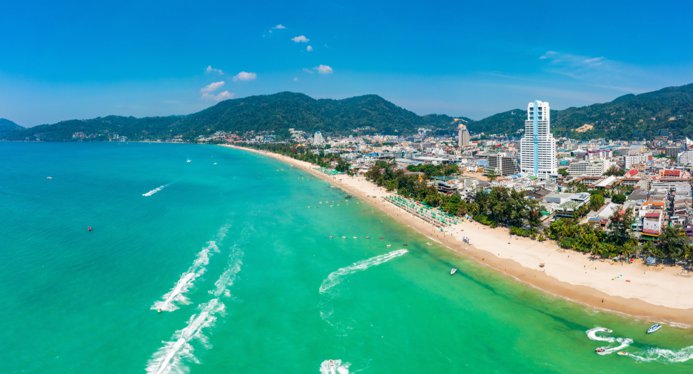
Thailand is rightly regarded as one of the best countries for property investment in Asia, and an excellent alternative to Europe and the Middle East. The Thai market offers opportunities without the extremes of high-risk, high-reward speculation, or purely defensive investments in which the millions of pounds invested will certainly not be lost, but the returns won’t be substantial. Suffice to say that investment funds based in Singapore and Hong Kong choose to invest in Phuket-based projects rather than those on their own developed islands. For many investors, Thailand has proved to be the perfect balance between emerging and fully established markets.
Thailand’s Economy Remains a Bastion of Stability in Asia
The Thai economy is one of the largest and most stable economies in the Association of Southeast Asian Nations (ASEAN). According to the International Monetary Fund (IMF) for 2025, Thailand ranks third within ASEAN by total nominal GDP (546 billion US dollars) and fourth by nominal GDP per capita (7,754 US dollars per person). It’s positions are similar when figures are adjusted for purchasing power parity.
Thailand became a BRICS partner country on 1 January 2025, which was an important step in strengthening its geopolitical and economic role in the region. This step bolsters the country’s strategic importance in the international arena, opens up new channels for foreign direct investment, and expands co-operation with key developing economies. Thailand's BRICS partner status may expand economic co-operation, but its effect on the baht cannot be isolated from other currency drivers.
Bank of Thailand forecast for 2026
Institution | Real GDP Growth Forecast (%) | Headline Inflation Forecast (%) |
BoT (June 2026) | 2.3% | 2.8% |
The Thai baht exchange rate in 2025 demonstrated stability and strengthening.
The average exchange rate for the first seven months of the year was about 33.4 baht per US dollar, whereas in 2023 it fluctuated around 35–36 baht per US dollar. This means that the baht appreciated against the US dollar by about 7–10% compared with the year before last.
During 2025, the exchange rate fluctuated within a relatively narrow range — from 32.3 to 34.9 baht per US dollar — which confirms the stability of the currency. For example, in July the exchange rate stood at around 32.3–32.6, which was the lowest level for two years.
A movement of more than 1 baht is still considered a significant event for the economy, and inflation remains in the range of 0–1%, which also indicates a high degree of macroeconomic stability.
Tourism accounts for about 20% of Thailand’s economy, with the majority of GDP coming from exports. It should be noted that many economists classify tourism as a service export category, as revenue is also received from overseas. The COVID-19 pandemic proved an unprecedented challenge for Phuket’s economy, but not for the country as a whole.
Thailand faces periodic challenges, but it has always demonstrated a knack for minimising or quickly offsetting economic losses. For example, a significant drop in Russian and European tourists between 2014 and 2015 was countered by attracting visitors from China.
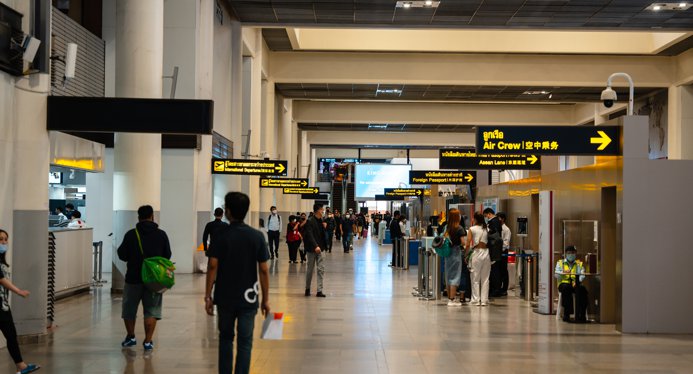
In 2024, Thailand received 35.5 million foreign tourists, which was a confident step towards the recovery of the industry after the pandemic and representing about 90% of the pre-2019 record (39.8 million). The increase compared with 2023 was approximately 26%, when 28.15 million people visited the country. The main contribution to this growth came from tourists from China, Malaysia, India, South Korea, and Russia. The segment of long-term travellers from Europe and the USA was particularly robust, as were premium destinations in Phuket, Koh Samui, and Bangkok.
In 2025, Thailand, according to estimates by the Ministry of Finance and the Bank of Thailand, will receive about 36–37 million foreign tourists, which is slightly higher than in 2024 (35.5 million, according to the Tourism Authority of Thailand), but lower than previous forecasts of 38–39 million (Reuters, TAT News). During the first six and a half months of 2025, the international tourist flow to Thailand remained stable, showing a modest decline of 4–6% compared to the same period last year (Reuters, July 2025). This slowdown stems mainly from a continuing fall in the Chinese segment, but it is being offset by strong demand from tourists from Europe, the United States, and India. Under its new national strategy, Thailand is focusing on high-quality tourism and long-term travel, an approach that is already bearing fruit. Despite temporary adjustments, the country confidently retains its status as one of the key tourist destinations in Southeast Asia.
Tourism fuels demand for rental accommodation not only from visitors themselves but also from those working in the tourism industry and allied sectors, whether they are Thais from other provinces or foreigners. Furthermore, the tourism industry in Phuket serves as a key driver for the island’s wider development, attracting a broad tenant base ranging from affluent European retirees to young digital nomads. By reinvesting the profits from tourism, the island offers a range of accommodation options to suit every requirement.
Choosing an Investment Project: Location
From a property investment perspective, Thailand can be divided into three types of market, with geography considered secondary and the economic profile of the location regarded as primary.
Bangkok
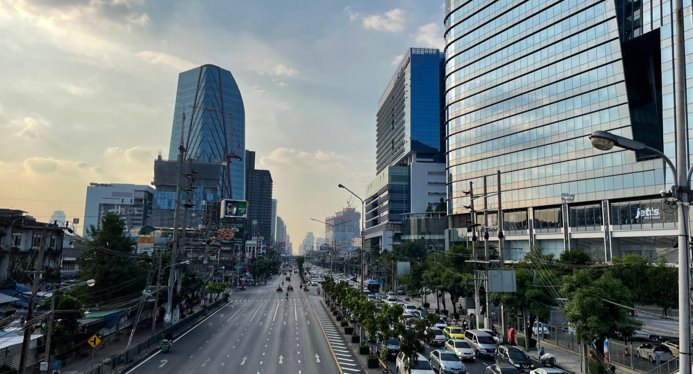
The capital of Thailand and its neighbouring provinces form a vast urban agglomeration with a population of many millions. It is the country’s largest conurbation; no other Thai city has even one million residents. The principal investment asset in this area is condominium units, and the typical income generating schemes are early-stage purchases during the construction phase, sales on completion, and long-term rentals.
According to the official AOT Traffic Report 2024, Bangkok’s Suvarnabhumi and Don Mueang airports have become Thailand’s busiest international air hubs, with a combined passenger traffic of 60.21 million passengers, making the capital the undisputed leader among Thai cities for international arrivals.
 From $114,000
Built in 2021 582 units in total
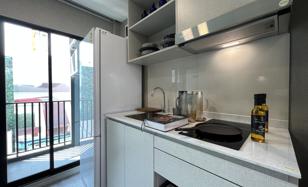 From $70,000
Built in 2024 1108 units in total
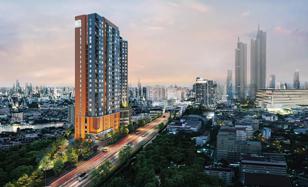 From $100,000
Built in 2025 508 units in total
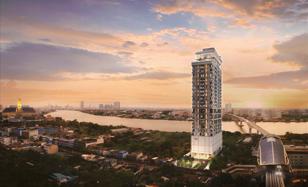

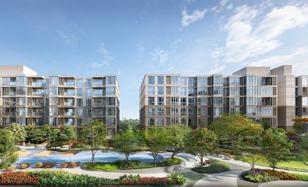 From $158,000
Completion in: 2027.I 408 units in total
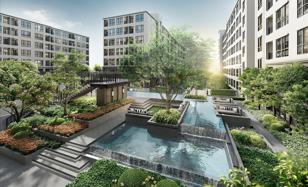 From $72,000
Built in 2025 759 units in total
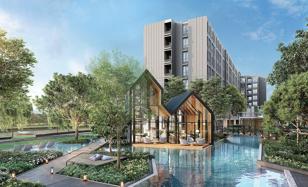
The capital’s property market is considered mature and highly competitive: attractive units sell out extremely quickly; you should seek opportunities with an experienced agent and commit before the start of construction. At the same time, condominiums in the capital are far more class-distinct than those in Phuket, for example, the price range can be quite wide.
Price structure for apartments from one of the leading developers:
Segment | Price per m² |
D-minus | $1,000–1,700 |
D | $1,700–2,300 |
C | $2,300–4,300 |
B | $4,300–7,100 |
A | $7,100–11,400 |
S | $11,400 and above |
In Phuket, this developer offers segments from D to B, while in the Bangkok conurbation all segments on the list are available to view.
Developed Tourist Destinations
Pattaya is one of Thailand's major resort markets, but airport passenger movements cannot be treated as a count of foreign tourists visiting the city. Against a backdrop of global tourism recovery, Pattaya is focusing not only on growth but also on sustainable development: the city authorities are actively implementing environmental and infrastructure initiatives aimed at improving the quality of tourism as part of the Amazing Thailand Grand Tourism & Sports Year 2025 national strategy.
Airports in Phuket (9.86 million), Chiang Mai (9.08 million), Hat Yai (266 thousand), and Chiang Rai (261 people) have likewise recorded growth in international traffic. Statistics for these airports are provided in the official reports of Airports of Thailand (AOT), the government agency that manages the country’s largest airports. By contrast, U-Tapao Airport (UTP), which serves Pattaya, is not included in the AOT system, as it operates under the joint management of Royal Thai Air Force and the private sector; consequently, official figures for it are not published by AOT.
No | Airport | International Passengers (Arrivals + Departures), 2024 | Source |
1 | Bangkok (Suvarnabhumi + Don Mueang) | 60.21 mln | AOT Traffic Report |
2 | Pattaya (UTP) | 28.16 mln | Pattaya Mail |
3 | Phuket (HKT) | 9.86 mln | AOT Traffic Report |
4 | Chiang Mai (CNX) | 9.08 mln | AOT Traffic Report |
5 | Hat Yai (HDY) | 266 thousand | AOT Traffic Report |
6 | Chiang Rai (CEI) | 261 | AOT Traffic Report |
Normally, resort property in Phuket and other popular locations, as well as property in the capital, generates a steady income (up to 30%) simply by buying at the early stage and selling on completion. In addition, in developed tourism markets there are opportunities for high-yield short-term rental of apartments or villas, which can generate up to 15% of gross income a year. Also, developers often offer guaranteed returns of 5–7% for an initial period after completion of the scheme, while tourist demand is still maturing.
 From $169,000
Completion in: 2027.IV Total of 606 apartments
 From $205,000
Built in 2026 Total of 264 apartments
 From $127,000
Completion in: 2028.IV Total of 1750 apartments
 From $292,000
Built in 2024 150 units in total
 From $134,000
Completion in: 2029.IV Total of 474 apartments
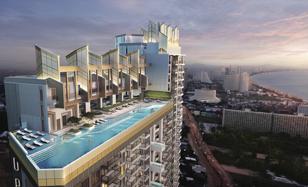 From $119,000
Completion in: 2028.I Total of 1800 apartments
 From $73,000
Completion in: 2028.III Total of 656 apartments
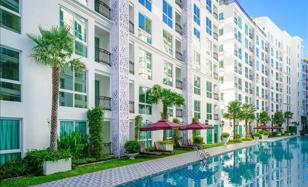 From $73,000
Built in 2019 Total of 1060 apartments
Phuket developers rarely rely on bank loans to finance construction. Instead, they fund land acquisition, project development, permitting, and early construction from their own capital; the remaining financing comes from prepayments made by home buyers. Consequently, there is a significant benefit for buyers of housing under construction in Phuket, which can be as much as 30%.

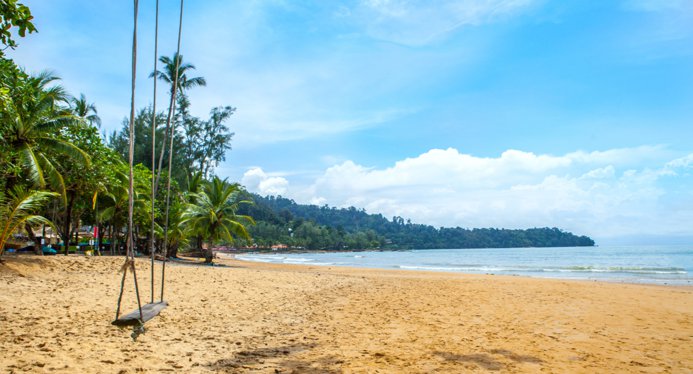
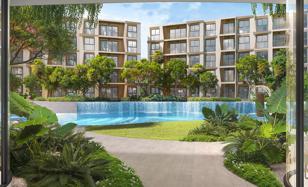 From $128,000
Completion in: 2027.IV 295 units in total
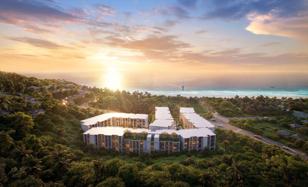 From $171,000
Completion in: 2029.I 350 units in total
 From $351,000
Completion in: 2029.I 37 units in total
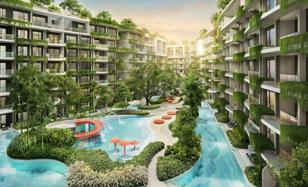 From $142,000
Completion in: 2027.I 859 units in total
 From $123,000
Completion in: 2028.III 363 units in total
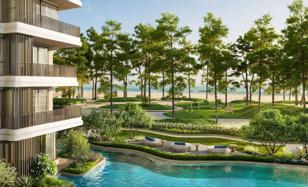 From $160,000
Completion in: 2028.I 542 units in total
 From $140,000
Completion in: 2028.I 564 units in total
 From $87,000
Completion in: 2028.II 452 units in total
Emerging Tourism Markets
From an investment perspective, emerging tourism markets include locations still unfamiliar to most tourists, such as Hua Hin and Chiang Mai, as well as popular resorts where a mature property market has not yet been established, notably the islands of Koh Samui, Krabi, and Phang Nga. Locations such as Bangkok set a higher bar for investor expertise, requiring the ability to separate personal preferences from visitor demand in order to maximise rental income.
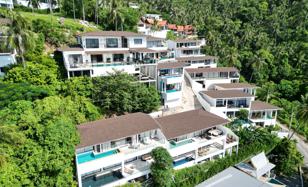
 $696,000
Total area 320 m² Land area: 700 m²
 $708,000
Total area 625 m² Land area: 678 m²
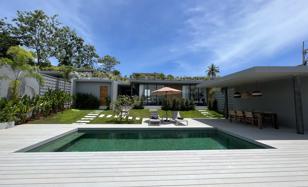 $650,000
Land area: 2,912 m² 3 bedrooms
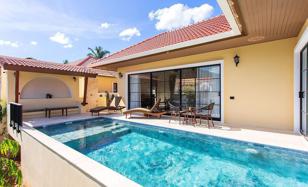 From $343,000
Built in 2025 9 units in total
 From $444,000
Yield 13.0% Built in 2024
 From $242,000
Total of 54 apartments
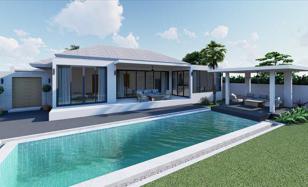
The main advantage of emerging markets is the opportunity to invest in property that will retain and increase its value for years to come — a successful seaside villa, for example. In Phuket, there are virtually no such properties left, and every new project is in high demand.
The downside is that an emerging market may not offer a quick return on investment and can be much less stable in a crisis than a market in Bangkok or Phuket. Emerging markets also differ in that property rents and prices can be significantly lower than in developed markets. A beachfront hotel room in Koh Samui can cost 30 US dollars per night, while the same room in Phuket will cost at least twice as much.
Choosing a Resort Investment Property: Types of Investment
Apartment or Villa
The debate over whether a villa or an apartment is better for an investor has been going on in Phuket for years. It will continue until Thailand amends its land laws to allow foreign ownership. Although there are proponents of this reform, their attempts to lobby for it over the past few decades have been unsuccessful.
The main advantage of owning an apartment in a condominium is that you can obtain full ownership in your name (foreign freehold). By law, villas commonly involve ownership of the building and a registered land lease of up to 30 years. The lease may contain a renewal option, but any later term requires the landowner's agreement and fresh registration; two further 30-year periods are not guaranteed. Condominium apartments can also be offered on a leasehold basis.
A condominium is a form of ownership, not a type of building, as the term literally means “shared ownership”.
Technically, there is nothing to stop a developer from delivering a condominium in a low-rise complex format, as opposed to a traditional apartment block, thereby creating individual units that resemble townhouses or villas. Nevertheless, in reality this is extremely unusual, and there is a huge demand for such properties.
From $128,000
Completion in: 2027.IV 295 units in total
From $171,000
Completion in: 2029.I 350 units in total
From $142,000
Completion in: 2027.I 859 units in total
From $123,000
Completion in: 2028.III 363 units in total
From $160,000
Completion in: 2028.I 542 units in total
From $140,000
Completion in: 2028.I 564 units in total
From $87,000
Completion in: 2028.II 452 units in total
 From $115,000
Built in 2026 814 units in total
Villas and townhouses are traditionally more expensive: starting at 300,000 US dollars for a modest house versus 110,000 US dollars — or even less — for a studio apartment, but in the future they can deliver higher rental income (or, conversely, lower) in the long run. Condominiums have a narrower yield spread. In all cases, it makes sense to focus on an annual return of up to 10% on the capital invested.
Phuket’s advantages include a wide range of supply at different price points, with entry thresholds starting at 110,000 US dollars in developing locations and 330,000 US dollars in developed resorts with premium services. In addition, new developments in Phuket across all classes tend to record good capital growth during the construction phase (approximately 10–15% per annum) and generate high rental yields thereafter, averaging 7–8% per annum.
From $351,000
Completion in: 2029.I 37 units in total
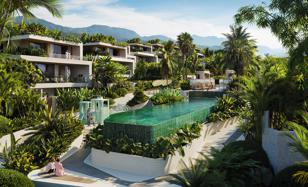 From $593,000
Completion in: 2027.II 37 units in total
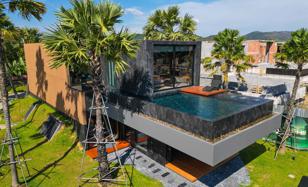 From $1,238,000
Built in 2026 45 units in total



 From $668,000
Completion in: 2027.III 26 units in total
 From $954,000
Built in 2024 21 units in total
Independent and Managed Rentals
The era of independent property management is slowly fading away, which bodes well for developers, investors, and tenants alike. Delegating specific operational responsibilities to professionals is a sign of a maturing market.
Most new short-term rental properties are launched with the expectation that they will be managed by a hospitality company, and that part of the property’s name will carry a well-known hotel brand, such as Wyndham or Banyan Tree.
If you want to rent out your property independently, you will need a wide range of knowledge that goes beyond the field of marketing. For example, any property in the tropics will suffer from a hot and humid climate, and if it stands on the coast, this exposure must also be factored in. Repair and maintenance work will require local labour, while tax compliance will necessitate outsourcing to an accountant. A separate issue is the need to monitor changes in legislation.
An experienced management company takes on all the associated risks and is legally responsible for the fulfilment of obligations, i. e. for the investor’s profit. In the event of unforeseen circumstances, the investor’s interests are protected along with the company’s other clients.
Short- and Long-Term Rentals
Investment in resort property typically involves short-term rental of an apartment or villa to maximise income, yielding up to 10%, which is a realistic target.
Sub-letting provisions are often included in long-term leases. This option is similar to short-term rental of a villa through a management company, except that an individual tenant, rather than a legal entity, rents the property.
This is not to say that buying a villa or apartment for long-term rental is without merit. There are many specific locations in Phuket that allow you to focus on this particular income stream. Profitability is likely to be lower than that of daily rentals, even when occupancy remains stable throughout the year. Nevertheless, this option can serve as a secure investment. In addition, for investments of up to 110,000 US dollars it may be the only alternative available.
Rents in the centre of the island are low; in terms of profitability, such apartments are inferior to those in the resorts, but they can be rented for long periods to over-wintering visitors. You can earn about 300–500 US dollars a month from an inland apartment, compared with roughly 1,000–2,500 US dollars for a place on the coast. However, you will not find an apartment on the coast for around 70,000 US dollars, whereas such properties are available in the centre of the island.
The location of a property purchased in Phuket is largely determined by its intended use. For daily tourist rentals, the ideal locations are the west-coast beaches from Nai Harn to Mai Khao, which includes Karon, Patong, Surin, Bang Tao, Nai Yang, and Nai Thon. However, if the property is to be used as a residence or for expat / winter rentals, other locations may be more suitable, such as the centre or east of Phuket, including Kathu, Wichit, and Chalong.
A studio in a condominium in the centre of Phuket may be the best option for someone who has just moved to the island and is unsure of the best place to live. The studio will be ideal for a new expat without a large capital reserve but with a taste for quality and modern living.
It is also worth noting that Bang Tao deserves special attention. Several new schemes are being built farther from the coast yet are marketed as housing by the beach.
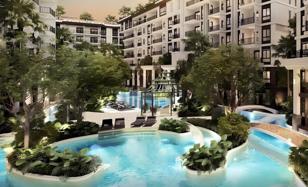
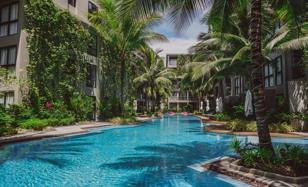
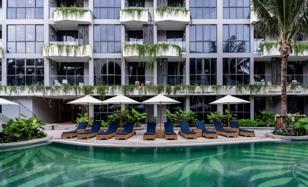 From $150,000
Built in 2025 Total of 9 apartments



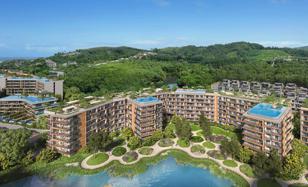 From $255,000
Completion in: 2027.IV 220 units in total
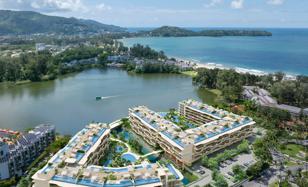 From $867,000
Completion in: 2028.IV 237 units in total
Types of Investment Activities in Thailand and Investment Programmes
A high-quality investment property in Thailand will increase in value and generate rental income before resale. The country would not be so popular if you had to choose between renting and resale. Phuket resort property is in demand because it does both simultaneously.
The two parameters are interrelated: a house or apartment that yields a high rental income will steadily appreciate. The key to success is to find and buy such a property quickly, as lucrative opportunities are fleeting. While buyers of homes for their own use weigh the colour of the bathroom tiles, investors assess demand for rental property. If demand is high, they buy.
Buying early is the first secret of successful investment. Often, by the time the property is delivered, the price has risen by 30%, but in some projects the purchased apartment can be put on the market within a week of purchase and sold at a profit, even if it only exists «on paper».
It is important to remember that an asset may become less attractive over time owing to external factors. Tenant preferences and market trends may change, and new properties, such as condominiums and villas may emerge, diverting tenants’ attention elsewhere. As a result, a proportion of investors will take profit, much as an Forex trader places a take-profit order. In this case, since the apartment has reached the required profit threshold, it would be preferable to sell it to generate income.
Usually, developers define a scheme’s concept in advance: is it suitable for permanent residence or for short-term rental? In the first case, you buy an apartment that you can rent out yourself or via a specialised company.
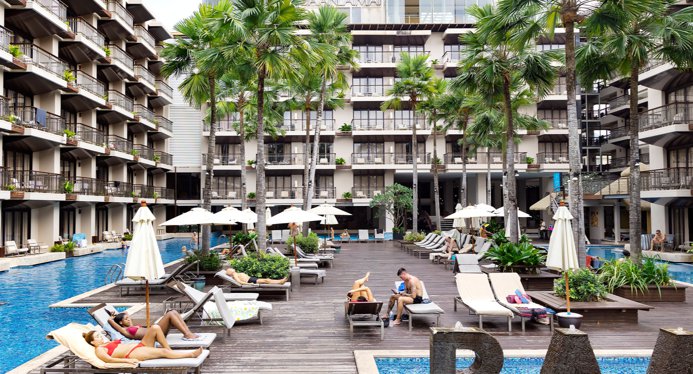
In the second case, the investor is essentially buying a room in a future hotel, often under a prestigious hotel brand. The main advantage is that everything in such a project is geared at maximising profit; the main disadvantage is that, to achieve that aim, the developer and the management company impose various restrictions, such as a limit on the length of the owner’s stay and strict furnishing standards from which it is impossible to deviate.
The main types of generating rental income are via guaranteed yield contracts and rental pool schemes. Typically, developers offer a guaranteed yield during a project’s launch phase, while it is still unfamiliar to tourists. Subsequently, they switch to a rental pool scheme in which income depends on actual revenue. In Phuket, a reasonable guaranteed yield is about 5–7% per annum. However, a popular property can produce a yield of 9% or more under a rental pool scheme.
Increasing Profitability in Thailand
There are various ways to boost returns from property investment in Thailand. The main secret is to buy early. At the initial stage — when the project has just been launched and construction has not yet started — developers offer the most favourable conditions: the price may be 30% lower than at later stages; furnishings may be included free of charge; and instalment plans may feature more attractive payment schedules. The developer needs to get investors interested in a new project, so early-bird discounts are beneficial to both the developer and the investors.
A developer's instalment plan may be interest-free, but its economic benefit depends on the price and terms. The Bank of Thailand projected headline inflation of 2.8% for 2026 in June 2026; this is a forecast, not a typical long-run rate. Mortgages remain difficult for many foreign buyers, so developers often plan financing terms accordingly.
Some Phuket developers offer buyers the opportunity to use their projects as a financial instrument, in addition to rental yields. Essentially, by purchasing an apartment in a project without an instalment plan during the earliest stages of construction, buyers thereby finance the project, and developers are willing to pay up to 5% annual yield on this capital, even during the construction phase. This scheme is known as a pay-back scheme. It is a good way to get a double benefit: to buy an apartment at a more favourable price at the start of sales and to start earning income even before the apartment is rented out.

Trivial as it may sound, choosing an agent who has a long history with a particular developer also helps to speed up the return on investment. An old and trusted partner may have preferential terms from the developer that are only offered to them and not available to others.
As in many other areas of business, the seller is often willing to offer discounts to an investor who is prepared to buy several units in a condominium or several villas in a complex. Although these are substantial assets, the seller’s primary objective is still to sell one project and move on to the next.
You can also save money by choosing the type of ownership wisely if the developer offers both freehold (full ownership in a foreigner’s name) and leasehold (long-term lease). However, this only applies to condominiums, as only in condominiums is it possible to register a property as freehold in a foreigner’s name.
Tranio has an office in Phuket. Our local lawyers and managers will help you complete a turnkey deal, and the cost of purchase will not increase.
Leave a request
Finally, the basic advice is to treat property investments as just that: investments. Pick those that generate a profit rather than those that appeal to personal taste. You may not like a particular condominium, but if it is popular with tourists, it is likely to be profitable. It is important to remember that we are talking about future income, not immediate gains. Investing in an area that will be tourist-friendly in a year’s time may prove to be a wise decision in the long run.
We will send you a content digest not more than once a week