Taxes in Italy
Italy attracts foreign investors and property buyers not only for its climate and cultural heritage, but also for affordable housing prices in a number of regions. Before buying, it is important to understand the country’s tax system, which includes taxes on purchase, possession, sale, as well as inheritance and foreign assets. In this article, we will talk about current taxes in Italy in 2025, new rules and benefits, as well as what expenses should be considered when owning real estate.
Taxes When Buying Property
When buying property in Italy, the tax burden depends on the type of seller and the purpose of the property. If you purchase a home from a private individual, the registration tax is 2% of the cadastral value for the main home (prima casa) and 9% for the second home. When buying from a developer, VAT is paid instead of the registration tax: 4% for the main housing, 10% for the second and 22% for luxury real estate.
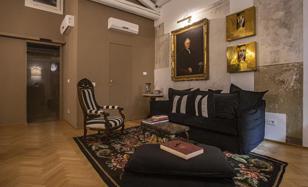 1,600,000 €
Total area 223 m² 4 bedrooms
 695,000 €
Total area 200 m² Land area: 700 m²
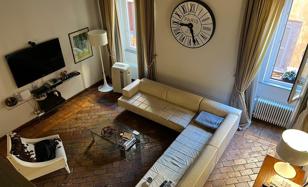 2,200,000 €
Total area 220 m² 3 bedrooms
 1,250,000 €
Total area 250 m² 3 bedrooms

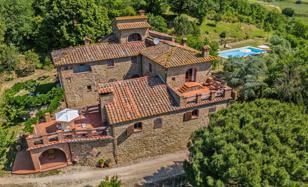 1,300,000 €
Total area 600 m² Land area: 180,000 m²
 16,000,000 €
Total area 420 m² 6 bedrooms
 5,500,000 €
Total area 628 m² Land area: 2,300 m²
The purchase of primary and secondary real estate in Italy differs both from a legal and tax point of view.
Comparison of the tax base of primary and secondary real estate
Parameter | Primary Property | Secondary Property |
Seller | Developer (legal entity) | Private individual |
Tax base | Market value (for VAT) | Cadastral value |
Main tax | VAT (4% / 10% / 22%) | Registration tax (2% / 9%) |
Additional fees | 200 euros each: cadastral, mortgage, registration | 50 euros each: cadastral and mortgage |
Warranty | Yes, required by law (up to 10 years) | No |
Primary property
Primary property is a new building purchased from a developer (a legal entity), most often with the participation of VAT (IVA). Such a purchase is subject to value—added tax:
- 4% if the home is purchased as a primary residence (prima casa);
- 10% if it is a second home;
- 22% — if the property belongs to the luxury real estate category (for example, villas of category A/1, A/8, A/9).
Instead of registration, cadastral and mortgage taxes, 200 euros are charged for each, for a total of 600 euros. These are fixed amounts.
The buyer receives a new home, often with a guarantee from the developer (by law, 10 years for structural elements). However, it is important to keep in mind that the legal review requires special attention: you should make sure that the building permits are valid and the facility is put into operation.
Secondary property
Secondary property is already commissioned objects purchased from private individuals. VAT is not applied here. Instead, the buyer pays the registration tax, which is calculated based on the cadastral value rather than the market value:
- 2% for the purchase of the main home,
- 9% for the purchase of a second home.
Mortgage and cadastral taxes are also charged — 50 euros each.
The key advantage of buying a second home is the absence of VAT and lower costs due to the calculation of taxes on the cadastral value, which is often significantly lower than the market value.
Other property taxes in Italy
Type of Tax | Primary Property (New Build) | Secondary Property (Resale) |
VAT (IVA) | 4% for primary residence; 10% for second home; 22% for luxury property | Not applicable if purchased from a private seller; registration tax applies instead |
Registration Tax (Imposta di Registro) | 200 euros (fixed amount) | 2% of cadastral value for primary residence; 9% for second home |
Mortgage Tax (Imposta Ipotecaria) | 200 euros (fixed amount) | 50 euros (fixed amount) |
Cadastral Tax (Imposta Catastale) | 200 euros (fixed amount) | 50 euros (fixed amount) |
Municipal Property Tax (IMU) | Not applied to primary residence (unless luxury); rate ranges from 0.4% to 1.06% of cadastral value | Applied; rate ranges from 0.4% to 1.06% of cadastral value |
Waste Collection Tax (TARI) | Applied; based on property size and number of residents | Applied; based on property size and number of residents |
Capital Gains Tax (Plusvalenza) | 26% on the profit if the property is sold within 5 years and was not the seller’s primary residence | 26% on the profit if the property is sold within 5 years and was not the seller’s primary residence |
Taxes on Property Ownership
Property owners in Italy pay the IMU municipal tax annually. If the property is used as a main dwelling and does not belong to the luxury category, no tax is charged. In other cases, the rate ranges from 0.86% to 1.06% of the cadastral value, depending on the decisions of the local municipality.
In 2025, IMU payments must be made before June 16 and December 16.
Also, all owners pay the Garbage collection Tax (TARI). Its size depends on the housing area and the number of registered residents. TARI is paid once a year.
Taxes on Property Sale
If you sell the property less than 5 years after the purchase, and it was not your main place of residence, you will need to pay capital gains tax (plusvalenza) in the amount of 26%. The exception is if the property has been owned for more than 5 years or was used as the seller’s main place of residence.
Inheritance and Gift Tax
Inheritance and gift tax rates depend on the degree of kinship between the parties. Spouses and direct heirs (children, parents) pay 4% of the amount exceeding 1 million euros. Brothers and sisters — 6% of the amount over 100 thousand euros. The remaining relatives — 6% without a tax-free minimum, and unrelated persons — 8%. In 2025, the tax is paid independently within 90 days from the date of filing the declaration.
Taxes on Foreign Assets
Residents of Italy are required to declare foreign real estate and financial assets. The tax on foreign real estate (IVIE) is 1.06% of the market value, but is not charged if the total amount is less than 200 euros. Financial assets abroad (IVAFE), including securities and investments, are taxed at a rate of 0.2%. In addition, for bank accounts with an annual average balance above 5,000 euros, you need to pay 34.20 euros.
Building Bonuses and Incentives in Italy in 2025
Italy has been encouraging property owners to repair, renovate and modernize their homes through tax deductions for many years. These measures stimulate the renovation of the housing stock and reduce energy consumption.
All bonuses are required: official documentation, the applicant’s Italian income tax, compliance with reporting deadlines, and the participation of licensed contractors. In most cases, notification of the ENEA (National Energy Agency) is required.
Bonus Ristrutturazioni is a tax deduction of 50% of the repair and renovation costs.
It applies to both primary and secondary housing. The maximum cost limit is 96,000 euros per facility. This includes redevelopment, roof repairs, and replacement of utility networks, facades, and stairs. The refund is made through the Income Tax (IRPEF) for 10 years in equal installments. All expenses must be confirmed by official payments indicating the purpose of the transfer.
Ecobonus provides a tax deduction for energy efficiency measures.
In 2025, the deduction is 50% for the main housing and 36% for the second. The benefit applies to the replacement of windows, the installation of thermal insulation, solar panels, thermostats and heat pumps. The limit depends on the type of work (for example, up to 100,000 euros for facade insulation). It is necessary to provide energy certificates before and after the work.
We will send you a content digest not more than once a week