How to get a mortgages in Italy: terms, rates, application documents — Tranio

Italy remains one of the most attractive countries in Europe for the purchase of real estate, and more and more foreign citizens are considering the possibility of buying a home on credit. The Italian mortgage market is open to non-residents: foreigners can obtain financing from local banks on terms similar to those offered to citizens of the country.
Among the key advantages are relatively low interest rates, a stable banking system, the ability to obtain a loan of up to 60-70% of the cost of the facility, as well as long repayment periods of up to 25-30 years.
Mortgages allow you to fix a favorable property price, diversify investments and maintain liquidity.
Who can get a mortgage
Italy offers mortgage loans to both citizens and foreigners. Mortgages are available both to residents residing in Italy on a permanent basis, and to non—residents — citizens of other countries, including those who do not have a residence permit. At the same time, the conditions for different categories of borrowers differ in terms of loan size, rates, and document requirements.
Regardless of the status, the age of the borrower must be at least 18 years old. By the time the loan is fully repaid, the borrower must be no more than 75 years old (sometimes 70 — according to the terms of a particular bank). It is also important to have a positive credit history, even if it is not in Italy, but in the country of residence.
Residents of Italy
Italian citizens and foreigners with an official residence permit in the country and tax residence are considered residents. These may be residence permit holders, self-employed, entrepreneurs, or retirees living in Italy.
For residents, mortgages are provided on more favorable terms. Banks can finance up to 80-90% of the cost of real estate. Rates — both fixed and variable — start from 2.8–3.2% per annum. The maximum loan term can be up to 30 years.
Mandatory requirements for a resident borrower include the presence of an Italian tax number (Codice Fiscale), proof of stable income in the country (for example, through busta paga, CUD certificates or a tax return), as well as official registration of residence in Italy.
Non-residents of Italy
Non-residents are foreign citizens who do not permanently reside in Italy. These may be property buyers from the EU, the UK, the USA, the CIS or the Middle East.
Stricter conditions apply for non-residents. The maximum loan amount is usually 50-60% of the value of the purchased property. Interest rates are higher than for residents, fixed from 3.2–3.5% per annum. The loan term is usually limited to 20-25 years.
The borrower must confirm a stable income abroad, provide a Codice Fiscale tax number and open an account with an Italian bank. All documents (passport, income certificates, bank statements, preliminary purchase and sale agreement) must be translated into Italian and notarized.
A mortgage can be issued for the purchase of both primary and secondary housing, including for rental. However, not all banks are ready to lend to an investment purchase: sometimes a commitment is required to use the property as a second home.
Types of mortgage loans in Italy
The Italian mortgage system offers different types of loans depending on the purpose of the purchase, the type of interest rate and the status of the borrower.
Type of Mortgage | Purpose | Eligibility | Features | Loan-to-Value (LTV) |
Property purchase | Buying real estate | Residents and non-residents | Most common type. Can be used for living or rental purposes | Up to 90% (residents), up to 60% (non-residents) |
Construction / renovation | Building or major renovation | Mainly residents | Funds released in stages. Permits, cost estimate and project documentation required | Up to 70–80% of verified construction costs |
Refinancing | Replacing an existing mortgage | Residents and foreign property owners | Improved loan conditions. Possible debt consolidation | Up to 80–90% of the property’s value |
Equity release | Getting cash against existing property | Residents (non-residents — limited) | Funds for any purpose. Mortgage secured against already owned property | Up to 50–70% of market value |
Mortgage for the purchase of housing (Mutuo per acquisto)
This is the most common type of mortgage intended for the purchase of ready—made real estate, both in the primary and secondary markets. Such a loan can be issued by both residents and foreigners without permanent residence in Italy.
Banks finance up to 80-90% of the cost of the facility for residents and up to 50-60% for non—residents. A mortgage can be used to purchase a home for both personal residence and rental — with the consent of the lender.
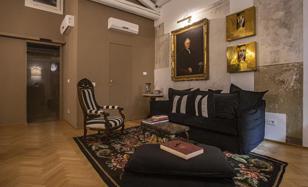 1,600,000 €
Total area 223 m² 4 bedrooms
 695,000 €
Total area 200 m² Land area: 700 m²
 2,200,000 €
Total area 220 m² 3 bedrooms
 1,250,000 €
Total area 250 m² 3 bedrooms

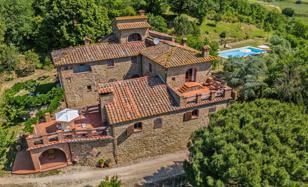 1,300,000 €
Total area 600 m² Land area: 180,000 m²
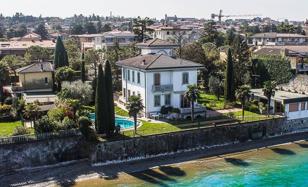 16,000,000 €
Total area 420 m² 6 bedrooms
 5,500,000 €
Total area 628 m² Land area: 2,300 m²
Mortgage for construction or reconstruction (Mutuo per costruzione o ristrutturazione)
This type of mortgage is designed to build a house from scratch or renovate an existing property. The loan is issued in stages (in tranches), in accordance with the construction schedule.
The Bank requires a construction permit, project documentation and cost estimates. Such a mortgage is more often available to residents, but it is also possible for foreign land owners in Italy.
Refinancing mortgage (Mutuo di rifinanziamento)
Refinancing allows you to replace an existing loan with a new one with a more favorable rate or conditions. This can be useful when market rates decrease or when it is necessary to change the loan term.
This option is available to both Italian residents and foreign property owners in Italy. At the same time, it is important that the borrower has a good credit history and a positive assessment of the property.
Mortgage secured by real estate (Mutuo con garanzia ipotecaria)
A loan secured by real estate already owned by the borrower allows you to get money for any purpose — not necessarily related to the purchase of housing. This may be, for example, repairs, business projects, or refinancing of other obligations.
Such a mortgage is usually available only to residents of Italy. For non-residents, the conditions are more limited and depend on the specific bank.
Types of interest rate
Rate Type | Average Level (as of 2025) | Comments |
Fixed | 3.2% — 3.8% annually | Does not change throughout the loan term. Predictable monthly payments. |
Variable | 2.9% — 3.5% annually | Linked to EURIBOR + bank margin. May change every 3/6/12 months. |
Mixed | 3.0% — 3.6% (fixed initially, then variable) | Flexible option: rate changes after 5–10 years. Combines stability and adaptability. |
The fixed rate (tasso fisso)
Remains unchanged for the duration of the loan. This ensures the stability of monthly payments and protects against a possible increase in market rates. This option is preferable for those who want to know all the costs in advance. In 2025, fixed rates are about 3.28%.
The variable rate (tasso variable)
It varies depending on market indicators (for example, EURIBOR or ECB rates). It is usually lower than the fixed one at the time of registration, but may increase over time. The variable rate is suitable for borrowers who are prepared for fluctuations and expect lower rates in the future. In 2025, variable rates will be about 3.15%.
Mixed type (tasso misto)
A mixed mortgage combines fixed and variable rates. For example, a fixed rate applies for the first 5 years, after which it becomes variable. Some banks also offer the option of changing the rate type during the loan repayment process.
Bank requirements and required documents
Comparative table of mortgage conditions for foreigners in Italy
Bank | Minimum Down Payment | Maximum LTV | Minimum Loan Amount | Loan Term | Interest Rates | Notes |
Intesa Sanpaolo | 40–50% | Up to 60% | From €100,000 | Up to 25 years | Fixed / Variable | One of the largest banks in Italy. |
UniCredit | 40–50% | Up to 60% | From €100,000 | Up to 25 years | Fixed / Variable | The second largest bank in Italy. |
Banco BPM | 40–50% | Up to 60% | From €100,000 | Up to 25 years | Fixed / Variable | The third largest bank in Italy. |
BPER Banca | 40–50% | Up to 60% | From €100,000 | Up to 25 years | Fixed / Variable | A major regional bank. |
Monte dei Paschi di Siena | 40–50% | Up to 60% | From €100,000 | Up to 25 years | Fixed / Variable | The oldest bank in the world. |
Required documents
For all borrowers (residents and non-residents):
- A foreign passport.
- Codice Fiscale (Italian tax number).
- A preliminary contract for the purchase and sale of real estate.
- Documents for the object (extract from the cadastre, technical passport).
- Bank statement (Italian, if already opened).
- Confirmation of the source of the initial payment (bank statement).
Additionally for residents:
- Income statement (busta paga, CUD or Modello 730 tax return).
- A contract with an employer or registration of an individual entrepreneur.
- An extract from an Italian bank account.
Additionally for non-residents:
- A tax return from the country of residence (translated and certified).
- Income statement.
- An employment contract or an extract from the register of legal entities (if the business owner).
- Bank statements for the last 6-12 months.
The mortgage application process

- Obtaining a Codice Fiscale (Italian tax number). This is a mandatory document for any legal and financial transactions in Italy, including opening a bank account and signing a purchase and sale agreement. You can get it from the tax office (Agenzia delle Entrate) or when buying a property.
- Opening a bank account in Italy. To obtain a mortgage and subsequent settlements with the seller of the property, you will need an Italian bank account. It is also needed to transfer the initial payment and make monthly payments on the loan. A foreigner can open an account if they have a Codice Fiscale and a passport.
- Pre-approval of the loan pre-delibera). It is recommended to get a preliminary decision from the bank before choosing a property. This will increase the seller’s trust and provide a clear understanding of your ability to pay. The Bank conducts an initial analysis of income, documents, and loan terms.
- Choosing a property and signing a preliminary agreement. After approval, you select an object suitable for the budget and conditions of the bank. A preliminary purchase and sale agreement (Compromesso) is signed with the seller, which sets out the main terms of the transaction and deadlines.
- Collection and submission of a complete package of documents. After signing the preliminary agreement, you send the final set of documents to the bank: personal documents (passport, Codice Fiscale), financial documents (income certificates, tax returns, bank statements), real estate documents (preliminary agreement, cadastral data, room plan).
- Real estate valuation by a bank (perizia). The Bank orders an independent valuation of the selected facility. The assessment affects the size of the loan: the mortgage amount cannot exceed the allowable percentage of the assessed value (usually 50-60% for non-residents).
- Final approval of the loan and signing by a notary. After a positive result of the assessment and verification of all documents, the bank makes a final decision. Next, a mortgage agreement and a purchase and sale agreement are concluded with a notary (Rogito). At this stage, the buyer transfers the remaining amount, and the bank transfers the loan to the seller. The property becomes the property of the buyer, and an encumbrance (mortgage) is issued in favor of the bank.
The process of obtaining a mortgage in Italy takes an average of 6-8 weeks. With proper training and the support of a broker or lawyer, all stages pass without complications — even for foreign buyers without a residence permit.
Expenses, fees and interest rates for non-residents
Interest rates for non—residents are usually 0.3-0.8 percentage points higher than for residents, especially if the income currency is unstable or there is no tax residence in the EU.
Basic banking fees and expenses
Expense | Amount / Range | Comment |
Bank processing fee | 0.5% — 1.5% of the loan amount | Sometimes fixed (e.g. €1,000—3,000). |
Mortgage broker services | 1.5% — 4% of the loan amount | Usually a minimum of €3,000. Includes bank selection, document review, support. |
Property valuation (perizia) | €300 — €600 | Paid separately, mandatory procedure. |
Notary fees | €2,000 — €4,000 | Includes mortgage registration and legal due diligence. |
Mortgage registration tax | 0.25% — 2% of the loan amount | Depends on property type (primary/secondary residence). |
Government duty | €200 — €500 | One-time fee upon contract registration. |
Property insurance | €150 — €500 per year | Mandatory insurance against basic risks. |
Document translation & legalization | €500 — €1,000 | Includes translation into Italian + notarization / apostille. |
Additional expenses:
- Translation services when signing a contract with a notary are required if the buyer does not speak Italian.
- The mortgage tax (Imposta sostitutiva) is 0.25% for basic housing, 2% for an investment property.
- Additional fees for early repayment are possible (usually up to 1%).
Cost calculation example
When buying a property worth 300,000 euros with a mortgage of 60% (that is, 180,000 euros loan), the cost of registration may be:
- Bank commission: 1 800 — 2 700 euros.
- Broker: 3 000 — 7 000 euros.
- Estimate: 400 euros.
- Notary public: 3,000 euros.
- Insurance: 300 euros.
- Other fees: 1 000 — 2 000 euros.
Total: approximately 9 000 — 15 000 euros (excluding taxes and registration fees).
We will send you a content digest not more than once a week