Portugal Residence Permit for Financially Independent Individuals in 2026
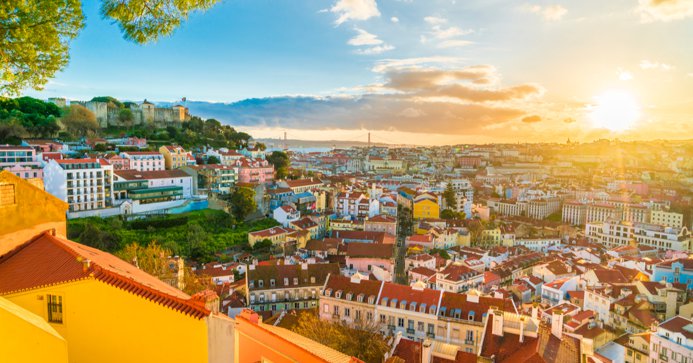
Relocating to Portugal is relatively straightforward for wealthy foreign nationals — all that’s required is to rent or purchase property and demonstrate sufficient funds to support oneself. The programme is simple and accommodating, which makes it accessible to a wide range of applicants.
Who is the Portuguese D7 Visa for?
Financially independent foreigners typically relocate to Portugal via the D7 visa route. This residence permit is intended for individuals who plan to live in Portugal while receiving their main source of income from abroad. In practice, this includes entrepreneurs with passive income as well as landlords earning rental income.
The D7 residence permit is granted to those who have secured housing in Portugal — either rented or owned — and hold enough funds in a bank account to support their family for 12 months. Once granted, children can attend local schools or universities, and relatives can access the country’s healthcare system.
Key Benefits of the Programme
- Freedom of movement across the EU. A Portuguese residence permit means no more applying for Schengen visas when travelling within the EU or Schengen Area. It allows permanent residence in Portugal and stays of up to 90 days in any 180-day period in other European countries.
- One-year residence permit with the option to renew. The permit can be extended as long as the original conditions continue to be met.
- Family inclusion. Close relatives — including children, spouses, and parents — may be granted residence permits as dependants.
- Citizenship after 5 years. After 5 years of residency, a foreign national becomes eligible to apply for Portuguese citizenship — one of the fastest naturalisation routes in the EU.
- Path to an EU passport without burdensome procedures, in a country known for its high quality of life.
- Dual citizenship allowed. Portugal permits dual nationality, so there is no requirement to renounce a Russian passport.
- Access to high-quality healthcare and education. Children benefit from EU resident status and can study at reduced rates.
Applicant Requirements
To apply for a D7 visa, an individual must meet several criteria, including having sufficient financial means to live in Portugal, a fixed place of residence, and no criminal record. Supporting documentation must also be provided to confirm the applicant’s sources of income.
 660,000 €
Total area 72 m² 1 bedroom
 555,000 €
Total area 56 m² 1 bedroom
 785,000 €
Total area 131 m² 1 bedroom
 830,000 €
Total area 136 m² 2 bedrooms
 810,000 €
Total area 116 m² 2 bedrooms
 895,000 €
Total area 254 m² 2 bedrooms
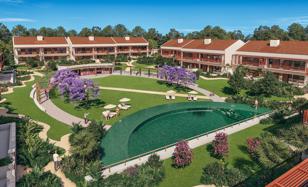 From 1,000,000 €
Completion in: 2027.II Total of 60 apartments
 From 4,300,000 €
Built in 2024 15 units in total
Permanent Accommodation in Portugal
The applicant must either purchase or enter into a long-term rental agreement for a property in Portugal — be it a flat or a house. There is no official minimum value for the property, but it is advisable to choose one at or above the market average. Priority is generally given to applicants who own their residence.
Passive Income
Applicants are required to demonstrate a stable passive income that is not tied to their physical location. Their financial means must exceed the minimum subsistence level in Portugal — currently €870 per month or €10,440 per year. If family members are accompanying the applicant, an additional 50% of this amount must be shown for each adult and 30% for each child.
This is the baseline for participation in the programme and eligibility for a Portuguese residence permit. Notably, the higher the amount of income the applicant can prove, the better their chances of approval.
Acceptable income sources include rental income from property, dividends from savings or investments, pensions, profits from business activities, royalties, or earnings from securities. The simplest way to demonstrate this is to show the total amount held in a bank account.
Minimum Stay and Tax Residency
The applicant must spend at least 183 days per year in Portugal, which automatically confers tax residency status. However, they may benefit from a favourable tax regime.
Favourable tax regime. As of 2024, Portugal has introduced an updated preferential tax scheme for new residents — IFICI (also referred to as NHR 2.0). It replaces the former Non-Habitual Resident (NHR) programme and is aimed at attracting highly skilled professionals in science, technology, innovation, healthcare, and education.
Under this scheme, income from employment or self-employment is taxed at a reduced rate of 20% for ten years.
Foreign-source income is exempt from Portuguese tax, provided that it is taxed in another jurisdiction. There is no inheritance or gift tax between close relatives, and no annual property tax. Those under this tax regime may also transfer funds into and out of Portugal without restriction or penalty.
In addition, individuals under the age of 35 are exempt from property transfer tax (IMT) and stamp duty when purchasing their first home for permanent residence.
Validity of the D7 Visa
The D7 visa is issued for a period of up to four months and allows the holder to stay in Portugal during this time to apply for a residence permit. Within this window, the applicant must obtain their initial 2-year residence permit from the Portuguese immigration agency AIMA. The permit can later be renewed for a 3-year period. After 5 years of legal residence, the applicant becomes eligible for permanent residency and can apply for citizenship.
Steps to Obtain a Portuguese Residence Permit via the D7 Visa
Preparing and Submitting the Required Documents
The first step is to gather all necessary paperwork, including proof of financial independence, health insurance, and accommodation in Portugal. All documents must be translated into Portuguese and certified.
Documents required for the visa application:
- Visa application form.
- International passport.
- National identity document (if applicable).
- 2 colour passport-size photos.
- Pension certificate (for retirees).
- Health insurance covering all medical expenses, including emergencies and potential repatriation.
- Police clearance certificate issued in the country of residence.
- Proof of accommodation in Portugal (either owned or rented property) — property deed or long-term lease.
- Evidence of sufficient income to live in Portugal — Portuguese bank statement, rental agreements, dividends, pension, etc.
- Proof of relationship for family members: marriage certificate, birth certificates.
- Portuguese taxpayer number (NIF).
- Proof of payment of all applicable fees.
Obtaining a NIF (Portuguese Tax Identification Number)
To carry out any financial activities in Portugal, it is mandatory to obtain a NIF — an individual taxpayer number. Without it, applying for a residence permit is not possible. A NIF can be acquired by visiting a local tax office or, if the applicant cannot attend in person, by authorising a legal representative to act on their behalf.
Buying or Renting Property
To meet the financial independence requirement, applicants must either purchase or rent property in Portugal. There are no minimum price thresholds for buying or renting. The applicant can select a flat or house remotely or travel to Portugal for this purpose.
660,000 €
Total area 72 m² 1 bedroom
555,000 €
Total area 56 m² 1 bedroom
785,000 €
Total area 131 m² 1 bedroom
830,000 €
Total area 136 m² 2 bedrooms
810,000 €
Total area 116 m² 2 bedrooms
895,000 €
Total area 254 m² 2 bedrooms
From 1,000,000 €
Completion in: 2027.II Total of 60 apartments
From 4,300,000 €
Built in 2024 15 units in total
Submitting the D7 Visa Application
Once all of the above steps are complete, the D7 visa application can be submitted at the Portuguese consulate in the applicant’s country of residence. The application must be accompanied by all supporting documents and proof of payment of the consular fee.
Russian citizens may submit their documents at the Portuguese consulate in Moscow for a national visa. The maximum processing time is 2 months.
Arriving in Portugal and Applying for a Residence Permit
Upon arrival in Portugal, applicants must submit their residence permit application at a local immigration office. This must be done within the four-month validity of the D7 visa. The application is submitted to the Portuguese immigration service (AIMA). An appointment must be booked in advance. During this stage, the applicant will also provide biometric data.
Receiving the Residence Card
After the application is reviewed and all documents verified, the applicant will be issued a residence card. This grants the legal right to reside in Portugal and can be renewed when it expires. The card will be posted to the registered address in Portugal within 1–2 months.
Opening a Portuguese Bank Account
Russian nationals are only able to open a bank account in Portugal after receiving their residence permit. Having a local account simplifies financial management. Banks may request documentation proving sources of income and a registered address in Portugal.
Need Help? Tranio’s experts can assist with selecting a flat or house in Portugal, obtaining a NIF, and opening a bank account.
Send a request
Residence Permit for Close Relatives of a Financially Independent Individual
Close family members of a financially independent individual may also apply for a residence permit in Portugal. To do so, they must provide proof of their relationship to the main applicant, along with evidence of financial support from the primary visa holder.
Family reunification allows the following relatives to obtain residency: a spouse, minor children, unmarried adult children enrolled in Portuguese universities, and dependent parents.
Costs Associated with Obtaining a Residence Permit via the D7 Visa
The main expenses typically include consular fees, health insurance, property-related taxes, and any legal or advisory service fees.
Approximate costs for obtaining a residence permit as a financially independent individual:
Consular fee for D visa application | €90 |
Government application fee | €170 |
Health insurance | €200 |
Consultation or immigration assistance services | €1,000 |
Real estate in Portugal is not cheaper than in other European countries. Prices continue to rise due to tourism growth, investment programmes, and favourable tax conditions. On average, the cost per square metre is around 2,850 euros. Renting a two-bedroom flat typically costs between 700 and 900 euros per month. In sought-after cities such as Lisbon and Porto, prices are significantly higher compared to smaller towns and rural regions.
Buying property in Portugal
Location | Price per m² (according to Numbeo) |
Lisbon | €3,000—€8,500 |
Porto | €2,300—€5,200 |
660,000 €
Total area 72 m² 1 bedroom
555,000 €
Total area 56 m² 1 bedroom
785,000 €
Total area 131 m² 1 bedroom
830,000 €
Total area 136 m² 2 bedrooms
810,000 €
Total area 116 m² 2 bedrooms
895,000 €
Total area 254 m² 2 bedrooms
From 1,000,000 €
Completion in: 2027.II Total of 60 apartments
 From 5,600,000 €
Completion in: 2028.I 6 units in total
Renting property in Portugal
Location | Monthly rent for a 1-bedroom flat (Numbeo) |
Lisbon | €800—€1,800 |
Porto | €650—€1,500 |
We will send you a content digest not more than once a week