Education in France
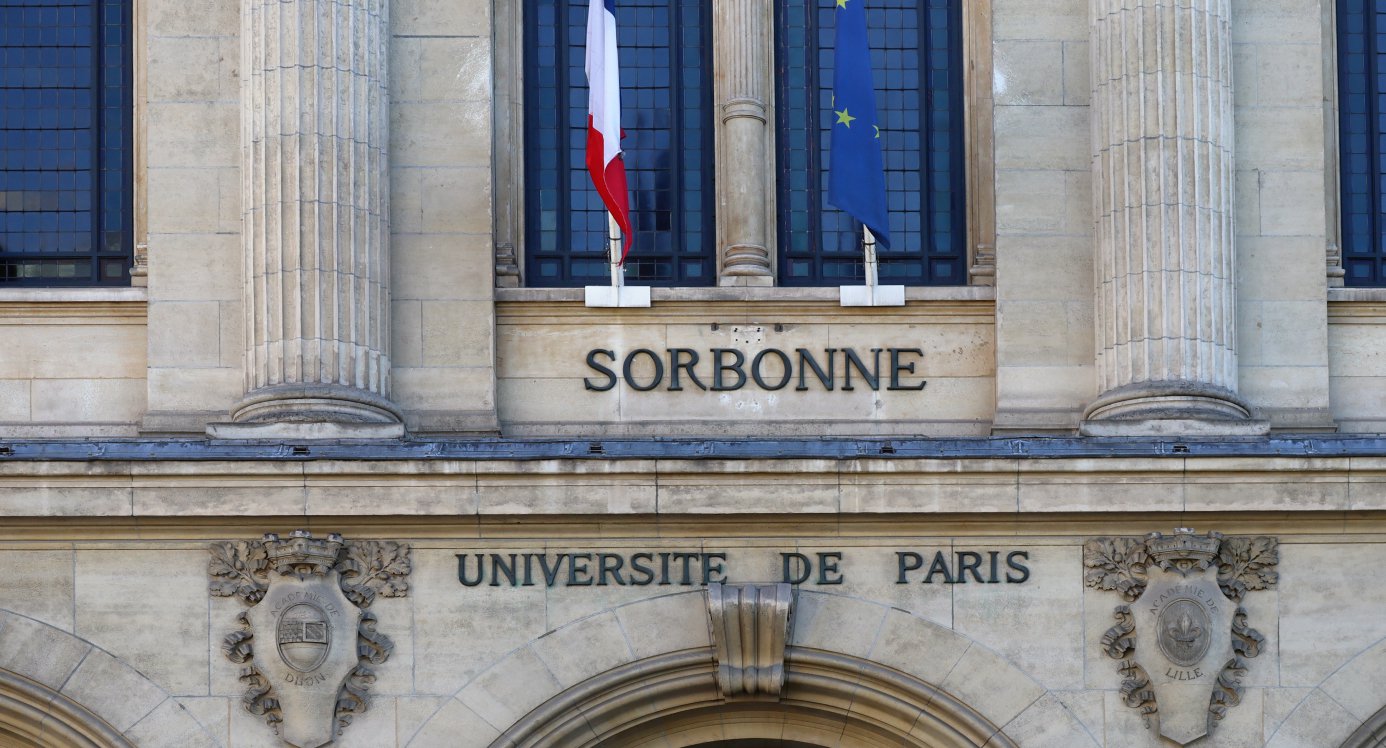
According to UNESCO, France ranks fourth in terms of the number of international students in 2025, behind the United States, the United Kingdom, and Australia. As of 2025, there are 67 public universities (universités publiques) under the control of the French Ministry of Higher Education and Science (Ministère de l’Enseignement supérieur et de la Recherche). There are also about 200 engineering schools, including prestigious Grandes Écoles such as École Polytechnique and CentraleSupélec, more than 200 schools of economics and management, including the famous HEC Paris and ESCP Business School, about 120 state higher art schools and 20 national schools of architecture.
Primary and secondary education
In France, education is compulsory for children from 3 to 16 years old. The system consists of three stages: 3 years in kindergarten (école maternelle), 5 years in elementary school (école élémentaire), 4 years in college (collège) and 3 years in lyceum (lycée). After graduating from the lyceum, students take the bachelor’s degree exam (baccalaureate), which gives them the right to enter universities. Compulsory education covers the entire kindergarten, elementary school, college, and the first year of high school.
Education in public schools in France is practically free — parents pay only for lunches, extracurricular activities, and school supplies. Private schools and lyceums require tuition fees, but they are significantly lower than in similar institutions in the UK and the USA. Most private schools in France are Catholic, many of them operate under contract with the state and are required to comply with the national curriculum. Catechism teaching may be offered, but it’s not mandatory, and participation in religious lessons is voluntary. Such schools are in demand due to strict discipline and attention to the educational component.
Higher education
France adopted the European higher education standards: the LMD system (Licence, Master, Doctorate). Earning a Licence (equivalent to a Bachelor’s degree) takes six semesters, Master’s — another four semesters, a Doctorate takes an additional two years with the possibility of extension.
The ability to write and speak French fluently is very important. Only business schools, like INSEAD where the learning and working language is English, are the exception. Admission requires a passport, birth certificate and diplomas. All the documents must have French translations and be apostilled. A motivation letter is also needed, along with the recommendations from teachers and employers.
Grandes écoles are considered prestigious. They train highly qualified specialists in Engineering, Management, Economics, Military Science, Education and Culture. There are more than 220 of such institutions in France, including the Paris School of Engineering (École des Ingénieurs de la Ville de Paris), Polytechnic School (École Polytechnique), National School of Administration (École Nationale d’Administration or ENA), Superior Normal School (École Normale Supérieure). These schools are not easy to enter: there is a rigorous competitive admission process and many institutions are fee-paying.
Business schools (Ecoles de Commerce) are popular too. The most famous school is the School of Higher Commercial Studies (École des Hautes Etudes Commerciales or HEC Paris). Its alumni include the President of France, François Hollande, entrepreneur François Pinault and former managing director of the International Monetary Fund Dominique Strauss-Kahn.
It’s easier to enter one of the universities which consider applications based on the results of the baccalaureate exam. The most famous university is Paris-Sorbonne University, one of the oldest universities in the world, founded in the XII century.
Top 10 Universities in France in 2025
Rank in France | World Rank | University Name | City |
1 | 24 | PSL University (Paris Sciences et Lettres) | Paris |
2 | 46 | Institut Polytechnique de Paris (includes École Polytechnique) | Palaiseau |
3 | 63 | Sorbonne University (merger of UPMC and Paris-Sorbonne) | Paris |
4 | 73 | Université Paris-Saclay | Orsay |
5 | 179 | École Normale Supérieure de Lyon | Lyon |
6 | 183 | Université Paris Cité (merger of Paris Diderot & Descartes) | Paris |
7 | 222 | Sciences Po Paris (Paris Institute of Political Studies) | Paris |
8 | 226 | University of Strasbourg | Strasbourg |
9 | 227 | Université Grenoble Alpes (includes former Joseph Fourier Univ.) | Grenoble |
10 | 230 | University of Bordeaux | Bordeaux |
International students have the same rights as the French nationals. They have access to public insurance, subsidies for accommodation and discounts on public transport.
| Training | costs, euro |
Six-month DALF preparation course in a French university | 1,440 |
DALF Exam | 130 |
Online version of the student’s record | 250 |
Required annual bank account balance | 7,380 |
Visa | 50 |
Air tickets to France | About 600 |
University application fee | About 250 |
Total | About 10,100 |
The French government provides substantial financial support to universities. The annual subsidy per each student, both local and international, is about €10,000. That’s why tuition fees rarely exceed €300 per year.
Registration fees for EU students:
- Bachelor’s degree (License): €175 per year.
- Master’s degree: €250 per year.
- Engineering programmes: €618 per year.
- Doctorate (Doctorat): €391 per year.
Registration fees for students from non-EU countries:
- Bachelor’s degree (License): €2,850 per year.
- Master’s degree: €3,879 per year.
- Doctorate (Doctorat): €391 per year (the same amount as for students from the EU).
Public Engineering Schools: At institutions such as INSA Rouen, registration fees are:
- 1st and 2nd years of study: €2,850 per year.
- 3rd to 5th years of study: €3,879 per year.
Private engineering schools: Tuition fees can reach €7,000 per year.
In other universities, in particular, in business schools, the cost of tuition is much higher — 10–40 thousand euros per year.
The main sources of scholarships for international students in France in 2025
Financial aid is available from the Ministry of Foreign Affairs, Ministry of National Education, National Centre for Scientific Research (Centre National de la Recherche Scientifique, CNRS) and other organisations.
To find relevant scholarships, it is recommended using the Campus Bourses platform, where you can filter offers by country, level of study, and area of specialisation.
French Ministry of Europe and Foreign Affairs (MEAE)
The Ministry offers several prestigious scholarship programmes:
- France Excellence Eiffel Programme: designed to attract talented international students to master’s and doctoral programmes. In 2025, 433 scholarships were awarded to students from 81 countries. The scholarship includes a monthly allowance (€1,181 for masters and €1,800 for doctoral students), travel expenses, medical insurance, and other benefits.
- The France Excellence Europa programme is aimed at students from 26 EU countries who wish to study for a master’s degree in France. The scholarship covers registration fees, provides a monthly allowance, and other benefits.
- The Excellence-Major programme is designed for the best graduates of French lyceums abroad, allowing them to continue their studies in France with financial support.
Ministry of Higher Education and Scientific Research (MESRI)
The Ministry provides:
- Social scholarships: for international students who have been living in France for at least two years and pay taxes.
- Financing of doctoral contracts: through doctoral schools to support research.
National Center for Scientific Research (CNRS) and other scientific institutions
CNRS, as well as other organisations such as IRD, ADEME and IFREMER, finance
scholarships for graduate and postdoctoral students: within the framework of research projects, often in collaboration with regional authorities.
Regional and local authorities
Many regions and cities in France provide:
- Scholarships for international students studying at their educational institutions.
- Financing of research projects: at the doctoral and postdoctoral levels.
Erasmus+ and Erasmus Mundus programmes
These European programmes offer:
- Scholarships for study and internships: within the framework of joint master’s degree programs and exchanges between universities.
Universities and higher education institutions
Many French universities provide:
- Own scholarships: for example, the Université Côte d’Azur offers IDEX scholarships in the amount of €5,000 and tuition fee exemption for the best candidates.
Cost of living while studying
The top five French cities for students include Paris, Lyon, Toulouse, Grenoble, and Montpellier. After enrolling in an educational institution, a student from abroad can try to get a place in a public dormitory, but more often foreigners have to look for housing in the private sector. The cost of renting student housing averages €400—500 per month for a studio and from €700 to €1,300 for a two-room apartment.
City | Average Monthly Rent T1 (1-bedroom) | Average Monthly Rent T2 (2-bedroom) |
Paris | €1,038 | €1,596 |
Lyon | €550 | €1,000 |
Nice | €595 | €750 |
Toulouse | €748 | €1,393 |
Marseille | €460 | €600 |
Montpellier | €495 | €650 |
Bordeaux | €550 | €609 |
Strasbourg | €550 | €659 |
Grenoble | €420 | €600 |
Rennes | €396 | €600 |
Lille | €471 | €650 |
Nantes | €401 | €600 |
Rouen | €395 | €600 |
Reims | €393 | €600 |
Aix-en-Provence | €524 | €700 |
Annecy | €504 | €700 |
Toulon | €423 | €600 |
Le Havre | €379 | €550 |
Poitiers | €366 | €500 |
Agen | €294 | €400 |
According to the latest survey by the Observatoire de la vie étudiante (OVE) for 2023, the distribution of students by type of housing is as follows:
- 32% of students live with their parents.
- 23% rent their own homes.
- 23% live with a partner or friends.
- The remaining 22% are distributed among living in dormitories, on campuses or other types of housing.
We will send you a content digest not more than once a week