Taxes in Portugal in 2026
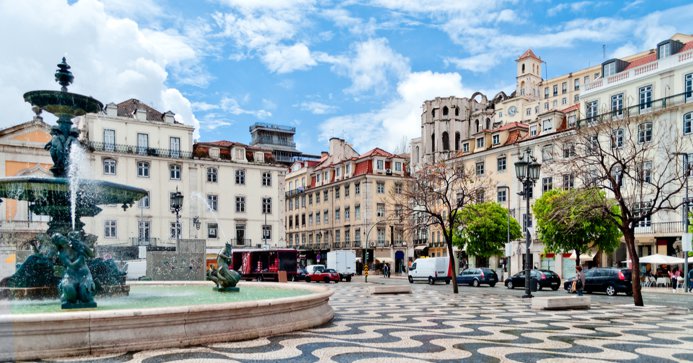
Portugal has an attractive tax system: tax rates are generally lower than in other European countries and there is a so-called «exceptional tax regime» for certain tax residents that considerably reduces expenses associated with business and other activities.
Individuals that spend more than 183 days a year in Portugal are considered tax residents.
Transaction, registration and ownership taxes
Stamp duty (Imposto do Selo or IS) is 0.8% and the title deed transfer tax (Imposto Municipal sobre Transmissões or IMT) is 1–8%. Buyers pay both taxes upon purchase of the real estate.
 660,000 €
Total area 72 m² 1 bedroom
 555,000 €
Total area 56 m² 1 bedroom
 785,000 €
Total area 131 m² 1 bedroom
 830,000 €
Total area 136 m² 2 bedrooms
 810,000 €
Total area 116 m² 2 bedrooms
 895,000 €
Total area 254 m² 2 bedrooms
 From 1,000,000 €
Completion in: 2027.II Total of 60 apartments
 From 4,300,000 €
Built in 2024 15 units in total
Annual real estate tax (Imposto Municipal sobre os Imóveis or IMI) for owners is 0.3–0.8% depending on municipality.
Capital gains and inheritance taxes
Capital gains tax is 28%, for non-resident taxpayers only, and paid upon sale of the property. It is calculated on the difference between the purchase price and the sale price.
There is no such thing as inheritance tax in Portugal, but instead, a stamp duty (Imposto do Selo) of 10% must be paid.
Income and corporate taxes
Non-residents pay 25% income tax on earnings in Portugal (employment or pensions). Earnings from dividends and other investments are taxed at 28%. Tax rates on rental income are 25–28%.
According to Henley & Partners, non-tax residents affiliated with countries that have a double taxation treaty with Portugal pay reduced tax on dividends (15%), royalties (10%) and capital gains (10%). They can also be exempt from tax on income from professional activity or employment in Portugal.
For tax residents, there are progressive tax rates from 13 to 48%, depending on the revenue band.
Income, € | Rates, % |
Under 8,059 | 13 |
8,060–12,160 | 16,5 |
12,161–17,233 | 22 |
17,234–22,306 | 25 |
22,307–28,400 | 32 |
28,401–41,629 | 35,5 |
41,630–44,987 | 43,5 |
44,988–83,696 | 45 |
Over 83,696 | 48 |
Incomes exceeding 80,000 euros are charged 2.5% solidarity tax and 5% for incomes exceeding 250,000 euros.
Corporate tax is 20%.
Exceptional tax regime
Previously, Portugal had an exceptional tax regime (Non-Habitual Residents, NHR) for foreign tax residents who came to Portugal for permanent residence but had never lived in Portugal before (no residence permit within the last 5 years). This scheme was created to attract qualified people, scientists, doctors, IT specialists, owners of large capital assets, etc. to Portugal.
The scheme was abolished on January 1, 2024. However, it will continue to apply for 10 years to those who have managed to register and meet the conditions before that date.
From January 2024, the NHR will be replaced by Incentivo Fiscal à Investigação Científica e Inovação (IFICI, Tax Incentive for Scientific Research and Innovation). The new scheme aims to attract only highly qualified professionals in the fields of science, higher education, technology and innovation.
Like the old incentive scheme, under the IFICI, income earned in Portugal is subject to income tax at a rate of 20% for 10 years. Income from work and business activities abroad (except pensions) is exempt from tax.
Disclaimer: the information in the above article is for reference and may be subject to change over time. Persons interested in exact calculations should contact a certified tax specialist in this country before purchasing property in Portugal.

.jpg)

We will send you a content digest not more than once a week