Residence Permit in Portugal: How to Get in 2026

renewable validity period
time to obtain a residence permit
required to live in Portugal to get EU citizenship
Many foreigners choose to relocate to Portugal because of its mild Mediterranean climate, friendly people, picturesque nature and beaches, beautiful architecture and affordable prices compared to other European countries. Portugal also offers excellent work and business opportunities.
A foreigner can obtain a residence permit in Portugal on the basis of study, work, business activity, family reunification, financial independence and investment in the country’s economy with a Golden Visa.
 660,000 €
Total area 72 m² 1 bedroom
 555,000 €
Total area 56 m² 1 bedroom
 785,000 €
Total area 131 m² 1 bedroom
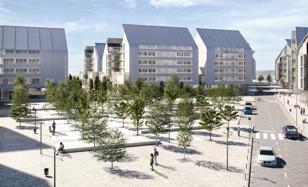 830,000 €
Total area 136 m² 2 bedrooms
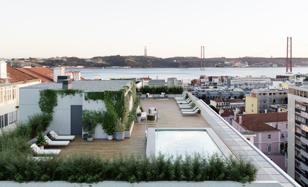 810,000 €
Total area 116 m² 2 bedrooms
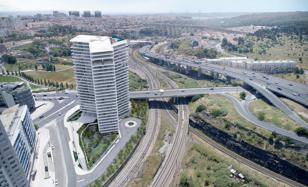 895,000 €
Total area 254 m² 2 bedrooms
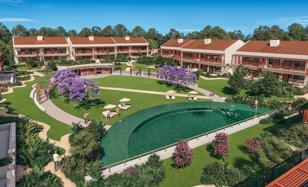 From 1,000,000 €
Completion in: 2027.II Total of 60 apartments
 From 4,300,000 €
Built in 2024 15 units in total
Benefits of a Portuguese residence permit
A residence permit in Portugal offers many advantages:
- A clear and simple registration procedure.
- The possibility of obtaining Portuguese citizenship after 5 years of naturalisation (for comparison, this period is 7 years in Greece, 10 years in Italy and Spain).
- Tax advantages for non-residents and new residents.
- No Portuguese language or history tests.
- The investor is entitled to family reunification, including a spouse, minor children, financially dependent children under 26 who are unmarried and studying full-time in higher education, and parents.
- There is no tax residency if you stay in the country for less than 183 days a year.
- Visa-free travel within Schengen and the EU.
- The right to work in Portugal for the investor and family members.
- Education of children in schools and universities in Europe without a student visa. Children receive educational benefits as EU residents.
- The right to use health services.
Special tax rules for foreign nationals
In general, residents of Portugal are taxed at a rate of up to 48% on income earned in Portugal and abroad. The standard rate of corporation tax is 21%. Non-residents are taxed at 25% on income from professional activities in Portugal. Capital gains, rents and other investment income are taxed at 28%.
Although the NHR scheme officially closed to new applicants in 2024, those who entered the scheme before the end of 2023 will continue to benefit from the preferential treatment for 10 years. In 2025, highly qualified professionals can continue to pay income tax at a reduced rate of 20% for self-employment or independent work.
The preferential regime also provides for exemption from tax on income earned outside Portugal, including income from employment, pensions, interest, dividends and royalties, in accordance with double taxation treaties.
In 2025, foreigners can apply for a new tax status, IFICI. Like the NHR, the IFICI provides for a flat tax rate of 20% on income from employment and self-employment for a period of 10 years. In addition, there is a tax exemption for foreign source income. However, the scope of foreigners’ activities is limited: only teachers, scientists, qualified employees of research centres and start-ups with innovative activities can benefit from this exemption.
How to obtain residence permit in Portugal

Obtaining a residence permit in Portugal involves several steps. First, a candidate needs to choose the appropriate type of visa, depending on their objectives. Then they need to prepare all the necessary documents.
Types of visas to obtain a residence permit in Portugal
Usually, a residence permit in Portugal is obtained with a D visa, which can be issued at the Portuguese consulate in a candidate’s country. To avoid confusion, visas for obtaining a residence permit in Portugal can be divided into several categories:
Residence permits based on employment (D1 and D3 visas).
These visas are for those who wish to work in Portugal. The D3 visa is only suitable for highly qualified professionals under contract, while the D1 visa is suitable for workers of any qualification under contract. With the D3 visa, it is possible to teach at universities and engage in research activities.
A separate subcategory is residence permit for job search, which is issued for 4 months with an extension of 2 months. During the 6-month period, it is necessary to find a job. If no job is found, a new visa can be applied for after one year.
Residence permit for entrepreneurs (visa D2)
The D2 visa is intended for foreign nationals who wish to carry out independent professional activities in Portugal as a sole proprietor or self-employed person. To obtain this visa, it is necessary to demonstrate a business plan.
Residence for study purposes (D4 and D5 visas)

The D4 visa is for undergraduate and postgraduate students studying at accredited institutions. The D5 visa is issued for short-term visits, such as student exchanges. It is also issued for internships and volunteer projects.
Residence permit for family reunification (D6 visa)
This visa allows family members of a Portuguese citizen or resident to reunite with them. Applicants must provide proof of kinship and financial support. Income must include 50% of the minimum wage for an adult family member, 30% for a minor.
Residence permit for financially independent persons (D7 visa)
The D7 visa is for those who can demonstrate financial independence and plan to earn passive income. Sources of income may include rental property, dividends, pensions, deposits, and intellectual property. The minimum income must be at least 870 euros.
Note: this visa does not allow the applicant to work or run a business in Portugal.
Residence permit for digital nomads
This visa category is suitable for people who plan to work remotely while in Portugal. It is important to have a stable income of at least 3,480 euros per month.
Residence permit for investment or Golden Visa
Foreigners can obtain a residence permit in Portugal for investments in the national economy. This programme is known as Portugal’s Golden Visa. It has been in place since 2012 and is designed to attract foreign investment to the country. It is issued for a period of two years.
In 2023, the authorities closed the real estate investment option in the programme, but it can be acquired by choosing the option to invest in the share capital of a developer company.
The main categories of the Golden Visa programme and the minimum investment amounts:
Starting own business | no minimum investment |
Promotion of culture and historical heritage | from €250,000 |
Investment in a fund | from €500,000 |
Scientific research | from €500,000 |
Investment in an existing company | from €500,000 |
One of the main advantages over other types of residence permit is that there is no requirement to live in Portugal and become a tax resident.
By choosing the option of investing in a developer’s company, the investor has the opportunity to buy property. Purchased properties can be rented out and yield a return of 4–6% per annum in euros.
Documents required to obtain a residence permit in Portugal
- Documents confirming the purpose of the visit (e.g. letter of admission to an educational institution, contract for the sale or purchase of real estate, business plan or employment contract).
- Passports or copies of passports for all applicants.
- Photograph of the applicant.
- Health insurance policy.
- Proof of residence in the country (rental or purchase agreement).
- Application for a criminal record check in Portugal.
- Certificate of no criminal record in the applicant’s country of residence.
- Certificate of no debts to the tax and social security authorities.
- Marriage and children’s birth certificates.
- Certificate of employment.
- School certificate for children over the age of 18.
- TIN.
From 4,300,000 €
Built in 2024 15 units in total
 From 5,600,000 €
Completion in: 2028.I 6 units in total
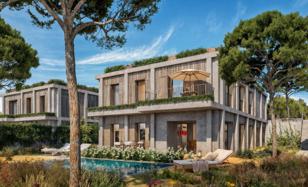 From 1,445,000 €
Completion in: 2028.II 71 units in total
 From 4,000,000 €
Completion in: 2028.I 18 units in total
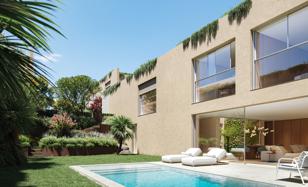 From 2,642,000 €
Completion in: 2026.III 13 units in total
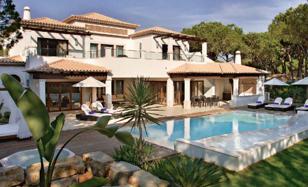 4,500,000 €
Total area 486 m² 4 bedrooms
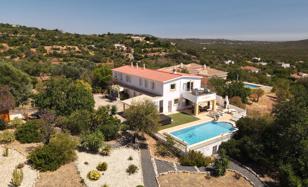 925,000 €
Total area 218 m² Land area: 7,062 m²
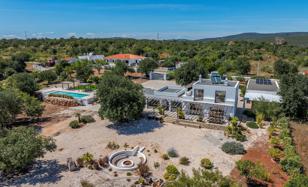 2,250,000 €
Total area 372 m² Land area: 68,892 m²
Renewal of a Portuguese residence permit
To renew a residence permit, the applicant must provide evidence that they still meet the conditions of the visa and complete the relevant forms and fees. Most categories also require a minimum of 183 days per year in the country.
Residence permits are renewable for 1–2 years, and citizenship can be obtained after 5 years of residence in the country. Dual citizenship is permitted in Portugal.
Reasons for refusal of a residence permit
A visa may be refused for a number of reasons. The main ones are: lack of funds, lack of necessary documents, refusal to take up employment or studies, false information in the documents, and the existence of a criminal record or other offences.



We will send you a content digest not more than once a week