Buying Property in Thailand as a Foreigner in 2026
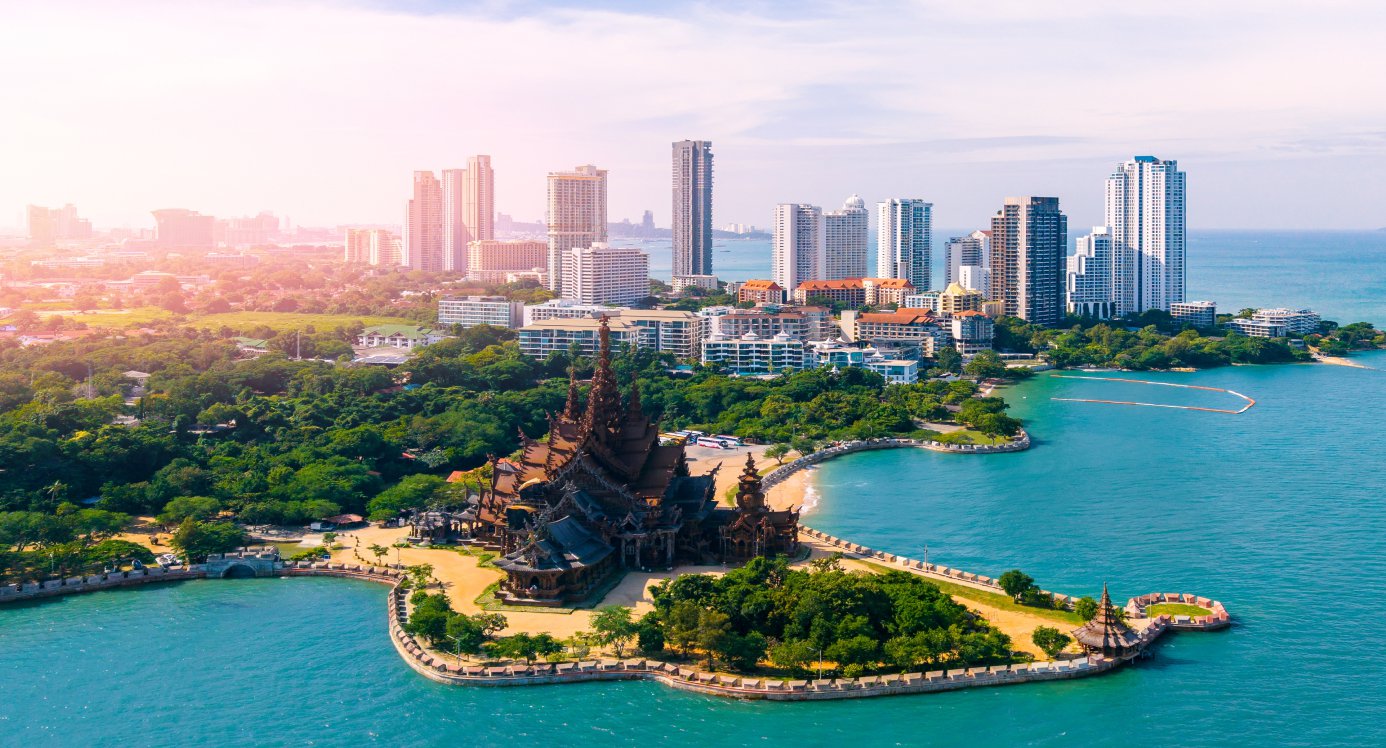
To purchase real estate in Thailand, a foreign individual actually needs only a foreign passport. The purchase of real estate in Thailand is carried out in several stages.
Сhoosing a property
Budget
Property prices in Thailand remain significantly lower compared to European seaside resorts, which makes the country particularly attractive to foreign buyers. This is especially true against the background of high-quality construction, well-developed infrastructure, and stable rental demand in the resort regions.
In popular destinations such as Phuket, Pattaya or Koh Samui, a small studio or apartment in a condominium with a swimming pool and security can be purchased for 100–150 thousand dollars. Such facilities are usually already fully furnished and ready for rent. More spacious apartments with sea views or within walking distance from the beach cost from 180–250 thousand dollars and above, depending on the developer, the level of decoration and location.
Villas with a plot of land and a private pool start at 350 thousand dollars, but in popular areas of Phuket (for example, Bang Tao, Kamala, Chalong) the cost can exceed 500–700 thousand dollars for a modern house in a secure complex. Facilities with direct access to the sea, especially on the islands, are estimated at 1–2 million dollars or more.
Purpose
The choice of location, type of property, and form of ownership should be based on the purpose of the purchase.
Foreigners planning to move to Thailand on a permanent basis, as a rule, do not consider tourist areas for living. For example, in Phuket, expats are more likely to choose the southern or eastern coast of the island — this is where the developed daily infrastructure is concentrated, including international schools, private clinics, supermarkets, and service companies. These areas are less popular with short-term tourists, so buying a home here is more suitable for personal living than for generating rental income.
Foreigners who do not plan to move permanently, but want to regularly spend their holidays in their own accommodation at the resort, usually prefer quiet, private locations away from mass tourism. At the same time, convenient infrastructure nearby is important for them — the presence of shopping centers, medical clinics, cafes, and restaurants. The choice often falls on modern residential complexes with services that provide comfortable accommodation and property maintenance in the absence of owners.
Foreigners who wish to invest in Thailand real estate most often choose service apartments in condominiums, hotel rooms or villas in special complexes with organised rentals. Such facilities provide the highest occupancy and quality of management. In addition, developers’ management companies often provide owners with free accommodation in residential complexes under their management for several weeks a year under loyalty programmes.
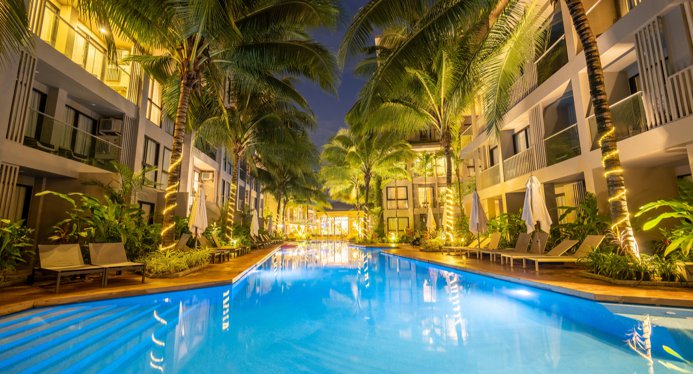
 From $128,000
Completion in: 2027.IV 295 units in total
 From $171,000
Completion in: 2029.I 350 units in total
 From $351,000
Completion in: 2029.I 37 units in total
 From $142,000
Completion in: 2027.I 859 units in total
 From $123,000
Completion in: 2028.III 363 units in total
 From $160,000
Completion in: 2028.I 542 units in total
 From $140,000
Completion in: 2028.I 564 units in total
 From $87,000
Completion in: 2028.II 452 units in total
Freehold or leasehold?
Real estate law in Thailand was changed in 2020. The buying process for foreigners has been greatly simplified: they can now own apartments, condominiums, houses and villas. However, foreigners are still not allowed to own land in the country. Full ownership of land (freehold) can only be registered by a foreigner to a legal entity of the Kingdom of Thailand. Moreover, at least 51% of the company’s share must be owned by co-founders with Thai citizenship.
Foreign individuals can own condominium units within the foreign freehold quota, which is limited to 49% of the total condominium unit area. Land is generally leased for an initial term of up to 30 years; an extension requires a new agreement and is not guaranteed. Learn more about forms of property ownership in Thailand.
Investors more often choose the leasehold type of ownership. There are several reasons for that. Firstly, leasehold properties are generally cheaper than freehold properties by up to 10%, hence the yield is higher. Secondly, leaseholders pay fewer taxes than freehold owners. Thirdly, leasehold is essentially a lease, so property does not need to be declared. At the same time, leaseholders are not limited in any way in their rights to the property: they can sell it, donate, lease and inherit.
Guidance
There are many realtors in Thailand who speak foreign languages; however it is important to choose among them those who have experience in the real estate market of the region in which you are going to buy property in Thailand. Experienced agents will help you select suitable properties, provide reliable primary information and secure the deal, as they work in conjunction with lawyers.
Tranio has reliable partners in Phuket and Koh Samui.
The Phuket market, as well as the Koh Samui one, is rather tight. We work directly with all major developers, not just a select few; therefore, we have the opportunity to act in the interests of our clients and choose from the entire available market the most promising and lucrative projects that best meet the clients’ goals.
We can also agree on the maximum possible discounts and bonuses that the developer can provide. You will not find such discounts on the open market.


Reservation agreement: what should it contain?
The reservation agreement is a mandatory stage of the transaction, which protects both parties. A foreigner will need only an international passport to conclude the agreement.
The reservation agreement states the following:
- the final cost of the property, including the discount, if any;
- the information about the project: its address, apartment number, and cadastral information;
- the information about the stages of construction, if the project is under construction, as well as penalties for non-compliance with the deadlines for completion of construction;
- the reservation fee amount;
- the payment schedule. If the project is bought in installments, then all payments will be specified in the reservation agreement. As a rule, they correspond to the construction stages;
- personal data of the buyer and seller;
- contact details of the buyer and seller for the exchange of documents and information.
If the property is purchased online, the buyer receives an electronic reservation agreement by email for approval and signs it, if there are no contradictions with the preliminary agreement, or proposes to change the conditions. As soon as the contract is agreed upon and signed, the seller, in particular the developer, removes the project from sale and issues an invoice to the buyer for the reservation fee payment. As a rule, the amount of this fee is 100,000–200,000 Thai baht (3,000–6,000 US dollars). This invoice can be paid at any bank that makes international SWIFT payments.
After the seller confirms the receipt of payment to his account, the process of drawing up the main contract begins.
Contract of sale (freehold) or transfer of possession for a long time (leasehold)
Up to four co-owners can be included in the contract: for example, family members or partners. If there are several new owners, then it will be necessary to translate and certify the passports of all owners specified in the contract.
At the stage of drawing up the contract, you need to choose the heirs. You can add them to the contract later, but this will cost 50,000–100,000 Thai baht (1,400–2,800 US dollars) for the services of a lawyer and for changing the contract.
Immediately after signing the contract, the seller issues an invoice for payment of the entire project’s cost or for the first instalment according to the payment schedule, minus the reservation fee.
Due Diligence
After concluding the reservation agreement, a foreigner should check the property and contract itself with the help of a lawyer who is well versed in local laws. Often such a service can be provided by a real estate agency.
Before the buyer signs the contract of sale, the lawyer will check that all documents for the property are in order. The legal service of checking a contract of sale in the primary real estate market costs about 20,000 Thai baht (550 US dollars).
The lawyer will check:
- a copy and original of the title deed provided by the seller;
- the encumbrance on the object, if any;
- technical plan and cadastral information;
- court cases directly or indirectly related to the property and the seller, if any;
- the appraised value of the apartment (some taxes are calculated based on this value);
- the compliance with foreign property quotas in the condominium;
- residents registered in the property, if any.
Usually our clients don’t need to do due diligence when buying properties on the primary market with our help, as we offer proven projects from our partner developers. However, this check should always be done when buying on the secondary market.
Payment
It usually takes up to 30 days after the reservation fee payment until the first payment under the main contract. If the property is purchased as a freehold one, then payment must be made by the international SWIFT transfer according to the contract and invoice. The invoice should be in the buyer’s name.
The payment method for a leasehold purchase should be agreed with the seller and bank. Cryptocurrency is not legal tender in Thailand, and licensed digital-asset businesses may not facilitate its use to pay for goods and services. Settlement should use an authorised payment channel in Thai baht.
Taxes and fees
Before registering the deal with the Land Department of Thailand, the buyer and seller must pay taxes, fees and commissions. The buyer pays transfer fee (freehold) or lease registration fee (leasehold). These fees are often divided between the buyer and the seller in different proportions, depending on the arrangement.
Tax | Leasehold | Freehold | Liability to tax |
|---|---|---|---|
Transfer fee | — | 2% | Buyer/Seller |
Lease registration fee | 1% | — | Buyer/Seller |
Stamp duty | 0.1% | 0.5% or not applicable | Seller |
Specific business tax | — | 3.3% | Seller (in the case of owning the property for less than 5 years) |
Withholding tax | — | 1% (individuals) or 5–35% (legal entities) | Seller |
The stamp duty on the sale of freehold property in Thailand is 0.5% of the appraised value or contract price of the apartment, whichever is higher. When acquiring land on a leasehold basis, the stamp duty is paid at a rate of 0.1%.
If the freehold property is sold within 5 years of purchase, a specific business tax is paid instead of stamp duty. This tax is 3.3% of the appraised value or contract price of the apartment, whichever is higher.
The seller also pays tax on the sale of real estate, which is 1% of the appraised value or contract price of the building and land, whichever is higher (if the seller is a company), or at an income tax rate of up to 35% on the increase in value (if the seller is an individual person, which mainly concerns resale properties). Read more about property taxes in Thailand in our article.
The real estate agent’s commission of 3 to 10% is usually paid by the seller.
Registration of the transaction
After paying for the property and paying taxes, the deal is registered with the Land Department of the Kingdom of Thailand. The new owner receives a document in Thai confirming the right of ownership (freehold) or the right of possession (leasehold).
If the property is bought on the primary market, then the deal registration in the Land Department is usually handled by the developer’s representative. The buyer receives a package of documents, including a state-certified contract of sale or a long-term lease agreement (the copy of this contract will be kept in the Land Department) and a house book. This book is also called the blue book in Thailand (or yellow book if the owner is a foreigner) and contains the address of the property, as well as information about registered residents.
We will send you a content digest not more than once a week