Climate in Thailand: change by month and region
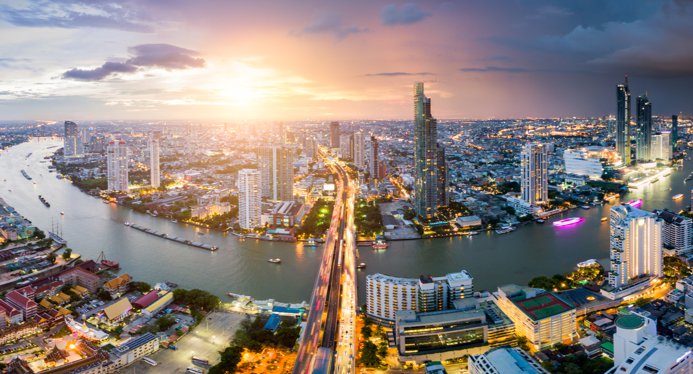
The Kingdom of Thailand has two types of climate: the tropical one in the northern regions of the country and the tropical monsoon one in the southern and southeastern regions. Thus, weather conditions in Thailand vary significantly by month and region.
Length of seasons and average temperatures in Thailand
There is a saying popular among Europeans and Americans living in Thailand: «There are three seasons here: hot, very hot and unbearably hot.» The southwest monsoon usually affects Thailand from about mid-May to mid-October, while the northeast monsoon generally runs from mid-October to mid-February.
In northern, northeastern and central Thailand, the usual climate seasons are:
- rainy season, roughly mid-May to mid-October;
- cool dry season, roughly mid-October to mid-February;
- hot season, roughly mid-February to mid-May.
In southern Thailand, the timing differs between coasts:
- On the west coast, including Phuket, rainfall is heavier from May to October and the driest months are usually December to March.
- On the east coast, including Koh Samui, the wettest period is usually October to December.
You can vacation in Thailand almost all year round. April is usually hottest in inland areas: in Chiang Mai, the 1991–2020 average daily maximum was 36.7°C, and temperatures exceed 40°C on some days. Coastal islands have a smaller annual temperature range. Cool season in Thailand lasts from December to February with an average air temperature of 20—27°C. In Pattaya, the driest weather is usually from November to February; in Phuket, from December to March. On Koh Samui, July to September is less rainy than October to December.
Air temperature, °C | Water temperature, °C | |
|---|---|---|
Bangkok | 32 | 28 |
Pattaya | 33 | 28 |
Phuket | 24–31 | 28–29 |
Koh Samui | 29–31 | 28 |
Acclimatisation to tropical heat in high humidity conditions can take several days. If you are heading to the north of Thailand at the end of the dry season, be aware of the significant difference between day and night temperatures and remember to bring warm clothes.
Precipitation in Thailand
There is no universal rainy season for the whole country; the humid period lasts for 6–8 months on average. The heaviest rains traditionally fall in the central part of the country as well as on the east coast in August, September and October. Average annual rainfall varies widely: 1991–2020 station normals are about 1,700 mm in Bangkok on the Chao Phraya Lowland, 1,120 mm in Nakhon Ratchasima on the Khorat Plateau and 4,930 mm on the Trat coast.
The rainy season varies by region. Pattaya and Phuket are wetter from May to October, often peaking in September or October; Koh Samui is wettest from October to December, especially November. Rainfall is heavy on the Trat coast, near Koh Chang, from June to September, and in Chiang Mai during August and September. Rain can also fall during the day and last longer than half an hour.
Insects in Thailand
It should be noted that there are many mosquitoes in Thailand. They are active at dawn and dusk, and are especially attracted to people who use body fragrances: perfumes, deodorants, and aftershave lotions. The further south you go, the more mosquitoes you will encounter due to the more humid climate. Malaria risk is concentrated in rural forested areas near the borders with Myanmar and Cambodia, and in the far south near Malaysia; cases in Bangkok, Chiang Mai city and Phuket are rare. Japanese encephalitis has been reported in northern and central Thailand and is transmitted through the bites of infected mosquitoes. In addition, there are many ants, cockroaches and spiders in Thailand that can make their way into houses.
We will send you a content digest not more than once a week
- Property Prices
- Buying and Registering
- Mortgage
- Residence
- Citizenship (getting passport)
- Property Maintenance
- Taxes
- Healthcare
- Travel
- Weather and Environment