Property taxes in Turkey in 2026



A citizen of any country can buy an apartment in Turkey. Real estate taxes in Turkey for foreigners and for citizens of the country are practically the same. The property tax is not burdensome at all. It equals to only 0.2% of an apartment’s cadastral value in the capital and to 0.1% — in small towns. Although the tax on resale and rental income for individuals can reach 35%, the taxable amount can be reduced on the account of expenses.
Taxes when buying property in Turkey
Property purchase tax (Tapu Devir Vergisi) in Turkey is 4% of the value indicated in the title deed (TAPU) and is paid upon receiving this document. By default, the tax is divided equally between the buyer and the seller, unless otherwise agreed by the parties. In practice, this tax is more often paid by the buyer.
 From 17,599,000 TRY
Completion in: 2027.IV Total of 2644 apartments
 From 12,430,000 TRY
Completion in: 2026.IV Total of 294 apartments
 From 15,910,000 TRY
Completion in: 2026.II Total of 369 apartments
 From 27,346,000 TRY
Built in 2025 Total of 544 apartments
 From 35,798,000 TRY
Completion in: 2026.IV Total of 295 apartments
 From 24,064,000 TRY
Completion in: 2026.II Total of 781 apartments
 From 14,173,000 TRY
Completion in: 2026.IV Total of 2800 apartments
 From 48,775,000 TRY
Built in 2024 Total of 1557 apartments
VAT on property purchases from developers is deductible
Value added tax (VAT) is included in the payment for new properties purchased from construction companies in Turkey. VAT rates vary from 1% to 20%: 1% or 10% for residential properties with an area size up to 150 square meters, and 20% for residential properties over 150 square meters, as well as for commercial and dual-use properties. The exact VAT rate should be verified with the developer beforehand. Additionally, foreign buyers may qualify for a 0% VAT exemption on their first property purchase under certain legal conditions.
In 2017, the Turkish government exempted foreigners from paying VAT when buying real estate from developers, making investments in the country much more attractive (in accordance with paragraph 13 of Article 3065 of the VAT Code of February 23, 2017 and Article 7 of Law No. 6824). After the deal is closed, foreign buyers are eligible to receive a tax deduction. For that, along with the tax return application, one must provide:
- Copy of passport with a notarised translation.
- Confirmation from the Turkish tax office that the buyer is not a tax resident of Turkey. To get this confirmation, additional documents are needed: a notarised confirmation of a foreign address, a statement from the Turkish Police Department on passport transactions and a statement from the Turkish Migration Service confirming that the applicant does not live in Turkey.
The deduction can be obtained independently or with the help of a tax specialist. The service costs approximately 1,200 US dollars.
If a VAT deduction has been received for a property, said property cannot be sold for a year; otherwise the deduction will have to be returned with interest.
Costs for registering a contract of sale with a notary
These are additional costs for the buyer if the property is purchased at the construction stage or if there is an instalment plan. Since in this case it will not be possible to immediately issue a certificate of ownership, a preliminary contract of sale is concluded between all parties and is certified by a notary to confirm the buyer’s right. Notarisation will cost 1% of the property’s value, indicated in this contract.
State duty for TAPU registration
Upon obtaining a certificate of ownership at the cadastral office, the state duty (Döner Sermaye) is paid. Foreigners pay approximately 112 US dollars, while Turkish citizens pay 45 US dollars. This is the only difference in costs when buying property in Turkey.
Taxes for owning property in Turkey
Annual property tax (Emlak Vergisi)
This property tax is an annual municipal tax for owners. It is calculated from the cadastral value of property, both land and buildings. Property tax rates are regulated in Articles 8 and 18 of the Property Tax Law. The tax rate depends on the type and location of the property:
Property type | Tax rate in major cities* | Tax rate in other regions |
|---|---|---|
Residential properties | 0.2% | 0.1% |
Commercial properties | 0.4% | 0.2% |
Plot without building permit | 0.2% | 0.1% |
Plot with building permit | 0.6% | 0.3% |
*Major cities of Turkey with higher property tax rates: Adana, Erzurum, Kocaeli, Sakarya, Ankara, Eskisehir, Konya, Samsun, Antalya, Gaziantep, Malatya, Sanliurfa, Aydin, Hatay, Manisa, Tekirdag, Balikesir, Istanbul, Mardin, Trabzon, Bursa, Izmir, Mersin, Van, Denizli, Kahramanmaras, Mugla, Diyarbakir, Kayseri, Ordu.
If the building is included in the list of cultural heritage objects of Turkey, then the taxable amount is increased by 10%.
If the building does not have a technical passport yet, it is classified as a plot with a building permit. After issuing a technical passport, the category and its corresponding tax rate are adjusted; the cadastral value is also increased.
The municipality periodically reassesses cadastral value of objects, so the tax amount may vary from year to year.
Example:
The cadastral value of Istanbul’s residential apartment was 250,000 US dollars. After revaluation in one year, the cadastral value increased by 20% to 300,000 US dollars.
Applicable tax rate: 0.2%.
Property tax: 500 US dollars.
Property tax in one year: 600 US dollars.
Luxury property tax
In 2026, luxury residential property tax applies when the assessed building value exceeds 17,711,000 liras (about $378,000 at the July 2026 exchange rate).
| Cost range (liras / $) | Tax rate |
|---|---|
| 17,711,000 – 26,567,000 (about $378,000 – $567,000) | 0.3% on value above 17,711,000 |
| 26,567,001 – 35,425,000 (about $567,000 – $756,000) | 26,568 plus 0.6% on value above 26,567,000 |
| Above 35,425,000 | 79,716 plus 1% on value above 35,425,000 |
Individuals who own only one residential property in Turkey, regardless of its value, are exempt from paying this tax.
Property tax is paid directly to the local municipality or to a bank with which the municipality has a special agreement to accept payments.
Property rental income tax
Property rental income tax (Emlak Kira Geliri Vergisi) in Turkey is paid by owners at a progressive rate.
Long-term rental
Foreigners along with Turkish citizens have the right to rent out real estate on a long-term basis. The notarised rental agreement must be submitted to the General Directorate of Population and Citizenship Affairs of the Ministry of the Interior (Nüfus Müdürlüğü) to register the tenants at the residence address.
Short-term rental
Both individuals and legal entities may rent homes for stays of up to 100 days if they obtain a tourism-rental permit from the Ministry of Culture and Tourism. An apartment in an ordinary condominium generally also requires unanimous consent from the other owners.
Property rental income tax rates for individuals
| Income, in Turkish liras | Approximate income in US dollars* | Tax rate |
|---|---|---|
| Up to 190,000 | Up to 4,050 | 15% |
| 190,001–400,000 | 4,051–8,530 | 20% |
| 400,001–1,000,000 | 8,531–21,320 | 27% |
| 1,000,001–5,300,000 | 21,321–113,000 | 35% |
| Over 5,300,000 | Over 113,000 | 40% |
Companies are generally subject to corporate income tax at 25% on taxable rental profits.
Property resale taxes in Turkey
Individuals are not required to pay income tax when reselling property if they have owned said property for more than 5 years. If the property has been owned for less than 5 years, then capital gains — excluding transfer tax, transaction and repair costs — are subject to income tax.
Capital gain is the difference between the property’s value indicated in the seller’s TAPU and the appraised value approved by the local administration, which will be indicated in the buyer’s new TAPU.
Tax rates for individuals on the resale of real estate
If capital gains do not exceed 87,000 Turkish liras (2,245 US dollars), no income tax applies. The exemption amount changes annually. The tax rate depends on the amount of profit and ranges from 15–40%.
Companies generally pay corporate income tax at 25% on taxable profits from resale, regardless of the property holding period.
Transfer tax
Inheritance (Miras Vergisi) and gift (Hediye Gayrimenkul Vergisi) taxes are calculated at a progressive rate. The payable tax amount is based on the property’s cadastral value: the lower the value, the lower the rates.
| Appraised value of property, in Turkish liras | Inheritance tax rate | Gift tax rate |
|---|---|---|
| Up to 3,000,000 | 1% | 10% |
| 3,000,001–10,000,000 | 3% | 15% |
| 10,000,001–25,000,000 | 5% | 20% |
| 25,000,001–55,000,000 | 7% | 25% |
| Over 55,000,000 | 10% | 30% |
This does not mean that if the property is expensive, then a high tax rate applies to the entire cadastral value. This amount is divided into several price ranged tiers and a separate rate is applied to each.
Property transfer tax is paid over a period of three years in two equal instalments in March and November each year.
How to save money on taxes
The taxable amount for income tax (when reselling property or renting it out) can be reduced by the amount of the owner’s expenses for the following:
- registration fees;
- maintenance costs;
- management costs;
- repair and depreciation costs.
In order to apply for the deduction, it is not necessary to keep all of the receipts and contracts with builders; property owners have the right to apply for a one-time deduction amounting to 25% of their income.
Holding expensive property through a company may change the tax treatment of rental and resale profits, but companies are generally taxed at 25% and individuals face progressive rates of up to 40%. Registration and running costs must also be considered before comparing the structures.
The amount of property taxes depends on the cadastral value indicated in a TAPU. In Istanbul, the cadastral value is almost the same as the market value, while in other regions there can be more than 60% difference.
In this case, on the one hand, you can save on purchase and ownership taxes, but on the other hand, there is a risk of overpaying capital gains tax on resale if the cadastral value approaches the market value in the future.
Therefore, you should consider tax optimization options before buying real estate and contact a tax consultant. Message us if you need a consultation.


How to pay taxes in Turkey
Without a Turkish tax number (TIN), a foreigner will not be able to pay any state duty in Turkey. In order to purchase property and apply for a residence permit or citizenship, a foreigner must first obtain a TIN.
If you speak Turkish, you can apply for a TIN independently at any tax office (Vergi Dairesi) in Turkey by submitting an application and a notarised translation of the passport. Otherwise, licensed lawyers can help you obtain a TIN, including obtaining it remotely.
Almost any duty and tax can be paid on the Turkish government website, except for the municipal property tax. You can also request information on tax accruals using your TIN.
Typically, taxes in Turkey are paid two times a year — in March and November, although different time ranges can apply for different taxes.
Foreign investors are exempt from double taxation
To prevent foreign investors from having to pay income tax twice (in Turkey and in the country of their residence), there are international agreements with other countries on the division of powers of tax authorities.
There are 90 countries that have signed double taxation agreements with Turkey so far, including Russia, Belarus, Ukraine and other CIS countries, USA, Czech Republic, Bulgaria, Israel, etc.
The tax system in Turkey and other taxes for individuals
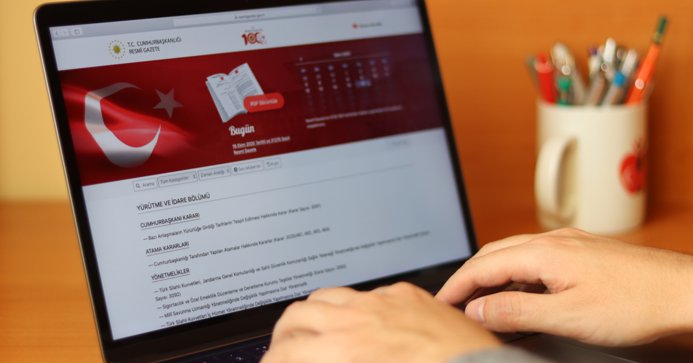
The Turkish tax system is based on long established laws and regulations. However, the country’s tax policy is constantly changing. New rates, exemptions and deductions are published on the official newspaper’s (Resmi Gazete) website.
All taxes in Turkey can be classified into three categories:
- Direct income taxes: personal income tax, corporate income tax.
- Indirect taxes: VAT, special consumption tax, stamp duty, special banking tax.
- Wealth taxes: property tax, inheritance tax.
Turkish tax residents are subject to income tax on their worldwide income. Non-residents only pay tax on their income in Turkey. Individuals who stay in Turkey for more than 6 months of a calendar year are considered tax residents. However, foreigners who are staying in Turkey on a business trip or on vacation, for medical or educational purposes, are not considered tax residents, even if they stay in the country for more than 6 months.
Wages, income from securities (dividends and interest), business, agricultural, professional and rental income, capital gains, and other one-time types of income are taxed.
VAT is levied on the supply of most goods and services at a standard rate of 18% or reduced rates of 8% (for basic foodstuffs, pharmaceuticals, etc.) and 1% (for magazines, newspapers, certain agricultural products and equipment received under financial leasing). Some goods are exempt from VAT. A VAT refund at the rate of 18% applies to payments to non-residents for professional services, the use of intangible property (such as royalties, licenses or know-how) and the sale of such rights.
We will send you a content digest not more than once a week