Weather in Turkey in 2026

Turkey is a country with great diversity in both geography and climate. Since it is surrounded by four seas on three sides, and the country’s landscape is formed by mountains, the Turkish weather varies significantly from region to region. The country is loosely divided into three climatic zones: Black Sea, Mediterranean and continental. In winter, temperatures in eastern Turkey can fall to −40°C, while the western coast is much milder on average: in Izmir, January’s mean temperature is about 9°C, although frosts can occur.
Climate in Turkey by Region
The territory of Turkey is formally divided into 81 provinces (ils), while unofficially the country consists of 7 geographical regions:
- Mediterranean region (Akdeniz Bölgesi);
- Aegean region (Ege Bölgesi);
- Marmara Region (Marmara Bölgesi);
- Eastern Anatolia (Doğu Anadolu Bölgesi);
- Central Anatolia (İç Anadolu Bölgesi);
- Southeastern Anatolia (Güneydoğu Anadolu Bölgesi);
- Black Sea region (Karadeniz Bölgesi).
In the Mediterranean region of Turkey, the tourist season begins in May and ends in mid-autumn. Here is the hottest summer in the country: in July, the average temperature maximum is 34°C. Even in January, the air temperature can stay at around 15°C.
The coast and inland region are separated by mountains, so the climate between these parts is quite different: near the sea it is still Mediterranean, while on the territories beyond the mountains the climate is continental. In the Mediterranean climate, summers are usually dry and hot (27°C — 28°C), and winters are mild and rainy (8°C — 10°C). This is the region with the most number of sunny days in the country, which is ideal for growing plants and vegetables. Tourists usually visit Antalya and its surrounding resorts: Side, Kemer, Alanya, Kas and Mersin.
The Aegean region has the longest coastline in the country. It is also the second region of Turkey in terms of population density. The landscape changes from flat coastal one in the west to mountainous in the east, and the climate changes from Mediterranean (for 150-200 kilometres) to steppe inland. The average temperature maximum in the summer is 32°C, and the coldest month of the year is January, when the temperature stays at an average of 13°C.
In December, there are a lot of rains, so it is best to avoid visiting the region during this month. And in the summer the most popular resorts are Bodrum, Kusadasi, Fethiye and Marmaris. Tourists are attracted by Izmir, the capital of the Aegean region and the third largest city in Turkey. The ruins of Ephesus and Troy — two of the oldest cities in Turkey — are also located here.
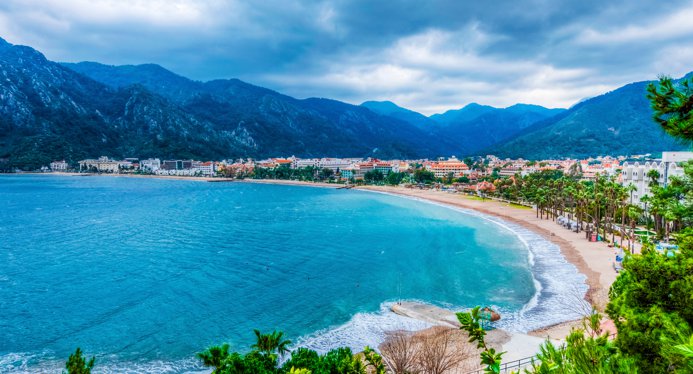
The Marmara region is the most densely populated region in Turkey. It has the minimum height above sea level, although there are mountains up to 2500 metres high. Due to the landscape and high moisture content of the soil, the largest amount of land in the country is cultivated in this region. There are three types of climate here: Mediterranean — on the coast of the Sea of Marmara and in the south; continental — in the inland region; and Black Sea — on the northern coast.
The region is quite cool in the summer (23°C — 25°C) and warm in the winter (3°C — 6°C). Istanbul, Canakkale and Bursa are the main points of interest for the entire population of Turkey as well as tourists. Tourism flourishes in the mineral resort of Yalova and along the coast of the Sea of Marmara.
Eastern Anatolia is the largest region of Turkey with the lowest population density, as it mainly consists of the steppe. The region is famous for its mountains and lakes. Both the highest mountain of the country, Mount Ararat (5137 metres) and the largest Lake Van are located here. The region has a harsh continental climate, which is typical for the inland territory. Winters here are severe and long, the air temperature can drop to −40°C; and summers are short, but not hot, with the average air temperature of around 20°C. This type of climate is known for its sharp changes in day and night temperatures.
Central Anatolia borders on all other regions of Turkey except South Anatolia. The region is located on a plateau inside the highlands at an altitude of 1100 metres, which simultaneously makes it the driest region of the country and one of the most cultivated ones (second only to the Marmara region).
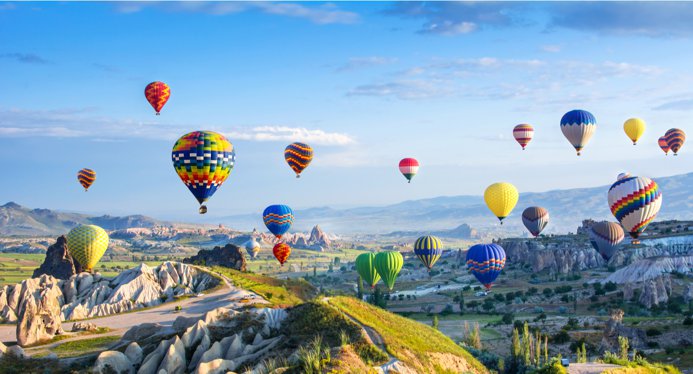
The region has harsh fluctuations between seasons, inherent to the steppe climate: in the winter the temperature can range from 0°C to −30°C; in the summer the average air temperature is 23°C — 24°C. Tourists are attracted here by the Phrygian Salt Lake with pink flamingos and the famous Cappadocia with underground cities and hot air balloons. Ankara, the capital of Turkey, is also located here.
Southeastern Anatolia is located on a flat plain. This contributes to the natural cultivation of pistachios, rice, cotton and sesame, as well as the breeding of sheep and angora goats. Earthquake hazard varies across Southeastern Anatolia and should be checked for the specific location. Winters are rainy, and summers are dry and hot, which makes it harder to water the plants. The climate in the region is a mixture of Mediterranean and steppe. The coldest month here is January with a maximum air temperature of 10°C. In the summer, the air temperature reaches 36°C, with July being the hottest month of the year.
The Black Sea region stretches from west to east along the coast. It is the most forested region of Turkey, with mountains forming the landscape in the east. On the coast, maritime climate prevails, while the inland region has continental climate. The region has cool summers (23°C — 24°C) and warm winters (5°C — 7°C). It rains a lot every season, so the region has the minimum number of sunny days in all of Turkey.
Regions of Turkey with a Continental Climate
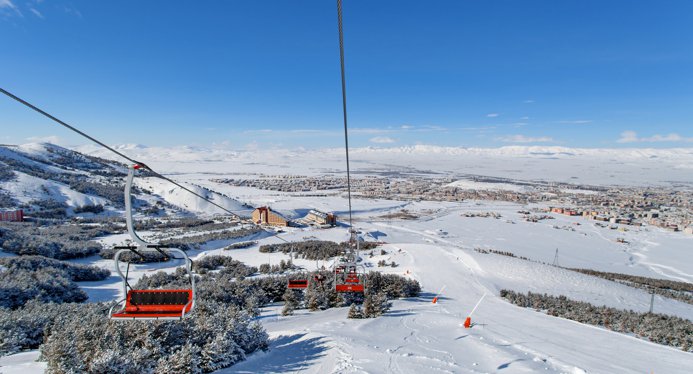
Due to the mild climate, the coastal areas of Turkey are often called the Turkish Riviera. This is not the case with the Black Sea region, as well as eastern and inland parts of Turkey. Here a continental climate with its hot summers and frosty winters prevails. This type of climate contributes to the development of beach and sightseeing tourism in the country, as well as to the popularity of ski resorts. The largest of them are Erciyes Kayseri in Central Anatolia and Palandoken in Eastern Anatolia.
In regions with a continental climate, the ground is covered in snow 120 days a year, and in the highlands the snow falls even in the summer. In regions such as Alanya, there are two different types of tourist attractions: you can spend a wonderful beach holiday by the seaside, and then go skiing in the mountainous areas. Thanks to the artificial snowing of the slopes, the ski season in Turkey lasts from December to April.
Weather on the Turkish Coasts by Season
Let us take a closer look at the weather on the coasts of the main resort regions of Turkey: the Mediterranean, Aegean and Marmara. Here the sun shines 300 days a year, which is one of the reasons for the regions’ popularity among tourists and those who buy property in Turkey for living.
Turkish Weather in the Spring
In March, spring begins in Turkey, but a beach season is still a faraway notion even on the Mediterranean coast of Antalya. The air during the day warms up only to 20°C. In April, the beach season finally opens on the Antalya coast: in Antalya, Side, Belek, Kemer and Alanya the air warms up to 25°C during the day, while the sea water temperature is 18°C. In May, the weather becomes much more pleasant on the Aegean coast, followed by the Marmara region.
The weather in Turkey in the spring is best for sightseeing tours and trips, which will be less comfortable to visit in the following months due to the summer heat. For example, you can go to Pamukkale and Cappadocia. Late spring is suitable for travelling to modern Istanbul and ancient Izmir.
Turkish Weather in the Summer
The weather in Turkey in the summer is ideal for a beach holiday. In all resort regions, there are only a few rainy days during the summer. Daylight lasts about 14 hours in summer, with the longest days in June; many resorts receive around 10 hours of sunshine a day in July.
In July and August, the sea in the Marmara region warms up to 23°C, in the Mediterranean — up to 28°C, and in the Aegean — up to 25°C. There are more than 100 Blue Flag beaches on these coasts, so swimming here is quite pleasurable. Both locals and tourists are engaged in yachting, diving and snorkelling in the summer.

Turkish Weather in the Autumn
Turkey is known for its velvet season, which takes place in September and October. The weather in Turkey in the autumn is not as hot as in the summer, but the sea has not yet had a chance to cool down. The longest swimming season is in the Mediterranean region: you can swim in the sea until mid-October. In the Aegean region — in Bodrum, Marmaris, and Fethiye — the sea water temperature is comfortable for swimming until the end of September. The Marmara region ends its swimming season earlier than any other region, because in September the weather here becomes windy and strong waves appear on the sea surface.
Turkish Weather in the Winter
The average winter temperature in the Marmara region is 8°C, in the Aegean — 10°C, in the Mediterranean — 11°C. The coldest month of the year is January. The shortest days are in December, when the average daylight time is 9.5 hours. In the Mediterranean region, winter is the rainy season, with the most rainfall taking place from November to March.
On the bright side, the mountains are covered with snow for six months of the year, so in the winter tourists flock to various ski resorts, for example, near Antalya. In the Aegean region, winters are mild and there are few tourists here at this time, so the time from December to February is the best for a relaxing holiday in Turkey. The Marmara winters are cold and long; and in Istanbul it often snows during the winter.
Average Temperature in Turkey by Month
The peak tourist season is from late May to mid-September. The hottest months in Turkey are July and August. Swimming in the Sea of Marmara is best from June to early September, and in the Aegean and Mediterranean Seas — from April to October. The sea water temperature in the resorts in the summer is around 25°C — 29°C. The ski season in these areas lasts from mid-December to mid-April.
Average temperature (day – night) in popular cities, °C | |||
|---|---|---|---|
Month | Istanbul | Antalya | Bodrum |
January | 9 – 7 | 13 – 8 | 14 – 11 |
February | 10 – 7 | 15 – 9 | 15 – 12 |
March | 12 – 9 | 17 – 11 | 16 – 13 |
April | 16 – 12 | 21 – 14 | 19 – 15 |
May | 22 – 16 | 25 – 18 | 23 – 19 |
June | 26 – 21 | 30 – 22 | 28 – 22 |
July | 29 – 24 | 34 – 25 | 31 – 24 |
August | 29 – 24 | 34 – 25 | 31 – 24 |
September | 26 – 22 | 31 – 22 | 28 – 23 |
October | 20 – 17 | 26 – 19 | 24 – 20 |
November | 16 – 14 | 20 – 14 | 20 – 17 |
December | 12 – 9 | 15 – 11 | 16 – 13 |
Precipitation in Turkey
According to WorldData’s twenty-year series, updated in September 2026, the Black Sea region averages 102 rainy days a year and Southeastern Anatolia 66. By annual rainfall, the Aegean and Mediterranean regions follow the Black Sea, while Central Anatolia is the driest of these regional samples.
The greatest number of cloudy and rainy days in Turkey is in February, and the greatest number of sunny days is in August. Wildfires also occur in coastal provinces: for example, forest burned in Menderes in Izmir province in June 2024.
In the resorts of the Mediterranean region of Turkey, such as Alanya and Side, there is almost no rainfall in the summer, while the air temperature during the day reaches 40°C. The least amount of rainy days in this region is in July. In Kemer, there are sometimes light rains in the summer, because of the close proximity of the mountains to the coastal areas, and the weather here is not so hot.
In Istanbul and Izmir, long-term Turkish Meteorological Service data show the most precipitation in December and the least in July.
Should you Fear the Wildlife of Turkey?
The nature of Turkey is rich and diverse not only in terms of vegetation and animals, but also in terms of insects, the most annoying of them being mosquitoes. For most people, mosquito bites cause only itching or skin irritation. In Turkey, mosquitoes can transmit West Nile virus, but most infections have no symptoms and severe illness is rare. Repellents help prevent bites.
Venomous spiders, scorpions and snakes occur in Turkey, as do ticks that can carry infections. For most tourists, the risk of a snakebite or a dangerous spider bite is low. Take extra care when walking through natural areas, especially among long grass, shrubs and rocks where snakes and scorpions may hide. A 2021 scientific review lists 57 snake species in Turkey, including venomous species; their range is not limited to remote mountain areas.
On walks through natural areas, wear closed shoes and long trousers, and avoid reaching into places where snakes, scorpions or spiders may hide.
Jellyfish and sea urchins occur off Turkey’s coasts. Some jellyfish near resort areas, including Rhopilema nomadica, can cause painful stings. Avoid touching them, even if washed ashore, and seek medical advice after a sting.
The risks of meeting dangerous wildlife in Turkey are not high, but in the rare case of a bite, you should immediately consult a doctor. Contrary to popular belief, Turkey has well-developed healthcare and modern clinics, where they will always provide qualified assistance in case of emergency.
What are the Natural Phenomena in Turkey?
Most natural hazards in Turkey occur in the winter: snowfalls and avalanches, sea storms, frosts, hail and landslides. Turkey can hardly scare off tourists from the CIS countries, Russia or Northern Europe with its winters, as frosts and snowfalls are not so strong here. During storms, snowstorms and avalanches, it is important to follow the directives of the authorities: do not go to the open sea and do not climb the mountains during the threat of natural disasters.
In the coastal regions of Turkey, extremely low temperatures are very rare. However, due to the high humidity, the cold is felt more strongly here. At −5°C to −7°C, strong wind can make the coast feel considerably colder; humidity alone cannot justify a fixed “feels like” temperature.
Some natural disasters in Turkey can also be encountered in the summer: from May to August, floods occur in regions with a continental climate, and forest fires can also occur in early summer, including in coastal provinces.
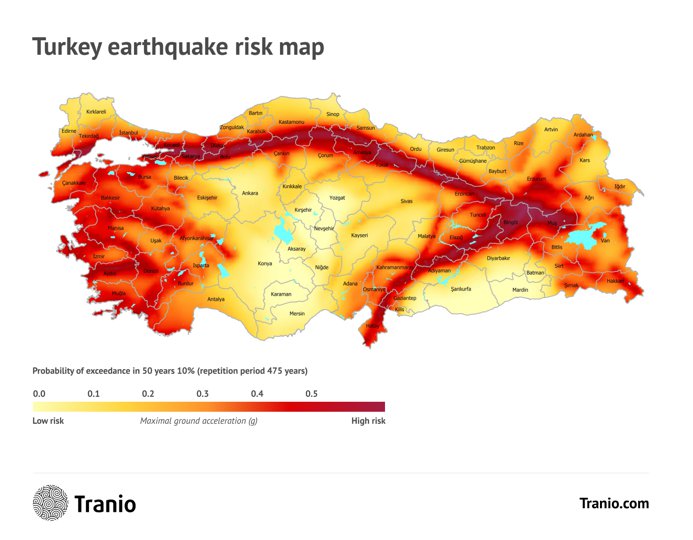
Some parts of Turkey have relatively low earthquake hazard, including Karaman province in southern Central Anatolia. This can be an advantage when choosing a place to live. Buyers should also check the building’s construction quality and earthquake resistance.
Turkey has periodically updated its earthquake-resistant building code. The code effective since 2019 takes account of the hazard at a particular site, soil conditions, building height and structural design. There is no universal three-storey limit or rule that every new home withstands an “8-point Richter” earthquake.
Additionally, compulsory earthquake insurance (DASK) was introduced in Turkey. The cost of this insurance is calculated depending on the structure of the building and on the seismic activity in the region. The government takes the problem of earthquakes in Turkey very seriously and allocates significant budgetary funds to ensure the safety of residents.
Largely due to its climatic conditions, Turkey has become a favourite holiday destination for hundreds of thousands of tourists from all over the world. The climate of Turkey was formed under the influence of a variety of natural conditions: in addition to beaches, there are glaciers, and snow-capped mountain peaks, as well as arid steppes and dense forests. Every season attracts many tourists to Turkey. At different times of the year, you can ski from the mountain slopes, go on scenic boat trips, sunbathe on the beach and swim in the four seas, visit natural landmarks, ancient cities and many other attractions.
We will send you a content digest not more than once a week
- Property Prices
- Buying and Registering
- Mortgage
- Residence
- Property Maintenance
- Education
- Taxes
- Healthcare
- Weather and Environment
- Citizenship (getting passport)