Dubai Property Tax for Foreigners in 2026


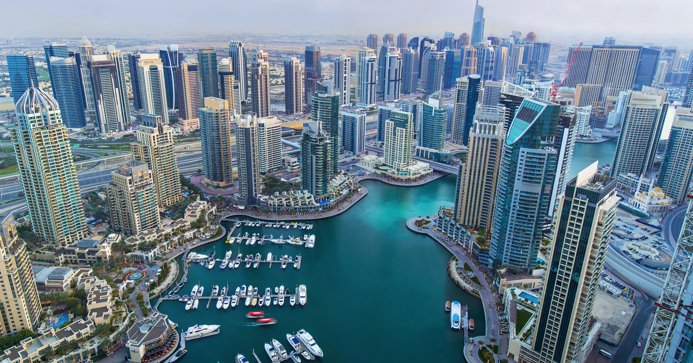
The UAE stands out as a jurisdiction with an exceptionally favourable tax regime. Unlike most international markets, the overall tax burden is significantly reduced, with some recurring taxes absent altogether.
Let’s explore the applicable property tax rates for international buyers and the additional fees associated with purchasing real estate in the Emirates.
The UAE continues to position itself as one of the world’s most attractive jurisdictions for investors, offering a highly favourable tax environment. Unlike many international markets, property ownership in the UAE is not subject to conventional real estate taxes, significantly reducing the overall tax burden.
Instead, taxation in the real estate sector is largely transaction-based, covering property transfers, rental-related levies, and VAT on commercial real estate.
According to the Henley Private Wealth Migration Report 2024, the UAE has been ranked the world’s top destination for high-net-worth migration for the third consecutive year. In 2024, approximately 6,700 millionaires relocated to the country. One of the key factors driving this trend, as highlighted by analysts, is the UAE’s zero personal income tax policy.
Tax Implications of Buying Property as an Expat in the UAE
Tax rates in the UAE vary across emirates, with Dubai typically commanding higher levies, reflecting its status as the primary destination for international buyers. The emirate has long positioned itself as a global hub, offering a refined infrastructure tailored to discerning investors — from luxury residences to corporate headquarters, as well as world-class international schools and universities.
Transfer Fees
The transfer fee, payable upon the transfer of property ownership from seller to buyer, is a mandatory charge collected by the respective land department of the emirate — such as the Dubai Land Department (DLD) or Abu Dhabi Municipality.
Although not classified as a tax, the transfer fee constitutes a significant transactional cost when purchasing real estate in the UAE.
The fee is calculated based on the property’s sale value as stipulated in the purchase agreement.
At times, developers may offset the registration fee as part of tailored incentives. Contact us to receive updates on the UAE’s most favourable property offerings.
Contact us
Transfer Fee Rates by Emirate
4% | |
2% | |
2% (buyer), 2% (seller) | |
2% (buyer), 1% (seller) |
 From $505,000
Completion in: 2029.II Total of 1097 apartments

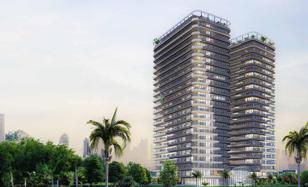 From $213,000
Completion in: 2027.IV Total of 210 apartments

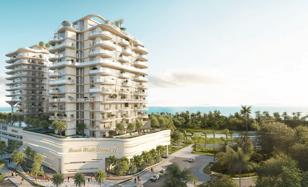 From $743,000
Completion in: 2027.IV 108 units in total
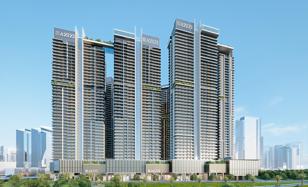 From $157,000
Completion in: 2028.II Total of 5800 apartments
 From $272,000
Completion in: 2029.II Total of 726 apartments
 From $589,000
Completion in: 2027.IV Total of 291 apartments
In Abu Dhabi, property transfers between immediate family members — such as parents and children, spouses, or second-degree relatives — are exempt from transfer fees. Additionally, intra-company transfers within the same legal entity do not trigger this charge.
Conversely, in Dubai, intra-family property transfers are subject to a reduced fee of 0.125% of the asset’s value, with a minimum charge of AED 2,000.
Registration Fee in the UAE
In addition to the mandatory transfer fee collected by the emirate’s land department, a registration fee is also charged as part of the same government service. This fee covers the registration of the transaction with the land department.
Registration Fees in Dubai
Fee Type | Amount (AED) |
Transactions worth ≥ 500,000 AED | 4,000 |
Transactions worth < 500,000 AED | 2,000 |
Title Deed Issuance Fee
Upon completion of the transaction, the buyer must obtain a Title Deed, which legally confirms property ownership. To do so, an application must be submitted to the local court along with a 250 AED fee (approx. $70 USD). The document is issued within three working days.
According to Tranio, as of February 2025, the median price per square metre in Dubai apartments was $5,153. By the end of 2024, the median property purchase budget for Tranio’s buyers in the UAE stood at $290,000.
Rental Tax in the UAE
In the UAE, individual property owners are generally not subject to personal income tax on rental earnings. Municipal housing charges vary by emirate: in Dubai, tenants pay a housing fee of 5% of annual rent through their utility bills; in Abu Dhabi, a 5% municipality fee is charged to tenants based on the rent or rental index, whichever is higher.
The municipal tax is levied on foreign tenants and landlords as compensation for public services, including healthcare, environmental management, waste collection, infrastructure maintenance, and quality control of air and food.
Municipal Tax Rates by Emirate
Emirate | Tax Rate |
Dubai | 5% |
Abu Dhabi | 5% |
Sharjah | 2% |
Ras Al Khaimah | 5% |
Ajman | 2% |
From $505,000
Completion in: 2029.II Total of 1097 apartments
From $213,000
Completion in: 2027.IV Total of 210 apartments
From $743,000
Completion in: 2027.IV 108 units in total
From $157,000
Completion in: 2028.II Total of 5800 apartments
From $272,000
Completion in: 2029.II Total of 726 apartments
From $589,000
Completion in: 2027.IV Total of 291 apartments
The Dubai Municipality charges a housing fee for public services, which is included in monthly utility bills.
For commercial properties, the municipal tax is 5% of the rental value, calculated at the time of licence issuance, renewal, or cancellation with the Department of Economy and Tourism.
Special Rates for Specific Asset Classes
Property Type | Tax Rate |
Retail & warehouses | 5% of rental value |
Banks | 15% of rental value |
Hotels & serviced apartments |
Brokerage Fees in Dubai
Dubai law mandates the presence of a licensed broker or real estate agent in all property sale agreements.
Buyers typically do not pay a brokerage fee when purchasing directly from a developer. Standard agency commission when reselling properties is 2% of the price.
Service Charge for Property Maintenance
While the UAE does not impose an annual property tax, owners are required to pay an annual service charge for building upkeep. This covers common area maintenance, cleaning, major repairs, and shared amenities such as playgrounds and gyms.
The fee is set by the developer based on property size and project-specific rates. On average, service charges range between $15 and $60 per m² per year.
Payment is made annually in advance and remains the responsibility of the property owner, even if the unit is rented out.
The Dubai Government’s official website provides a Service Charge Calculator, allowing property owners to estimate costs using their Title Deed or map location.
Service Charge Calculation: Binghatti Heights, Jumeirah Village Circle
Service | Fee (AED/ft²) |
General Maintenance | 3.36 |
Technical Maintenance | 2.67 |
Utilities | 8.42 |
Property Management | 1.00 |
Insurance | 0.14 |
Master Community Fee | 1.12 |
Reserve Fund | 1.22 |
Parking | 63.68 |
Total | 81.61 |
Value-Added Tax (VAT) in the UAE
Since 1 January 2018, the UAE has introduced a 5% VAT on commercial property transactions, including sales and rentals. This tax is paid by either the tenant or buyer.
Residential property transactions remain exempt from VAT.
Corporate Tax in the UAE on Real Estate Income
In June 2023, the UAE implemented a corporate tax on businesses deriving income from real estate activities, such as rental income and property trading. The tax rate is 9% on taxable income exceeding AED 375,000.
Individuals are not subject to corporate tax unless they are conducting licensed real estate activities with an annual income exceeding AED 1 million (for non-residents).
General Corporate Tax Rate
Annual Income | Tax Rate |
Up to AED 375,000 | 0% |
Over AED 375,000 | 9% |
The UAE maintains a zero-tax regime for dividends and capital gains, meaning income from shares, both within the UAE and internationally, is exempt from corporate tax.
Property-Related Taxes and Fees in the UAE
Type | Rate |
Annual Property Tax | None |
Transfer Fee | 2–4% of the contract value |
Title Deed | 250 AED |
Registration Fee | AED 2,000 — AED 4,000 |
Municipal Rent Tax | 2–5% of rental rate |
VAT | 5% on commercial, 0% on residential |
Corporate Tax (for businesses) | 9% (on income over AED 375,000) |
Service Charge | Variable (e.g., AED 10–20 per ft²) |
UAE Tax System Advantages
- No property ownership tax reduces costs and increases returns for long-term investors.
- No personal income tax on rental income.
- Profits from the sale of property are not taxed, making the UAE attractive for property flipping strategies.
- The 2–4% transfer fee is lower than global averages.
- Residential properties exempt from standard VAT.
- Double taxation agreements with over 100 countries.
We will send you a content digest not more than once a week