Property maintenance in Dubai cost in 2026

Monthly utility bills in Dubai typically range between 160–180 dollars, depending on the size of the property and the occupant’s usage. These costs cover electricity, water, waste disposal, and air conditioning.
In addition to utilities, property owners are responsible for annual service charges, which fund the upkeep of shared facilities in residential communities. These facilities often include swimming pools, gyms, children’s play areas, landscaped gardens, and leisure zones.
Property Taxes in the UAE
The United Arab Emirates offers one of the most favourable tax environments for property investors globally. There are no annual property taxes, capital gains taxes, inheritance taxes, or gift taxes — making it highly attractive for both local and international buyers. There is no distinction in tax treatment between residents and non-residents, ensuring equal investment conditions for all.
Property owners incur taxes primarily during the purchase process, including the property transfer tax, registration fees, and administrative charges. Beyond these one-time costs, ongoing tax obligations are minimal.
Individuals do not pay a separate UAE tax on ordinary rental income. In Dubai, the municipality housing fee is 5% of annual residential rent and is normally charged to tenants through monthly DEWA bills. A 5% municipal fee on commercial rent is likewise a tenant business expense.Annual Property Tax | Not applicable |
Transfer Tax | 4% |
Title Deed Issuance Fee | AED 250 (approx. $70) |
Registration Fee | AED 2,000 (approx. $550) for residential properties under AED 500,000 (up to $137,000) |
AED 4,000 (approx. $1,100) for properties valued at AED 500,000 ($137,000) or more | |
Rental Income Tax | No separate tax for individuals; the tenant pays a municipal fee of 5% of annual rent in Dubai. |
Capital Gains Tax | Not applicable |
Inheritance Tax | Not applicable |
Gift Tax | Not applicable |
Maintenance Fees for Apartments in Dubai
Although the UAE does not impose an annual property tax, property owners are required to pay an annual service charge. This fee covers the upkeep and maintenance of shared facilities within residential buildings and communities, helping to maintain a consistently high quality of life for residents.
The amount of the service charge is determined by the developer and varies based on factors such as the size of the property and the specific features of the project. Payments are usually made annually in advance, and the owner is responsible for the fee, even if the property is rented out. To simplify the process, the fee is often automatically deducted from the owner’s designated account.
This system ensures the ongoing maintenance and smooth operation of communal facilities, contributing to a comfortable, secure, and well-managed residential environment.
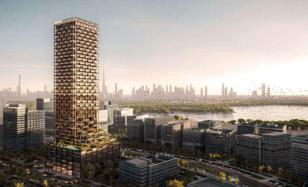 From $505,000
Completion in: 2029.II Total of 1097 apartments

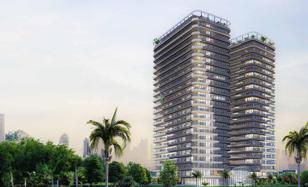 From $213,000
Completion in: 2027.IV Total of 210 apartments
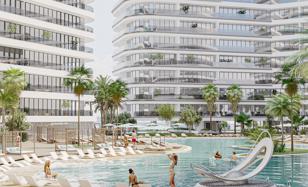
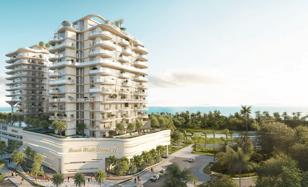 From $743,000
Completion in: 2027.IV 108 units in total
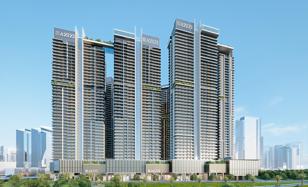 From $157,000
Completion in: 2028.II Total of 5800 apartments
 From $272,000
Completion in: 2029.II Total of 726 apartments
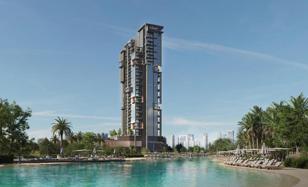 From $589,000
Completion in: 2027.IV Total of 291 apartments
The cost of maintaining a property in Dubai, known as the Service Charge, can be determined through an official government calculator. This tool allows owners to estimate the fees for any building by entering the Title Deed details or selecting a location on a map.
Example of what is included in Apartment Service Charges in Dubai:
Project: Cayan Tower, Dubai Marina (Completion in 2020)
Service | Fee (AED/ft²) |
General Maintenance | 3.34 |
Technical Maintenance | 4.39 |
Renovation | 3.26 |
Utilities | 2.79 |
Management | 1.28 |
Insurance | 1.33 |
Master Community Service | 0.62 |
Depreciation | 1.66 |
Reserve Fund | 1.19 |
Central Air Conditioning | 4.72 |
Total | 24.58 |
What’s Included in Maintenance and Utility Costs
Utility expenses in Dubai are calculated based on actual meter readings, ensuring a fair, consumption-based billing system — similar to practices in many other countries.
For an apartment of approximately 85 square metres, monthly utility bills typically range between 160–180 dollars. This includes charges for:
- electricity;
- water;
- waste disposal;
- air conditioning.
Home internet in the UAE costs roughly AED 200–750 ($55–205) a month, depending on speed, connection technology and television package.
In Dubai, utility costs are calculated based on individual meter readings, promoting a fair and usage-based billing system. Foreign residents are fully responsible for their electricity and water consumption, while UAE nationals receive government subsidies that cover basic utility usage. However, any consumption exceeding the subsidised limit — as recorded by the meter — must be paid by the resident, ensuring accountability and efficient resource use.
Thanks to the hot climate, residents of the UAE do not need to pay for heating — instead, they cover the costs of centralised air conditioning. The air conditioning fee depends on the number of floors in the building: the higher the building, the higher the rate.
Electricity in Dubai is provided by DEWA (Dubai Electricity and Water Authority) and operates on a tiered pricing system, where rates increase with higher consumption levels.
The following structure applies to residential consumers:
Consumption (kWh per month) | Tariff (AED/kWh) |
0–2,000 | 0.23 (for the entire volume) |
2,001–4,000 | 0.28 (for consumption beyond 2,000) |
4,001–6,000 | 0.32 (for consumption beyond 4,000) |
Above 6,000 | 0.38 (for consumption beyond 6,000) |
For industrial consumers, the tariffs are as follows:
- up to 10,000 kWh/month: AED 0.23 per kWh;
- above 10,000 kWh/month: AED 0.38 per kWh.
Additionally, a fuel surcharge of AED 0.06 per kWh is applied to all consumption, reflecting the cost of energy production.
DEWA also employs a tiered system for water pricing, based on monthly consumption in cubic metres:
Consumption (m³) | Tariff (AED/m³) |
0–27 | 7.7 |
28–54 | 8.8 |
55+ | 10.12 |
Home insurance is generally optional for UAE tenants and buyers without a mortgage. Basic policies start at about AED 200 ($55) a year, with the final premium depending on the property and coverage.
We will send you a content digest not more than once a week