Montenegro Citizenship by Investment Program: Current Status, Former Rules and Residency Alternatives
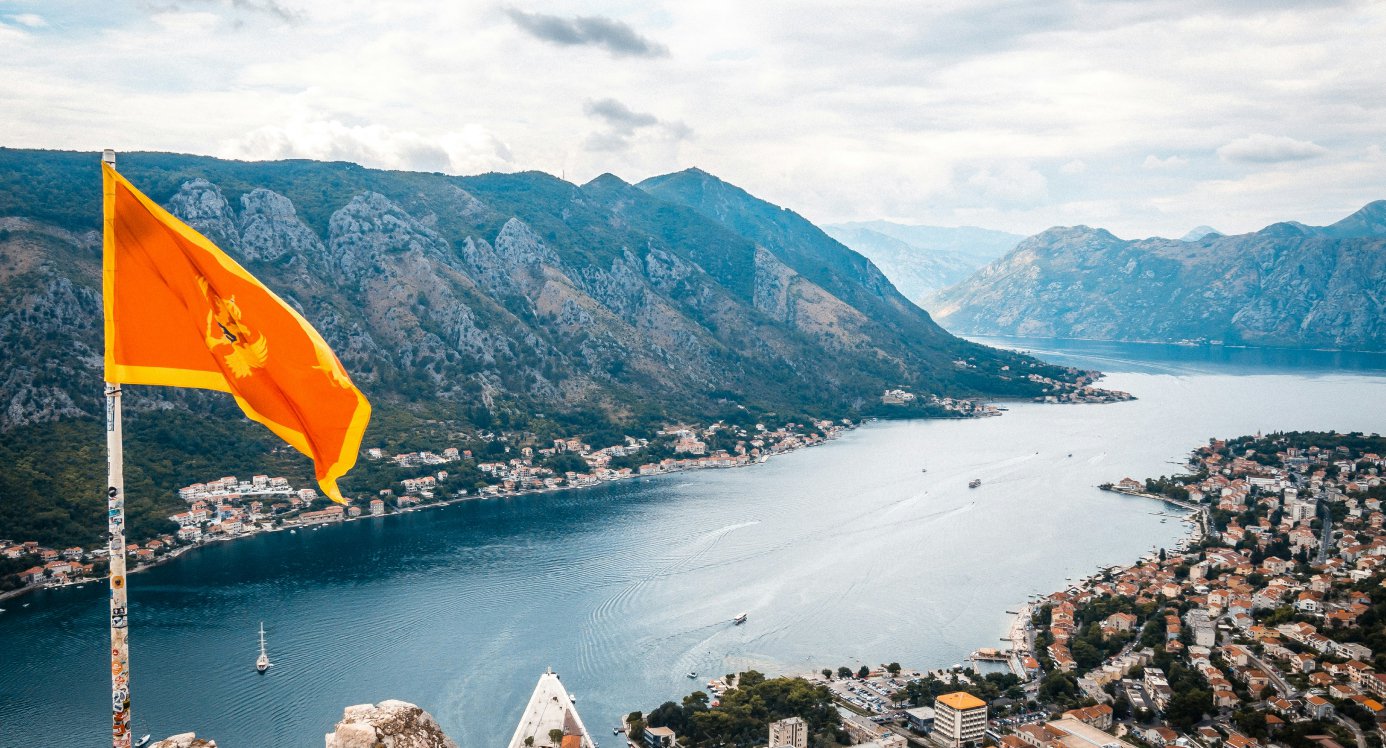
The Montenegro citizenship by investment program was once one of Europe’s relatively small number of investor citizenship schemes. It allowed qualifying foreign applicants to obtain Montenegrin citizenship after making a government contribution and investing in an approved development project.
However, the position today is very different. Montenegro’s Special Investment Program ended on 31 December 2022, and new applications are no longer accepted. The Government of Montenegro confirmed again in August 2026 that the program ran only until that date, although administrative and financial matters relating to applications submitted while the program was open are still being processed.
This distinction is essential for anyone searching for terms such as Montenegro golden visa, Montenegro passport by investment or Montenegro citizenship by real estate. Montenegro currently offers property-based temporary residence under its immigration legislation, but buying ordinary real estate does not provide citizenship or a passport.
In other words, there are now two separate subjects to understand:
- the former Montenegro citizenship by investment program, which is closed;
- current residence options, including temporary residence linked to property ownership.
They should not be treated as interchangeable.
Does Montenegro Have Citizenship by Investment in 2026?
No. Montenegro does not currently operate an open citizenship by investment in Montenegro program for new applicants. The Government originally introduced its Special Investment Program in 2019. After an extension, it was ultimately terminated on 31 December 2022. The government had publicly confirmed before closure that the scheme would not continue beyond that date.
The European Commission subsequently described the investor citizenship scheme as having been phased out at the end of 2022, while noting that pending applications continued to be processed. Therefore, someone asking how to get Montenegro citizenship by investment today cannot simply invest a specified amount and submit a new application under the former program.
Likewise:
- buying an apartment does not provide citizenship;
- investing in a Montenegrin company does not automatically provide citizenship;
- buying property above a particular value does not provide a passport;
- obtaining temporary residence through property ownership is not equivalent to citizenship.
A person seeking citizenship now generally needs to consider Montenegro’s ordinary citizenship rules or another statutory basis for admission rather than the discontinued investor program.
What was the Montenegro Citizenship by Investment Program?
Montenegro’s former scheme was officially designed as a Special Investment Program of particular importance for the country’s business and economic interests.
Program History
The Government adopted the framework in November 2018 and the program became operational from January 2019. It was initially designed for a maximum of 2,000 applications. Its purpose was to attract foreign capital into development projects and support economic activity, particularly tourism and less-developed regions.
The program focused heavily on approved tourism projects such as hotels and mixed-use resort developments. It was originally intended to operate for a limited period. Montenegro later extended it through 2022, but the Government ultimately terminated the scheme on 31 December 2022.
How the Former Program Worked
The basic model was contribution plus investment. Applicants had to make a non-refundable contribution to government-designated purposes and invest in a project approved under the program.
Under the original rules, the investment component was:
- at least €250,000 in an approved development project in the northern or central region, excluding Podgorica;
- or at least €450,000 in an approved project in Podgorica or Montenegro’s coastal region.
A separate contribution of €100,000 was originally required for the development of less-developed municipalities.
When the program was extended into 2022, an additional contribution to Montenegro’s Innovation Fund was introduced, effectively increasing the total non-refundable contribution requirement to €200,000 for applicants under the revised scheme. Government financial reporting after the program’s closure confirms that substantial amounts were subsequently transferred to the Innovation Fund from Special Investment Program receipts.
Applicants were also subject to background and source-of-funds checks, and applications were submitted through authorised intermediary agents. The Government used international due-diligence agents to assess eligibility and the origin of funds.
Montenegro Citizenship by Investment Cost: Former Program
Because the program changed during its lifetime, there was no single historical Montenegro citizenship by investment cost that applied throughout the entire period.
Former Investment Requirements
At launch, the core requirements included:
- €250,000 investment in an approved project in the north or central region outside Podgorica;
- €450,000 investment in an approved project in Podgorica or the coastal region;
- €100,000 government contribution for less-developed municipalities;
- application and due-diligence costs.
The Government also specified application fees of:
- €15,000 for the main applicant;
- €10,000 for family members within the applicable initial family group;
- €50,000 for each additional family member beyond the prescribed number.
When the program was extended for 2022, a further €100,000 contribution to the Innovation Fund was introduced.
Total Historical Cost
Under the original version, the lowest headline financial requirement was therefore approximately:
- €250,000 investment + €100,000 contribution = €350,000, before application, due-diligence and other fees.
Under the revised 2022 structure, the comparable minimum became approximately:
- €250,000 investment + €200,000 contributions = €450,000, again before other fees.
For coastal or Podgorica projects, the investment component was €450,000, taking the corresponding headline requirement under the revised contribution structure to approximately €650,000, excluding processing and due-diligence costs.
These amounts are historical. They should not be interpreted as a current price for obtaining Montenegrin citizenship.
Montenegro Citizenship by Investment Requirements Under the Former Program
The former Montenegro citizenship by investment requirements went beyond simply transferring money. Applicants had to satisfy financial, legal and due-diligence conditions.
The principal applicant was generally required to:
- invest the prescribed amount in an approved development project;
- make the required government contribution;
- submit the application through an authorised agent;
- provide evidence concerning the origin of the investment funds;
- pass international due-diligence checks;
- meet criminal-record requirements;
- pay the applicable government and processing fees.
Government documentation provided that citizenship could later be cancelled if it emerged that an applicant had supplied false information or deliberately concealed material facts. Checks became particularly significant toward the end of the scheme.
In 2022 the Government introduced additional verification connected with international sanctions and the legality of applicants’ funds. Family members could also be included subject to the program’s eligibility requirements and additional fees.
Montenegro Citizenship by Real Estate: Did Buying Property Provide Citizenship?
No. Even while the program was open, ordinary real estate ownership did not automatically provide Montenegro citizenship by real estate. This is an important distinction.
The former scheme required investment in a government-approved development project. It was not enough simply to purchase:
- a resale apartment in Budva;
- a villa in Kotor;
- a home in Tivat;
- a plot of land;
- an ordinary investment property.
Only investments satisfying the Special Investment Program’s requirements could form part of an application. Today the distinction is even clearer: the citizenship program is closed altogether.
Therefore, Montenegro property citizenship should not be interpreted as a current immigration category. A property purchase may be relevant to temporary residence, but it does not result in Montenegrin nationality.
Can You Buy a Montenegro Passport?
No. The phrase buy Montenegro passport is not an accurate description of either the former program or the current system. Under the historical program, applicants were required to complete a regulated citizenship procedure based on investment, contributions and extensive due diligence. Citizenship was granted by the state following approval.
A Montenegrin passport could then be obtained as a consequence of holding Montenegrin citizenship. The passport itself was not an investment product.
The distinction can be summarised as:
- investment → citizenship application and approval → citizenship → eligibility for a passport
It was never simply:
- payment → passport
Today, there is no open Montenegro passport by investment or Montenegro golden passport program for new applicants.
Montenegro Golden Visa: Does It Exist?
The term Montenegro golden visa is frequently used commercially, but Montenegro does not have a formally branded golden visa comparable to several EU residence-by-investment programs. What Montenegro does have is a system of temporary residence permits with several possible legal bases, one of which is ownership of qualifying real estate.
What People Mean by «Montenegro Golden Visa»
When people search for a golden visa Montenegro, they are often referring to the possibility of purchasing property and obtaining temporary residence. Current government guidance lists ownership of real estate in Montenegro as one of the grounds on which a foreign national may apply for temporary residence.
A property-based temporary residence permit is generally issued for one year and can be renewed if the statutory conditions continue to be met. This is not the same as a traditional golden visa that automatically creates a route to permanent residence after a qualifying investment period. It is also not citizenship.
Montenegro Golden Visa vs Former Citizenship Program
The former investor citizenship program and current property-based residence are fundamentally different. The historical program was designed to grant citizenship to approved applicants after qualifying investment.
Property residence grants only temporary immigration status. A holder of a property-based residence permit does not receive:
- citizenship;
- a Montenegrin passport;
- EU citizenship;
- an automatic right of permanent residence.
Calling the property route a Montenegro golden visa program can therefore be convenient shorthand, but it can also create unrealistic expectations.
Montenegro Residency by Buying Property
Montenegro residency by buying property remains possible under current immigration legislation, subject to the applicable conditions.
Can Property Owners Obtain Temporary Residence?
Yes. Montenegro’s official temporary-residence guidance states that ownership of immovable property may provide the basis for a temporary residence permit. Applicants must also satisfy general conditions, including having:
- means of subsistence;
- accommodation;
- health insurance;
- a valid travel document;
- no applicable prohibition on entry or residence;
- no disqualifying serious criminal conviction;
- no relevant national-security or public-order obstacle.
Proof of real estate ownership is required to establish the property basis for the application. The permit is generally issued for one year. Applications for extension should normally be made before the existing permit expires.
Property Value Requirements
This area changed materially in 2026. In November 2025, the Government initially proposed a minimum qualifying property value of €200,000. However, the final legislation passed by Parliament did not adopt that figure.
The amendments to Montenegro’s Law on Foreigners published in the Official Gazette in January 2026 entered into force on 17 January 2026. The enacted provision requires evidence from the competent local tax authority showing a real estate transfer tax base of at least €150,000 for the relevant property-residence route.
This is an important difference because older articles may still cite €200,000. The relevant value is not simply an asking price chosen by the seller. The enacted provision refers to the tax base shown in the relevant real estate transfer tax decision.
For buyers considering Montenegro residency by real estate, this means that the immigration value of a property should be checked separately from its advertised purchase price.
Montenegro Residence by Investment
There is no single current scheme officially equivalent to the former Montenegro residency by investment program. Instead, investors may potentially qualify for residence through different legal grounds. These can include:
- real estate ownership;
- employment;
- business activity where applicable requirements are satisfied;
- family reunification;
- other grounds recognised under the Law on Foreigners.
Property Ownership Route
The most direct option for a passive property owner is temporary residence based on qualifying real estate. The property itself serves as the residence basis, subject to the statutory value requirement and other immigration conditions.
Business and Employment Routes
An investor operating an active company may instead use a residence-and-work structure where the statutory requirements are met. This should be distinguished from simply registering a company. Corporate ownership by itself should not be assumed to provide residence automatically.
Montenegro tightened aspects of its foreign-residence framework during 2025–2026, including rules aimed at ensuring that companies used as a basis for foreign residence have genuine economic activity. For this reason, Montenegro residence by investment is better understood as a group of potential legal routes rather than a single golden-visa product.
Montenegro Property Residence Requirements
For an individual applying for Montenegro residency by property, the documentation and conditions typically involve several elements:
- Proof of Property Ownership. The applicant must demonstrate ownership through the relevant property and cadastral documentation. Under the 2026 amendments, the required evidence also includes documentation from the competent local tax authority establishing the relevant property value for the statutory threshold.
- Valid travel document. A current passport or other qualifying travel document is required.
- Accommodation. The applicant must demonstrate suitable accommodation. In a property-based application, the owned property will commonly be relevant to satisfying this requirement.
- Financial means. Applicants need sufficient means of subsistence.
- Health insurance. Health insurance is another general requirement for temporary residence.
- Criminal-record and security conditions. The applicant must satisfy statutory criminal-record requirements and must not present an obstacle from the perspective of national security, public order or public health.
- Application procedure. Current government guidance states that temporary-residence applications are submitted personally to the Ministry at the applicant’s place of residence.
The authority generally has up to 40 days to decide a complete temporary-residence application.
Does Montenegro Property Residence Lead to Permanent Residence?
This is one of the most important limitations of Montenegro residency by real estate. Montenegro generally provides a route to permanent residence after five consecutive years of qualifying lawful residence.
However, the Government specifically states that time spent under temporary residence based on ownership of real estate is not included when calculating the standard five-year qualifying period for permanent residence.
This means that a simple strategy such as:
- buy property → renew property residence for five years → obtain permanent residence does not work under the standard rules.
Property-based residence can allow an owner to live in Montenegro while the permit remains valid, but it is not structured as a conventional five-year investment route to permanent status.
People whose long-term objective is permanent residence or eventual citizenship should therefore distinguish between a convenient temporary residence basis and a residence category that counts toward permanent residence.
Does Montenegro Residency by Investment Lead to Citizenship?
Not automatically. Montenegro residency by investment and Montenegrin citizenship are separate legal concepts. Property ownership does not automatically provide citizenship after a certain number of years.
The general naturalisation framework is significantly more demanding. Under Article 8 of the Montenegrin Citizenship Law, ordinary admission to citizenship generally requires, among other conditions:
- being at least 18;
- lawful and uninterrupted residence for 10 years before applying;
- accommodation and a secure source of income;
- satisfaction of criminal-record and security requirements;
- basic knowledge of the Montenegrin language;
- settlement of tax and other legal obligations;
- compliance with the rules concerning release from another citizenship, subject to applicable exceptions.
The key difficulty for a property investor is that the residence period accumulated solely under property-based temporary residence does not count toward the standard five-year permanent-residence route.
Consequently, Montenegro investment citizenship should not be presented today as a straightforward progression from buying property to obtaining nationality.
Montenegro Citizenship by Investment vs Residency by Property
Factor | Former citizenship by investment | Current property-based residence |
Current status | Closed to new applicants | Available subject to current law |
Main objective | Citizenship | Temporary residence |
Property requirement | Approved development projects | Qualifying owned property |
Minimum property/investment value | Historically €250,000 or €450,000 project investment | Current threshold based on tax base of at least €150,000 |
Government contribution | Historically €100,000, later €200,000 | No equivalent citizenship contribution |
Citizenship granted | Possible under former program | No |
Passport | Available after citizenship | No |
Permit duration | Not applicable after citizenship | Generally one year |
Renewal | Citizenship itself was permanent status | Permit can generally be renewed |
Counts automatically toward permanent residence | Not relevant | Property-based time does not count under standard five-year rule |
The two routes therefore solve completely different problems. Someone seeking the right to live in Montenegro may find property-based residence useful. Someone specifically seeking a second citizenship should not treat it as a replacement for the closed citizenship scheme.
Benefits of Montenegro Residency by Property
Although it does not provide citizenship, Montenegro residence permit property status can still be useful:
- Ability to reside in Montenegro. The permit enables an eligible property owner to reside in Montenegro for longer than the normal short-stay period.
- Renewable status. Property-based temporary residence is generally issued for up to one year and may be renewed while the legal basis and other conditions continue to be satisfied.
- Suitable for second-home owners. A person who already intends to purchase and use a home in Montenegro may find the residence basis practical because the same asset can serve both lifestyle and immigration purposes.
- Family reunification. Government guidance provides that immediate family members of a foreigner holding temporary residence may generally qualify for temporary residence based on family reunification. Immediate family includes spouses and minor children, with certain additional family situations recognised by law.
- No need for the former citizenship program. Applicants do not need to purchase a unit in a former government-approved citizenship project. The current property residence system is part of ordinary immigration law rather than the discontinued Special Investment Program.
Limitations of Montenegro Residency by Property
The route also has substantial limitations:
- It does not provide citizenship. A Montenegro residence permit by investment or property ownership is not nationality.
- It does not provide a Montenegro passport. A residence card and passport are legally different documents with very different rights.
- It does not provide EU citizenship rights. Montenegro is not currently an EU member. A Montenegrin residence permit does not provide the same rights as residence or citizenship in an EU Member State.
- It does not create a standard five-year route to permanent residence. This is perhaps the most important limitation for long-term planning. Property-based residence time is excluded from the normal permanent-residence calculation.
- The residence permit is tied to its legal basis. If the property ceases to satisfy the requirements or is sold, the basis for the residence permit may disappear.
- Absence rules apply. Government guidance also provides that temporary residence may cease if the holder remains outside Montenegro beyond prescribed periods, subject to limited exceptions for justified absences that are properly notified.
Montenegro and EU Accession: Implications for Investors
Montenegro is currently the most advanced candidate in the EU enlargement process. As of July 2026, all 33 screened negotiating chapters had been opened and 18 had been provisionally closed. The Council has also begun preparatory work connected with Montenegro’s eventual accession treaty.
This is relevant to investment migration because the EU has consistently expressed concerns about citizenship-for-investment schemes. The European Commission criticised Montenegro’s former investor citizenship program because of risks involving security, money laundering, tax evasion and other issues. It welcomed the phase-out of the scheme at the end of 2022.
For investors, two conclusions follow. First, it is not reasonable to assume that Montenegro will simply reopen the former citizenship program in the same form while progressing toward EU membership. Second, Montenegro’s future EU membership should not be treated as guaranteed or as an immediate source of EU rights for current residence-permit holders.
An investor buying property in 2026 receives rights available under Montenegro’s law today, not the rights that might exist after a future accession date.
Alternatives to Montenegro Citizenship by Investment
Because the former Montenegro citizenship program is closed, foreign nationals should consider what they actually want to achieve:
- Temporary residence through property ownership. This is relevant to people who want to buy and use a qualifying property and spend substantial time in Montenegro.
- Employment-based residence. A foreign national working for a qualifying employer may apply under the appropriate residence-and-work provisions.
- Business-related residence. Entrepreneurs actively operating companies may have residence options depending on the corporate, employment and immigration conditions applicable to their situation.
- Family reunification. Family members of Montenegrin nationals or eligible foreign residents may qualify under family-reunification rules.
- Standard citizenship route. Applicants whose ultimate objective is citizenship may need to plan around the ordinary naturalisation requirements rather than attempting to transform property residence into a citizenship scheme.
This usually involves considerably longer residence and integration requirements.
Is Montenegro Residency by Real Estate Worth Considering?
For the right type of applicant, Montenegro residency by real estate can still be attractive even though it is not a citizenship program. It can be suitable for someone who:
- already wants to own property in Montenegro;
- plans to spend significant time in the country;
- wants a renewable temporary residence basis;
- is buying a second home;
- does not require an immediate route to citizenship.
It may be less suitable for someone whose primary objective is:
- obtaining a second passport quickly;
- qualifying automatically for permanent residence after five years;
- obtaining EU citizenship rights;
- making a passive investment solely to acquire immigration status.
The residence decision and the property investment decision should therefore be evaluated separately. A good property does not necessarily create the right immigration outcome, and an immigration-qualifying property is not necessarily a good investment.
Frequently Asked Questions
No. The former Montenegro citizenship by investment program ended on 31 December 2022 and is closed to new applications. Some administrative matters connected with applications submitted before closure have continued to be processed.
It formally ended on 31 December 2022.
No. Buying ordinary property does not grant citizenship. Under the former scheme, only qualifying investments in approved development projects formed part of the citizenship application. The program itself is now closed.
No. A passport is issued as a consequence of citizenship. There is no current scheme under which a foreigner can simply purchase a Montenegrin passport.
Montenegro does not operate a formally branded golden visa in the same sense as several EU countries. Property ownership can, however, provide a basis for temporary residence, which is why the term Montenegro golden visa is sometimes used informally.
Yes, subject to the current immigration requirements. Montenegro’s Law on Foreigners allows qualifying real estate ownership to support a temporary-residence application.
The final amendments to the Law on Foreigners that entered into force in January 2026 set a threshold based on a property tax base of at least €150,000 for the relevant property-residence provision. This replaced the €200,000 level that had appeared in the Government’s earlier proposal.
It is generally issued for one year and may be renewed if the applicable requirements continue to be met.
Not through the standard five-year route. The Government states that time spent under temporary residence based on ownership of real estate is excluded when calculating the normal qualifying period for permanent residence.
Residence can be relevant to citizenship under the general naturalisation framework, but there is no automatic citizenship after purchasing property. Ordinary citizenship by admission generally includes a requirement for ten years of lawful and uninterrupted residence along with other eligibility conditions.
Historically, qualifying applicants invested at least €250,000 in approved projects in northern or central Montenegro outside Podgorica or €450,000 in qualifying coastal or Podgorica projects. The program originally also required a €100,000 government contribution. During its final year, total contributions increased to €200,000, in addition to application and due-diligence fees.
Requirements included an approved project investment, government contribution, authorised-agent application, source-of-funds documentation, criminal-record checks, international due diligence and applicable fees.
Potentially yes. Montenegro’s family-reunification rules allow immediate family members of a temporary resident to apply under the family-reunification basis, subject to the relevant conditions.
There is currently no open replacement program for new applicants. Given Montenegro’s advanced EU accession process and the EU’s previous objections to investor citizenship schemes, investors should not base a property purchase or migration plan on an assumption that the former program will return.
We will send you a content digest not more than once a week
Montenegro Real Estate Investment: Guide for International Buyers in 2026
Montenegro Real Estate Market: Trends, Prices and Outlook in 2026
Selling Property in Montenegro: Guide for Property Owners in 2026
Phnom Penh Real Estate Market in 2026
Invest in Cambodia: Investment Opportunities for Foreigners in 2026